 Uday Kumar Varma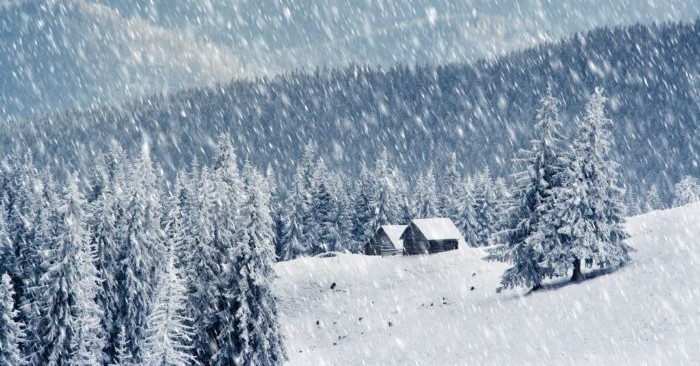
Winter has arrived almost without notice. A few snow showers have already passed through, leaving behind a softened world and the promise of more to come. The brilliant colours and ensorcelling splendour of autumn have withdrawn without farewell. The golds and crimsons that once flared so confidently leave no trace. In their place spreads a pristine, unbroken white—a quiet reign, serene and unassertive, yet at moments mesmerising, even faintly intimidating.
The year, too, seems to stand at such a moment. Its vivid days lie behind us. What remains is a gentler tempo, an invitation to pause and ponder. One cannot help wondering whether the retreat of autumn mirrors the closing of a year. Both carry a subtle ache: the feeling that something beautiful has run its course.
Autumn is, in many ways, the season of reckoning. It offers splendour in abundance and then teaches us how to let go of it. Leaves fall not in haste, but with grace, gathering on the ground like memories. Walking through such landscapes, one realises that beauty does not vanish when it fades; it merely alters its address. What once dazzled the eye now moves the heart.
So, it is with a year drawing to its close. There is always some sadness in looking back—missed chances, conversations delayed too long, time that slipped away unnoticed, moments of pain or quiet grief. Yet this backward glance need not be judgmental. Like autumn, the year does not demand justification; it asks only recognition. What was lived was lived. What fell has already found its place.
Then comes winter
Winter does not argue with the past. It covers everything evenly, with a quiet impartiality. Snow falls, and the world is briefly rewritten. Lawns, rooftops, branches, fences—all surrender their sharpness, their identities softened. They stand together in a shared stillness. Familiar outlines melt; distinctions blur. There is something almost merciful in this whiteness, as though the earth has chosen to begin again—without erasing what came before.
The end of the year offers a similar grace. It is not a peroration, but a pause. The blankness of winter resembles a fresh page—not demanding resolutions, not insisting on explanations. It invites us simply to stand still, to plant our feet, to breathe.
As Rainer Maria Rilke once wrote, “And now we welcome the new year, full of things that have never been.” Winter seems to understand this wisdom instinctively. It slows the world so that attention, rather than ambition, may lead the way. There is, undeniably, a severity to winter. Days shorten. Warmth withdraws. Life appears pared down to its essentials. And yet, beneath the frozen ground, nothing is idle. Roots deepen. Seeds wait. What looks like barrenness is, in truth, patience. Winter teaches us that stillness is not stagnation; it is preparation.
The closing year often feels the same. Not every year ends in triumph. Some end in understanding. Some in endurance. Some simply in survival. Yet even such years have done their work. They have strengthened something unseen.
When we speak of spring and summer, then, we speak not of the calendar, but of promise. Spring is the idea that something new is already stirring, though it has not yet declared itself. It arrives quietly: a softening of light, a loosening within. The new year carries this same assurance—new hope, new energy, new expectation—not as obligation, but as possibility. Growth need not be hurried; it will reveal itself when ready.
And summer is the faith that follows—that warmth, confidence, and ease will return in their own time. That effort gives way to ease. That endurance is not permanent. Seen this way, the seasons do not rush us; they reassure us.
To see the year through this lens is to practise patience. Not every year is meant to blaze. Some are autumns of release. Some are winters of waiting. All are necessary.
As this year draws to its close, perhaps the gentlest response is gratitude—for having lived through its unique weather. For the colours it gave, the silences it imposed, the lessons it left quietly behind. Between falling leaves and first snow, between ending and beginning, we stand not at a terminus, but at a turning. Before us lies the pristine, unmarked snow, inviting our first steps—taken with care, with joy, and with hope.
Let us walk into the year ahead.
A Happy New Year.
(Uday Kumar Varma is an IAS officer. Retired as Secretary, Ministry of Information & Broadcasting)
Related Posts
Amit Shah outlines three-year roadmap to make India drug-free by 2029
Mamdani imposes one-year AI ban for most NYC students
Amit Shah sets one-year target for full rollout of new criminal laws