 Krishan Gopal Sharma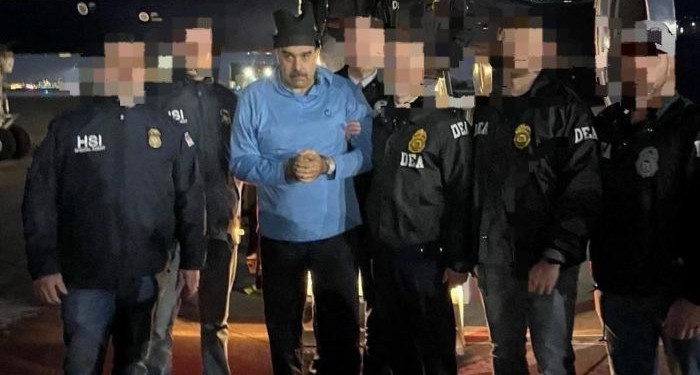
The U.S. capture of Venezuelan President Maduro has sent shockwaves around the world, raising urgent questions about sovereignty, international norms, and global vulnerability. This analysis explores which countries are most at risk and how India and others navigate this unprecedented geopolitical shift.
The unprecedented U.S. capture of Venezuelan President Nicolás Maduro and his wife has raised urgent questions about the erosion of international norms. UN Secretary-General António Guterres warned that such unilateral actions risk regional destabilisation and setting a dangerous precedent for the use of force. Capitals from Latin America to Asia and the Middle East are assessing new vulnerabilities: Panama, Colombia, Cuba, and Mexico face immediate regional anxieties, while Iran, Malaysia, Indonesia, and others watch for implications on sovereignty and security. India, too, confronts pressure on trade, energy, migration, and diplomacy. Analysts caution that the incident is less about Venezuela itself than a reshaping of global perceptions of vulnerability, signalling a shift in the rules of international engagement.
Introduction — A Precedent Beyond Venezuela
The dramatic U.S. military operation in Venezuela in early January 2026, which resulted in the capture of President Nicolás Maduro and his wife, has reverberated across the international system. Presented in Washington as a law-enforcement action, the operation quickly drew condemnation from multiple world leaders and international organisations, chiefly because it involved the forcible removal of a sitting head of state without UN authorisation. Experts warn that the incident threatens to weaken long-standing international norms, particularly state sovereignty and the prohibition on the use of force, both central to the UN Charter. In the wake of the operation, several states and regions are now reassessing their perceived vulnerabilities in a world where the traditional taboo against extraterritorial coercion appears to be eroding.
UN Caution: Stability at Stake
At an emergency session of the UN Security Council, Secretary-General António Guterres expressed deep concern over the U.S. operation, describing it as a “dangerous precedent that could destabilise Venezuela and the wider region.” He urged a return to multilateralism, emphasising that international disputes must be resolved through dialogue and diplomacy rather than unilateral military actions. Guterres further highlighted that if powerful states increasingly view coercion as a legitimate instrument of policy, the global norms restricting the use of force could be severely weakened, producing ripple effects far beyond Latin America.
Latin America and the Caribbean: Immediate Anxiety
Several Latin American countries are now viewed as especially sensitive to the new precedent. Panama is seen as particularly exposed because of its strategic control over the Panama Canal, its historical experience with U.S. intervention in 1989, and its role as a financial and transport hub. Any instability in Panama could have disproportionate regional and global consequences. Colombia, facing tensions with Washington over anti-drug policies, experiences amplified perceptions of vulnerability even without a direct threat of intervention. Cuba, closely tied to Venezuela, observes the collapse of Caracas’ resilience with apprehension, fearing that the erosion of state immunity norms could extend to allied nations. Mexico, while not a likely target, feels the growing weight of U.S. pressure on immigration, organised crime cooperation, and diplomatic issues. Grenada, largely symbolic in the current discourse, evokes memories of the 1983 U.S. intervention, highlighting the vulnerability of small states to unilateral actions.
Asia and the Middle East: Wider Ripples
The Venezuelan operation has also raised serious concerns in Asia and the Middle East. Malaysia and Indonesia condemned the operation as a breach of international norms, warning that such actions undermine regional security frameworks and weaken global restraints on force. Iran denounced the U.S. action as “aggression” and a violation of sovereignty, suggesting that similar pretexts—whether counter-terrorism or criminal charges—could potentially be applied to other states with strained relations with Washington. Both Russia and China described the operation as “hegemonic behaviour” and warned that the erosion of multilateral norms threatens global stability, reinforcing fears that unilateral interventions could become more frequent if unchecked.
India’s Diplomatic and Strategic Challenges
India is watching closely, facing multiple pressures across trade, energy, and diplomatic fronts. Trade and energy security are directly affected, as Latin America is a growing partner and Venezuelan energy flows are vital. Diaspora and migration concerns are also significant, with Indian communities in the Americas and Southeast Asia potentially affected, increasing consular responsibilities. In the diplomatic arena, India is expected to uphold sovereignty norms while maintaining balanced relations with both Western powers and the Global South. Analysts emphasise that principled, UN-based diplomacy is essential for India’s strategic autonomy in this uncertain geopolitical environment.
States Perceived as Most Vulnerable
Based on media and expert commentary, several countries are frequently cited as most vulnerable to the implications of the Venezuelan precedent. In Latin America, Panama, Colombia, Cuba, and Mexico are highlighted for strategic, historical, or political reasons. In the Caribbean, Grenada remains symbolic of small-state vulnerability. Across Asia, Malaysia and Indonesia are concerned about regional security and the potential erosion of international norms, while Iran in the Middle East faces compounded risks due to sanctions and its tense relations with the U.S. Occasionally, global media commentary also mentions Iceland, Alaska, and Canada, largely in rhetorical or speculative contexts, illustrating the perceived unpredictability of U.S. unilateral actions.
(Disclaimer: This summary reflects perception-based analysis and media commentary. It does not represent confirmed intelligence or official government positions.)
Conclusion — Navigating a New Global Landscape
The U.S. operation in Venezuela has reshaped the global perception of vulnerability, revealing that international norms may increasingly be tested. Anxiety is highest in Panama, Colombia, Cuba, Iran, and India, while references to Alaska or Iceland are largely rhetorical. For middle powers such as India, the challenge is to uphold international law, safeguard trade and diaspora interests, and maintain strategic autonomy, navigating a world where the rules governing the use of force and respect for sovereignty are under unprecedented strain. In this emerging landscape, principled diplomacy is both an ethical and strategic imperative, guiding nations through the uncertainties of a post-Venezuela geopolitical order.
(Freelance journalist Retired from Indian Information Services. Former senior editor with DD News, AIR News, and PIB. Consultant with UNICEF Nigeria. Contributor to various publications.)








Related Items
US Senate votes to halt Iran war despite Trump’s push for peace deal
Sensex falls 893 pts, Nifty below 23,850 amid global sell-off
Sensex settles 291 pts higher, Nifty at 24,103 amid postive global cues