 Ira Singh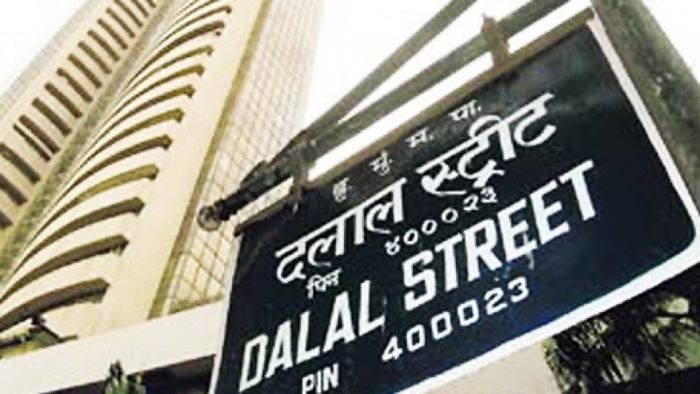
As Dalal Street gears up for the trading week starting June 24, investors and traders are poised to react to a series of critical events and developments. The immediate market response will hinge on the outcome of the GST Council Meet announced last Saturday. Additionally, the continuation of consolidation is anticipated, with attention firmly on global cues, including the quarterly US GDP data and the results of bank stress tests. Experts also predict heightened volatility due to the impending expiry of June derivative contracts.
The past week saw a phase of consolidation on Dalal Street, marked by limited volatility and a narrow trading range. The holiday-shortened week began with a break on Monday, June 17, in observance of Bakri Eid, reducing the number of trading sessions to four. The BSE Sensex was up 0.3 percent at 77,210, and the Nifty 50 rose 0.15 percent to 23,501, while the Nifty Midcap 100 and Smallcap 100 indices gained 0.4 percent and 1 percent, respectively.
Dalal Street Week Ahead:Key headlines to Watch!
● GST Council Meet Outcome
The market’s initial movements on Monday will be influenced by the decisions made during the GST Council Meet. Key announcements related to tax rates, compliance measures, and policy adjustments will be closely scrutinized by market participants. Any favorable changes or reforms aimed at boosting economic activity could spur positive sentiment, whereas decisions perceived as unfavorable might trigger cautiousness among investors.
● Global Cues: US GDP and Bank Stress Tests
Global economic indicators will play a crucial role in shaping market trends throughout the week. The upcoming release of the US GDP data for the March quarter of the current calendar year 2024, which is scheduled on June 27, is a significant event that will be watched globally.This data will provide insights into the health and trajectory of the US economy, influencing global market sentiment, including Dalal Street.
According to information, the economy grew 1.3 percent for the quarter as per the second estimate, which is in line with the market expectations, against 1.6 percent growth as per the advance estimate and 3.4 percent growth in the December quarter of 2023, impacted by slower consumer spending.
Alongside this, the results of the bank stress tests will offer a glimpse into the resilience of financial institutions, potentially impacting banking stocks and broader market sentiment.The results from the annual bank stress tests in the US, to be released on June 27 by the Federal Reserve, will also be closely watched by the market participants next week. Stress tests of 32 banks with $100 billion or more in total assets are one supervisory tool used to measure whether banks have adequate capital to absorb losses so that they can lend to households and businesses even in a severe recession. They evaluate banks' resilience by estimating losses, net revenue, and capital levels—which provide a cushion against losses—under a hypothetical recession scenario including a severe global recession with heightened stress in commercial and residential real estate markets, the Federal Reserve reportedly stated.
● Global Economic Data
Furthermore, the PCE(Personal Consumption Expenditures Price Index) prices, consumer real spending in Q1-CY24, weekly jobs data, durable goods orders, personal income & spending in May from the US, scheduled next week, will also be observed by the market experts. In addition, they will also look for cues from economic & services sentiment data in Europe; retail sales, unemployment rate, construction orders numbers from Japan; and Q1 GDP growth figures from the United Kingdom.
● Domestic Economic Data
On the domestic front, the fiscal deficit and infrastructure output for May will be announced on June 28. Bank loan & deposit growth for the fortnight ended June 14, as well as foreign exchange reserves for the week ended June 21, will also be released on the same day.
Current account and external debt position for the quarter ended March 2024, too, will be seen next Friday.
Analysts Perspective
Vinod Nair, Head of Research, Geojit Financial Services indicated that, expectations are high for some government actions aimed at stimulating consumption, a critical area to focus on. Strong institutional inflows post-government formation, have further bolstered market sentiment. However, profit booking emerged on concerns about the slow progress of the monsoon. Heatwaves in northern India remain a key concern,'' added Nair.
Market Outlook
The Indian stock market has continued its upward trajectory, buoyed by easing concerns over election outcomes and an overall improvement in global sentiment. The establishment of a coalition government has instilled a sense of optimism among investors, who are hopeful that the upcoming budget will adeptly balance growth initiatives with populist measures.
While the current market sentiment is largely positive, experts caution that the path ahead may still have its share of challenges. The global economic environment remains dynamic, and any adverse developments could impact market performance. Additionally, the new government's ability to implement its policy agenda effectively will be crucial in sustaining investor confidence.
(Writer is a Finance Research Analyst, based in Gandhinagar, Gujarat)

















Related Items
Putin credits PM Modi for growing Russia-India trade
India’s FTAs to unlock $15tn export potential,at 75% global trade
Canada, U.S. fail to strike tariff deal, trade war escalates