 Newsinc24 Team
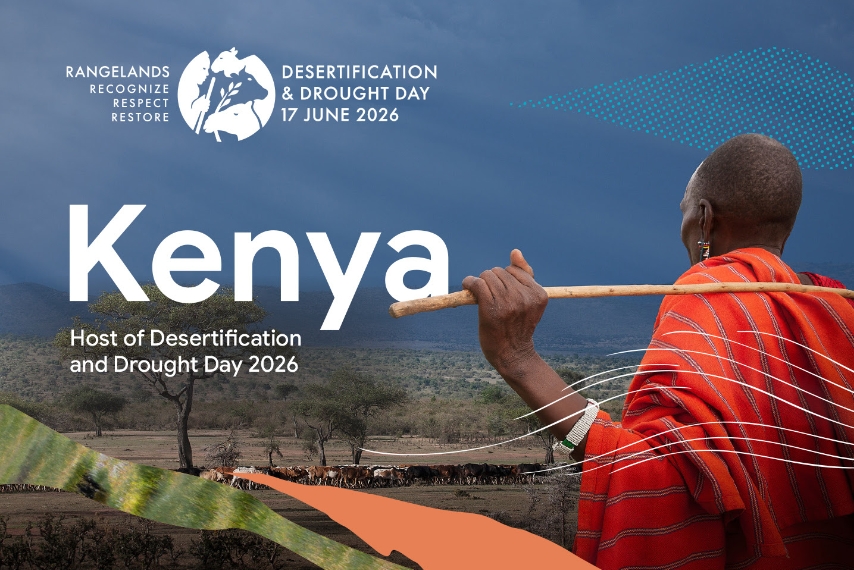
 Kenya is set to host this year’s Desertification and Drought Day 2026 on June 17, placing global attention on the growing crisis of land degradation and intensifying droughts, with a sharp focus on the world’s vital rangelands.Observed under the theme *“Rangelands: Recognize. Respect. Restore,”* this year’s campaign underscores the critical role rangelands play in sustaining livelihoods, strengthening drought resilience, and supporting global food systems. Events will take place across the country in the lead-up to the main celebration in Kilifi County, culminating at Vipingo Central Primary School.
The programme will feature participation from government officials, community leaders, pastoralists, youth groups, and international partners. Activities include ceremonial tree planting, exhibitions highlighting land restoration efforts, and cultural performances by local schools and communities.As host nation, Kenya is drawing attention to both the challenges confronting dryland regions and the practical, community-driven solutions emerging on the ground. Rangelands account for nearly 80% of Kenya’s land area and support millions of people, primarily through livestock and pastoral livelihoods. However, these ecosystems are increasingly strained by climate variability and land degradation.
Deborah M. Barasa, Cabinet Secretary for Environment, Climate Change and Forestry, said the event offers a crucial platform to spotlight both risks and solutions. “Kenya is honored to host this global observance. It is an opportunity to highlight the realities facing dryland communities while advancing a shared agenda on land restoration and drought resilience,” she noted.Echoing this, Yasmine Fouad of the United Nations Convention to Combat Desertification emphasized the growing urgency of protecting rangelands. She noted that these landscapes, often overlooked, are central to economies, food systems, and climate resilience, yet are degrading at an alarming pace in some regions.
Globally, rangelands cover more than half of Earth’s land surface and support nearly two billion people. They provide close to 70% of livestock feed, making them indispensable to food security. However, up to half of these ecosystems are already degraded or at risk, threatening water availability, livelihoods, and economic stability.
The financial toll is significant. Land degradation costs the global economy nearly $900 billion annually, while drought-related losses exceed $300 billion each year. Experts highlight that investments in land restoration and drought resilience offer high returns and remain among the most effective strategies for sustainable development.This year’s observance also coincides with the International Year of Rangelands and Pastoralists, further amplifying the role of pastoral communities and indigenous knowledge in managing these fragile ecosystems.
Momentum from the event will carry forward to the COP17 of the UNCCD, scheduled to take place in Ulaanbaatar from August 17 to 28, where global leaders will convene to advance coordinated action against desertification, land degradation, and drought.Originally established by the United Nations General Assembly in 1994, Desertification and Drought Day is marked annually on June 17, bringing countries together to promote awareness and drive solutions to some of the planet’s most pressing environmental challenges.



Related Posts
Karnataka turns to cloud seeding to tackle drought
India economy grows 7.8% in April-June, beats expectations
UNCCD COP17 pushes land restoration & stronger drought resilience