 Prithivi Kumar A R
India's culinary landscape is enriched by the versatile tubers that have been cultivated and consumed for centuries. Storage organs like potatoes, sweet potatoes, yams, colocasia (taro), and cassava not only help in feeding the population but also foster a wide range of cultural practices and culinary traditions—giving Indian food its unique character.
The history of tubers in India is a fusion of indigenous agricultural practices and foreign influences. The potato, for instance, was introduced to India by the Portuguese in the 17th century and gradually found a place in the national cuisine. In contrast, sweet potatoes and yams have been cultivated in India for centuries, particularly in the tribal regions of Odisha, Chhattisgarh, and the Northeastern states. These areas have preserved traditional cooking methods that highlight the versatility and cultural importance of these root crops.
In many rural communities, tubers have long served as a vital source of sustenance during lean farming seasons. Their ability to grow in poor soil, withstand drought, and remain edible for extended periods makes them crucial in ensuring food security. Beyond nutrition, tubers are also valued in Ayurveda for their medicinal benefits. Colocasia, for example, is known to aid digestion, while sweet potatoes—thanks to their low glycemic index—are considered beneficial for diabetics.
For decades, humans have employed various preservation techniques for tubers, including sun drying, fermentation, pickling, and roasting. These methods not only extend shelf life but also enhance flavor and edibility. Such preservation is not unique to tubers and is commonly practiced with many other Indian fruits and vegetables, including the lesser-known yet intriguing monkey jackfruit.
Monkey jackfruit (Artocarpus lacucha), also known as lakoocha or bahar, belongs to the Moraceae family. Indigenous to South and Southeast Asia, it thrives in tropical, humid regions of India, Bangladesh, Thailand, and Myanmar. Though nutritious and flavorful, it remains less popular than its cousin, the jackfruit.
The fruit is small, round, and spiny—green when unripe and yellowish-brown when mature. Its pulp is sour, mildly astringent, and turns subtly sweet as it ripens. In various regional cultures, monkey jackfruit is consumed fresh, pickled, made into jams, or dried into snacks. The seeds, too, are edible when roasted or boiled, offering yet another nutritional application.
Monkey jackfruit has deep roots in Indian culinary and medicinal traditions. In Ayurveda, its leaves, bark, and fruit are believed to aid digestion, reduce inflammation, and boost immunity. The tree’s durable wood is also used in making furniture and agricultural tools, underscoring its cultural utility.
Traditionally, it has been part of the indigenous diet in regions like Assam, Jharkhand, and parts of Bengal. There, the sour pulp is mixed with spices and salt to make chutneys and pickles, typically paired with plain rice meals. The fruit is also employed in folk medicine to treat diarrhea, ulcers, and skin conditions. Its distinctive taste and medicinal value have made it a staple in these communities, giving their cuisine a memorable twist.
Rich in essential nutrients such as vitamin C, potassium, iron, and antioxidants, monkey jackfruit is ideal for the health-conscious. Vitamin C boosts immunity, dietary fiber aids digestion, and antioxidants fight oxidative stress, lowering the risk of chronic diseases. Its protein- and mineral-rich seeds are valuable in protein-scarce diets, while traditional preservation methods such as fermentation and pickling enhance both shelf life and nutritional benefits.
Brining and Fermentation: The Science of Sourness
Brining and fermentation are time-honored techniques that transform monkey jackfruit into a tangy, long-lasting pickle. The process begins with brining—submerging peeled and sliced unripe fruit in a concentrated salt solution. Salt acts as a natural preservative, drawing out moisture and creating an environment hostile to spoilage-causing microbes.
The brined fruit is then sun-dried, further reducing its water content and intensifying its sourness. It’s later mixed with spices and oil, initiating fermentation—a natural process driven by lactic acid bacteria (LAB). These microbes break down natural sugars in the fruit to produce lactic acid, which imparts the signature sour flavor while inhibiting harmful bacteria.
Fermentation also breaks down complex carbohydrates, proteins, and fibers, deepening the flavor profile with layers of tartness and umami. This combination of brining and fermentation is a hallmark of traditional Indian food preservation, widely practiced in pickles and fermented dishes across the country. The result is a spicy, tangy, and aromatic pickle that not only captures the essence of monkey jackfruit but also celebrates India’s enduring culinary wisdom.
Monkey Jackfruit Pickle Recipe
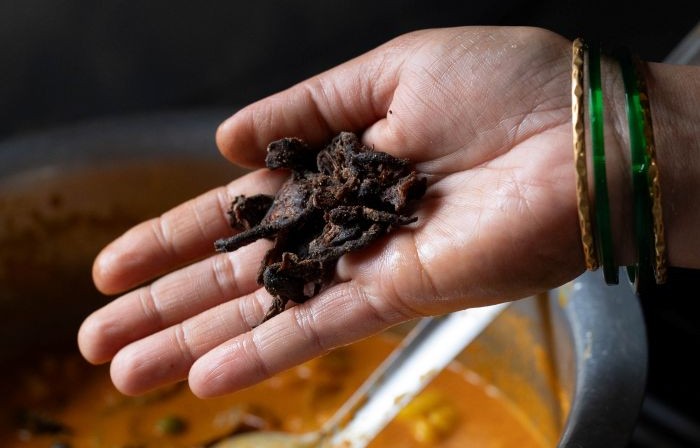
Monkey jackfruit may be lesser known, but its tangy complexity and rich nutritional value make it a hidden gem of Indian cuisine. The traditional brining, drying, and fermenting techniques bring out its best, preserving its essence for months. This recipe is a blend of heritage and modern taste, offering a delicious way to celebrate India’s legacy of culinary preservation. Stay tuned for more explorations into forgotten tubers and timeless recipes!.
Ingredients:
Mustard oil – 250 ml
Garlic – 30 g
Green chilli – 30 g
Ginger – 30 g
Panch phoran (a blend of cumin, mustard, fenugreek, nigella, and fennel seeds) – 25 g
Brined and dried monkey jackfruit – 200 g
Chili powder – 15 g
Coriander powder – 10 g
Mustard seeds – 10 g
Fenugreek seeds – 3 g
Method:
Roughly pound the garlic, green chilli, and ginger using a mortar and pestle. Set aside.
Heat mustard oil in a kadai (heavy-bottomed pan) until it reaches smoking point. Reduce the heat.
Add the panch phoran and allow it to splutter, releasing its aroma.
Add the pounded garlic, green chilli, and ginger mixture. Sauté until golden and fragrant.
Stir in the brined and dried monkey jackfruit, ensuring it is well-coated in the oil. Sauté for 5–7 minutes on medium heat.
Add chili powder and coriander powder. Mix thoroughly and cook until the raw aroma of the spices disappears.
Separately, dry roast the mustard seeds and fenugreek seeds until aromatic. Grind them to a fine powder and add this to the pickle mixture. Mix well.
Allow the mixture to cool completely.
Transfer to a clean, dry ceramic or glass jar. Seal and let it rest for a day at room temperature to allow the flavors to meld before serving.
Serving Suggestion:
Enjoy this tangy, spicy pickle with steamed rice, parathas, or curd rice for a burst of traditional flavor.
Author Details
Chef Prithivi Kumar A R
Designation: Assistant Professor, Department of Hotel Management, Christ University, Bengaluru
Co – Author Details
Estelle Mark
Designation: Student, Department of Hotel Management, Christ University, Bengaluru
Picture Courtesy – Spudnik Farms
(This story has been published under arrangement from Better Kitchen magazine)



Related Posts
Indian Navy hands over Command of CTF 154
Germany: Fire kills 3 Indian nationals,man arrested on murder suspicion
Meet Arshi Gupta: 9-year-old Indian Racer making F1 history