 Newsinc24 Team
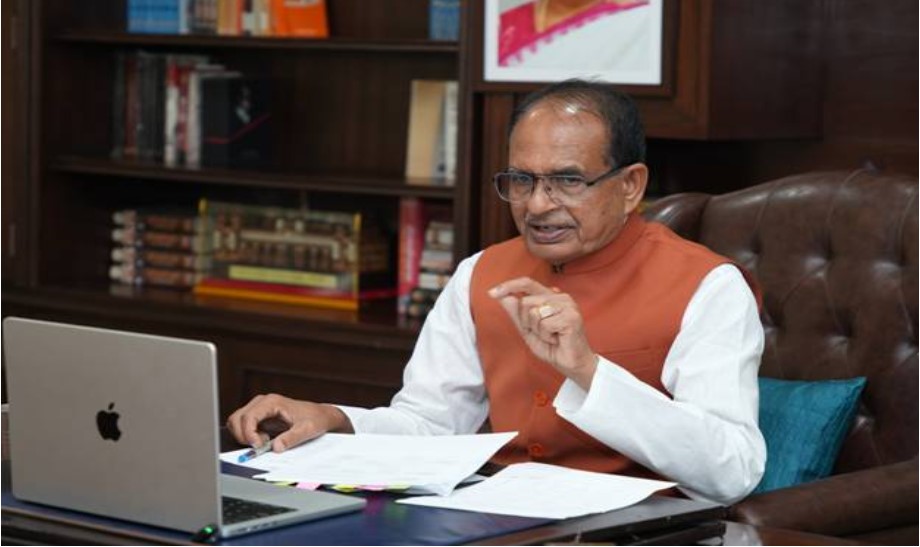
 Union Agriculture and Farmers Welfare Minister Shivraj Singh Chouhan has said that rainfall across the country is currently around 43 per cent below normal, while IMD forecasts indicate weak precipitation may continue through the first week of July. He stressed that the government is acting proactively rather than waiting for the situation to worsen.“We are preparing in advance, not waiting for a crisis. Every possible measure is being taken to minimise risks and protect farmers’ livelihoods,” the minister said on Tuesday.
The Ministry of Agriculture, in collaboration with ICAR, has identified around 315 districts that could face adverse impacts from deficient rainfall and limited irrigation coverage. Among them, 111 districts have been categorised as high-priority areas with irrigation coverage below 25 per cent. Another 76 districts fall under the medium-priority category with irrigation levels between 25 and 50 per cent, while 128 districts have relatively better irrigation infrastructure.
Most of the vulnerable districts are located across Madhya Pradesh, Maharashtra, Gujarat, Uttar Pradesh, Rajasthan, Karnataka, Bihar, Jharkhand, Telangana, Andhra Pradesh and Odisha. State governments and district administrations have been instructed to accelerate preparedness measures and ensure contingency plans are operational at the grassroots level. To tackle potential rainfall deficits, ICAR and ICAR-CRIDA have prepared District Agriculture Contingency Plans (DACPs) for all districts. These plans provide region-specific recommendations on crop selection, water management, crop diversification, and alternative livelihood options.
With water availability emerging as a major concern, the Centre has launched an extensive conservation and storage drive. States have been instructed to repair and strengthen ponds, reservoirs, streams, farm ponds, check dams, stop dams and temporary water-harvesting structures. Water conservation projects under the Mahatma Gandhi National Rural Employment Guarantee Act (MGNREGA) and upcoming rural development programmes will receive priority.
The minister said drinking water supply in vulnerable districts must remain the highest priority and directed states to consider transferring water from surplus regions if necessary. The Centre has advised states to promote short-duration and low-water-consuming crop varieties. Farmers are being encouraged to diversify cropping patterns and adopt intercropping and mixed farming systems to reduce risk. Special emphasis is being placed on pulses, millets (Shri Anna), and oilseeds, which perform relatively well under moisture-stressed conditions. States have also been instructed to swiftly shift to alternative crops if monsoon delays persist beyond the normal sowing window.









Related Items
Keralam Govt in talks with states, Discoms to purchase power: CM
India’s trade deficit narrows to $26.86 bn as exports rise 26% in Aug
Six states sign agreement for rejuvenation of Yamuna River