 Newsinc24 Team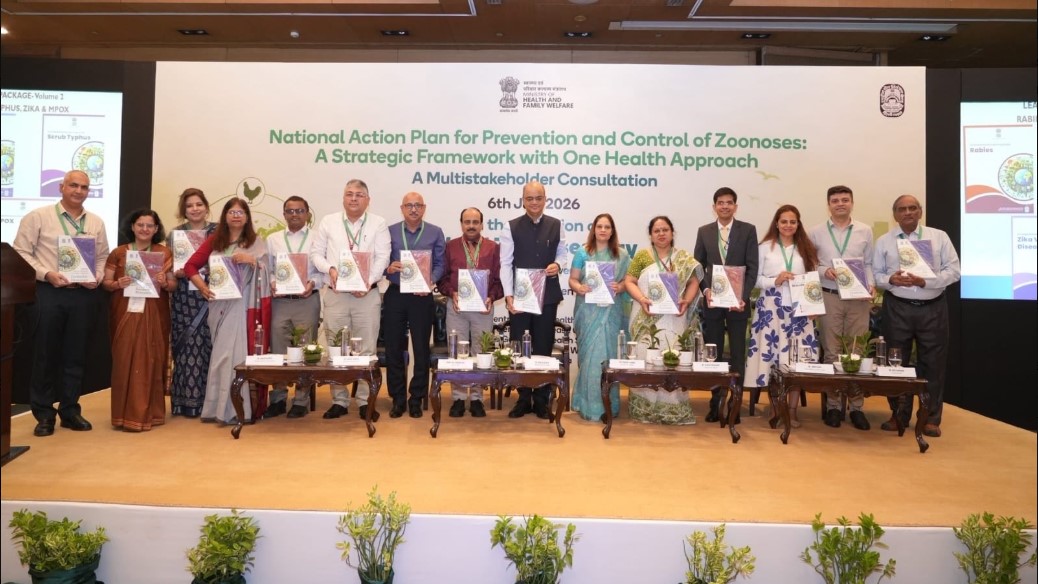
The Union Ministry of Health and Family Welfare on Monday organised a National Multistakeholder Consultation on the National Action Plan for Prevention and Control of Zoonoses, bringing together experts from the human health, animal health, wildlife, environmental, academic and development sectors to strengthen India's preparedness against zoonotic diseases through a One Health approach.According to agency reports, the consultation focused on enhancing inter-sectoral coordination and developing a comprehensive strategy for the prevention, surveillance and control of zoonotic diseases.
#HealthForAll
— Ministry of Health (@MoHFW_INDIA) July 6, 2026
Union Ministry of Health & Family Welfare organized National Multistakeholder Consultation on National Action Plan for Prevention and Control of Zoonoses on the occasion of World Zoonoses Day
Government Launches Learning Resource Package and E-Learning Modules to… pic.twitter.com/4H2ZzC1evt
Addressing the gathering, Additional Secretary in the Ministry of Health and Family Welfare Rakesh Gupta said zoonotic diseases continue to pose significant public health, animal health and economic challenges. He said the proposed National Action Plan would strengthen governance, integrated surveillance, laboratory systems, preparedness, risk communication, research, innovation and sustainable financing, while also supporting states and Union Territories in preparing context-specific action plans.
Additional Director General of Health Services Sujata Chaudhary emphasised sustained coordination among ministries and stakeholders to operationalise the One Health approach, while National Centre for Disease Control (NCDC) Director Ranjan Das highlighted the growing public health significance of zoonotic diseases and the need for stronger integrated disease surveillance.During the inaugural session, the ministry launched two technical resources under the National One Health Programme—a Learning Resource Package covering 10 priority zoonotic diseases and a suite of e-learning modules to strengthen the capacity of healthcare professionals, veterinarians, public health officials and frontline workers involved in disease surveillance and response.
Technical sessions during the consultation reviewed key components of the draft National Action Plan, including governance, surveillance, laboratory strengthening, outbreak response, research, workforce development and financing. Participants also stressed expanding sentinel surveillance, strengthening laboratory networks, improving data sharing through IHIP 2.0, and leveraging digital technologies and artificial intelligence for early disease detection and outbreak prediction.The ministry said recommendations from the consultation will be incorporated into the final National Action Plan, which will serve as India's strategic framework for coordinated multisectoral action, strengthen national health security and enhance preparedness against future public health emergencies.










Related Items
SEMICON 2026: India preparing today for the chips of tomorrow: PM
PM Modi inaugurates SEMICON India 2026, engages with participants
India vows to protect energy security, warns of impact on US ties