 Ira Singh
Chief Economic Advisor (CEA) V. Anantha Nageswaran on Friday noted that India’s pursuit of sustainability and climate goals must not undermine its economic growth trajectory, highlighting the “very crucial and critical trade-offs” involved in the country’s energy transition, fiscal stability, and banking soundness.Speaking at the Bengal Chamber AGM and Indo-Pacific Economic Conclave, Nageswaran said India has been “a standout performance among the G20 countries in mitigation,” but achieving long-term sustainability demands acknowledging difficult choices.“For a country aspiring to become a developed economy by 2047, energy transition and dealing with climate change must not consign not just India but also other developing countries in the Indo-Pacific and Africa to a state of permanent underdevelopment,” he remarked.
Carbon Budget and Development Priorities
The CEA described the carbon budget allocated to developing countries as “arbitrary,” arguing that it fails to account for the “overdrawn carbon budget by today’s developed countries over the last 200 years.” He stressed that the Sustainable Development Goals (SDGs), framed prior to the Paris Agreement, should take precedence over climate targets in the near term.“It is appropriate that both temporarily and logically SDG goals take precedence over climate goals,” he noted.
Fiscal and Banking Risks
Nageswaran indicated of significant fiscal implications in a rapid shift away from fossil fuels, pointing out that governments in India currently collect revenues of about ₹7.5 lakh crore annually from petrol, diesel, and coal cess. A premature phase-out, he said, could erode vital tax resources.He further flagged risks to banking stability, noting that retiring thermal power plants could create stranded assets, triggering a chain reaction of undercapitalised banks. “It is appealing to say development and energy transition are not mutually exclusive. History tells us there are times when they are mutually exclusive and we need to make choices both in terms of sequence and priorities,” he added.
Policy Prescriptions and Global Responsibilities
On the way forward, the CEA urged developed nations to share finance, technology, and innovation, treating technology as “public commons for the world to benefit from.” He also called for India to diversify its renewable strategy beyond solar and wind to include hydro and nuclear power.Pointing to the Union Budget 2025’s announcement on opening nuclear energy to private participation and amending the civil nuclear liabilities act to enable foreign collaboration, he said this could strengthen India’s energy diversification efforts.
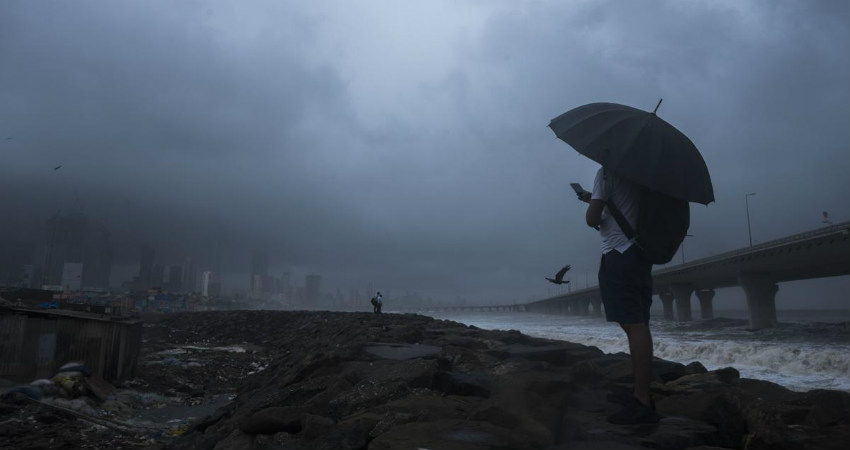
Nageswaran expressed doubts over the feasibility of limiting global warming to 1.5 degrees Celsius above pre-industrial levels, given the slow pace of mitigation in the US and Europe. Instead, he underscored climate adaptation as a “more practical, realistic and viable goal” and suggested investments in seawalls, coastal restrictions, energy efficiency, and sustainable public transport.The CEA emphasized the importance of reviving traditional practices such as rainwater harvesting and temple tanks to support a circular economy. Stressing that India cannot afford the “high per capita vehicle ownership and electricity-intensive living standards of the West,” he urged greater citizen participation and investment in public goods for a sustainable future.
(Business Correspondent)













Related Items
India, Bengal not safe until borders are secured: Amit Shah
Pakistan appoints Asim Munir as first Chief of Defence Forces
Trump threatens 'tremendous' economic costs on Iran partners