 Newsinc24 Team
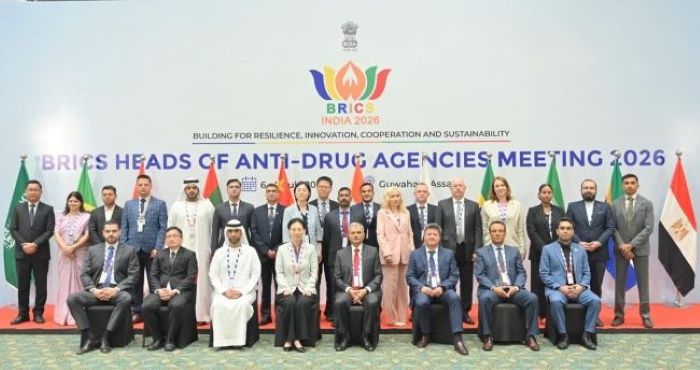
 Heads of anti-drug agencies from BRICS countries on Tuesday adopted the 'Guwahati Declaration' at the end of a two-day meeting in Assam's Guwahati, reaffirming their commitment to strengthen cooperation to combat narcotics trafficking and related transnational organised crimes. The declaration underscored the need for timely exchange of information, intelligence and best practices among member countries, in accordance with national laws and international obligations, an official release said. The declaration also emphasised the promotion of innovative technologies, digital tools and data-driven approaches to strengthen law enforcement and regulatory efforts against drug trafficking, it added.
Expressing concern over the rapidly evolving nature of the global drug trade, the BRICS countries highlighted the growing menace of synthetic drugs and New Psychoactive Substances (NPS), diversion of precursor chemicals, misuse of cryptocurrencies and emerging technologies, and the increasing use of maritime routes and digital platforms by transnational criminal networks. The member countries also stressed the need for evidence-based programmes to reduce drug demand, particularly among children and youth, alongside stronger rehabilitation and public awareness initiatives.
Leading the Indian delegation, Director General of the Narcotics Control Bureau (NCB) Anurag Garg called on BRICS anti-drug agencies to build a partnership based on speed, trust and real-time intelligence sharing to dismantle transnational drug cartels. Highlighting India’s anti-drug strategy under the Centre’s zero-tolerance policy, Garg said the country has adopted a 2026-2029 Network-Centric Roadmap aimed at dismantling entire trafficking networks rather than targeting individual offenders. The strategy also focuses on preventing drug abuse through awareness campaigns and strengthening treatment and rehabilitation.
Garg said today’s drug trafficking networks operate across borders without jurisdictional barriers, making international cooperation indispensable. He proposed the creation of a BRICS Virtual Working Group and enhanced cross-border training initiatives to improve coordinated enforcement.
The Declaration assumes particular significance for the Northeast, which has emerged as a major transit corridor for heroin, methamphetamine and other synthetic drugs smuggled from Myanmar through the porous international border. States such as Assam, Mizoram, Manipur, Nagaland and Arunachal Pradesh have witnessed frequent seizures of narcotics worth hundreds of crores in recent years.













Related Items
BRICS countries to expand opportunities for youth in education, skills
Ulaanbaatar declaration calls for stronger local action on land resilience
BRICS Tourism Ministers meet concludes, Adopt 'Jaipur Declaration'