 Newsinc24 Team
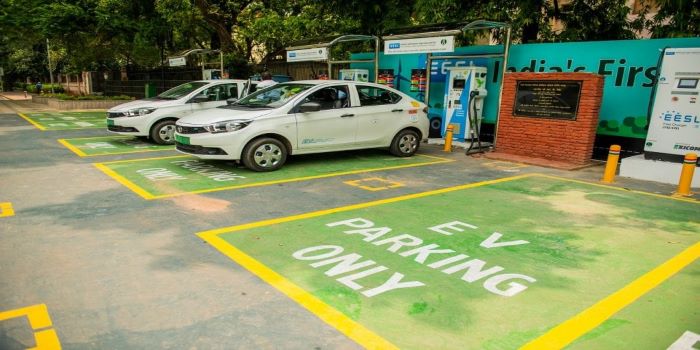
 Centre has promulgated revised consolidated Guidelines and Standards for Charging Infrastructure for Electric Vehicles. These guidelines are exhaustive and include provisions for individual owners of Electric Vehicles as well as Public Charging Stations. Owners may charge their Electric Vehicles at their residence and offices using their existing electricity connections. The guidelines provide that any individual or entity is free to set up public charging stations without the requirement of a license. These can be set up provided that such stations meet the technical, safety and performance standards and protocols laid down by Ministry of Power, Bureau of Energy Efficiency and Central Electricity Authority from time to time.
An exhaustive list of compliance requirements for Public Charging Station have also been outlined. The guidelines provide not only the prevailing international charging standards available in the market but also the new Indian charging standards. In order to make charging stations financially viable, a revenue sharing model has been put in place for land used.Power Ministry said that these guidelines and standards have been promulgated with the objective of enabling faster adoption of electric vehicles in India by ensuring safe, reliable, accessible and affordable Charging Infrastructure and eco-system. Guidelines provides that at least one Charging Station shall be available in a grid of 3 Km X 3 Km. Further, one Charging Station shall be set up at every 25 Km on both sides of highways/roads. For long range EVs and/or heavy duty EVs like buses/trucks etc., there shall be at least one Fast Charging Station with Charging Infrastructure Specifications every 100 Kms, one on each side of the highways/road located preferably within/alongside the Public Charging Stations.



Related Posts
TN to set up 1,600 MW thermal power station under PPP model
Tamil Nadu: Udhayanidhi Stalin released on police station bail
IITM, ARIES partner to set up climate monitoring station in Himalayas