 Newsinc24 Team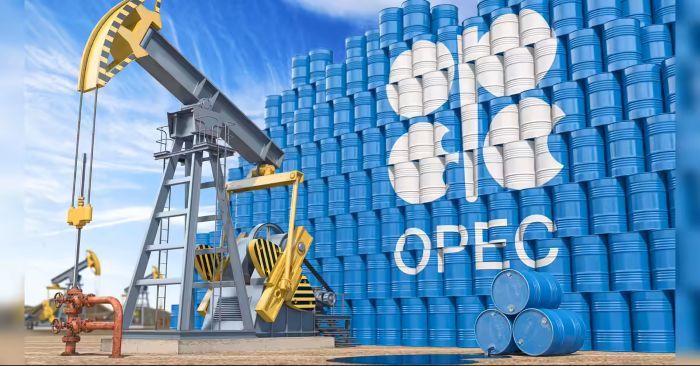
OPEC+ has agreed in principle to maintain steady oil output despite rising political tensions among key members and widening geopolitical uncertainty. The eight participating countries, Saudi Arabia, Russia, the United Arab Emirates, Kazakhstan, Kuwait, Iraq, Algeria and Oman, collectively pump about half of the world’s oil. They had raised output targets by around 2.9 million barrels per day between April and December 2025, equivalent to nearly three percent of global demand, before agreeing in November to pause further increases for January, February and March. Oil prices fell more than 18 percent in 2025, their steepest annual decline since 2020, amid concerns over oversupply. On Saturday, the United States captured Venezuelan President Nicolas Maduro and U.S. President Donald Trump said Washington would take control of the country until a transition to a new administration becomes possible, without saying how this would be achieved.
Tensions between Saudi Arabia and the United Arab Emirates flared last month over the conflict in Yemen, after a UAE-aligned group seized territory from the Saudi-backed government, triggering what has been described as the biggest rift in decades between the two former allies.
OPEC has previously managed internal disputes by prioritising market stability, but it is now facing multiple challenges. Russian exports are under pressure from U.S. sanctions linked to the war in Ukraine, while Iran is facing protests and U.S. threats of intervention. Geopolitical uncertainty has deepened further after the United States captured Venezuelan President Nicolas Maduro. Venezuela holds the world’s largest proven oil reserves, but production has sharply declined due to years of mismanagement and sanctions, and no meaningful production increase is expected despite trump’s assurance of increased output.
Venezuela has the largest known oil reserves in the world, with the equivalent of 300 billion barrels. It tops the No. 1 OPEC+ oil-producing country, Saudi Arabia. However, the country only produces a million barrels a day or roughly 1% of the global output compared to the 1970s when it produced 7 per cent. The US, meanwhile, produces 13 million barrels a day. Venezuela’s top customer is China. If the government change is successful in Venezuela, the country’s exports could grow. The increased production in oil would bring down global oil prices, which is something that Saudi Arabia is not looking forward to, reported Bastille Post.
Related Posts
India's core sector output slows to 4.8% in August
OPEC+ cartel opts to keep October production targets unchanged
India’s core industrial output growth slows to 5.4% in July