 Newsinc24 Team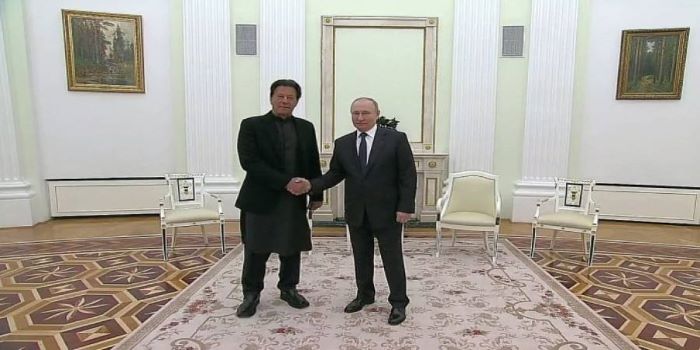
Russia has criticised the US for making "another attempt of shameless interference" into the internal affairs of Pakistan, saying that prime minister Imran Khan was paying the price for his disobedience to Washington and was being punished for visiting Moscow earlier this year. Russia's Foreign Ministry spokeswoman Maria Zakharova said despite pressure from the US to cancel his visit to Moscow, Khan went ahead with his trip. Russian diplomat said that the sequence of events left no doubt that Washington had "decided to punish a disobedient Imran Khan", which also explained why a number of members from Khan's ruling coalition decided to switch sides and shift their allegiances ahead of the April 3 no-trust vote.
Imran Khan met Russian president Vladimir Putin at the Kremlin in Moscow on February 25, the day when Russian forces launched a full-scale invasion of Ukraine. Khan became the second Pakistani prime minister to visit Russia in the last 23 years, the last being Nawaz Sharif in April 1999. Imran Khan had alleged that the foreign power was upset over his visit to Russia, but it was backing ally India which is importing oil from Russia. Zakharova said Moscow was keenly watching the events unfolding in Islamabad over the last three days as well as the events preceding it. In her commentary, she exuded hope that the Pakistani voters would be well-informed about these circumstances when they come to vote in the elections that are scheduled to be held 90 days after the dissolution of the National Assembly.
Meanwhile, Pakistan's election commission has expressed its inability to hold general elections within three months due to legal, constitutional and logistical challenges, according to a media report on Tuesday. According to the Dawn newspaper, a senior official of the Election Commission said due to fresh delimitation of constituencies, particularly in Khyber Pakhtunkhwa where the number of seats was increased under the 26th Amend ment, and bringing district-and constituency-wise electoral rolls in conformity were the major challenges, the preparations for the general elections would require some six months. The official said procurement of election material, arrangement for ballot papers and appointment and training of polling staff were among the other inherent challenges.









Related Items
Pakistan: 'Legal Coup' gives absolute power to Field Marshal Munir
Trump renamed Lake Ontario as Lake of America, US changing: Carney
Putin credits PM Modi for growing Russia-India trade