 Uday Kumar Varma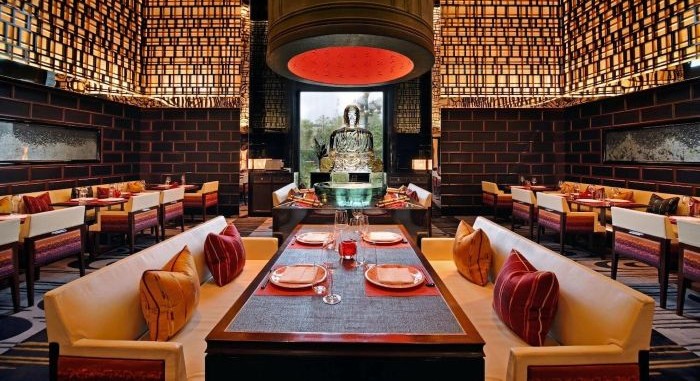
The Star Arrives in India: Presence, Practice, and the Limits of Adoption
If the Michelin star’s journey across continents demonstrated its ability to travel, adapt, and recalibrate, its encounter with India introduces a different order of complexity. Here, the question is not simply whether excellence exists—few would doubt that—but whether a system designed to recognise a particular form of excellence can meaningfully engage a civilisation whose food cultures were never organised around visibility, authorship, or professionalised display.
Before entering questions of philosophy and cultural limits, it is necessary to look carefully at the facts: where Michelin stands in relation to India today, how it operates, what it recognises, and what remains outside its frame.
A Presence Without a Guide
Unlike France, Japan, or the United States, Michelin does not yet publish a comprehensive India Guide. There is no annual red book mapping cities, categories, and stars across the country. This absence is not accidental; it reflects both institutional caution and structural difficulty.
Michelin’s engagement with India is currently fragmentary and indirect, expressed through: Recognition of Indian restaurants abroad, Selective acknowledgment of fine-dining establishments within Indian metros, and Occasional inclusion of Indian restaurants in Michelin-adjacent listings and collaborations In other words, Michelin is present—but not fully anchored.
Indian Cuisine Abroad: Early Recognition
Curiously, some of the earliest and most visible Michelin recognitions of Indian cuisine occurred outside India. This is significant.
In London, restaurants such as Gymkhana (two Michelin stars), Trishna (one star), and Benares (one star) have played a crucial role in reshaping global perceptions of Indian food. These establishments demonstrated that Indian cuisine could be: technically precise, ingredient-forward, restrained rather than excessive, and presented within Michelin’s evaluative grammar
Importantly, these restaurants did not abandon Indianness; they curated it. Regional specificity, disciplined spice usage, and narrative menus allowed Michelin inspectors to engage Indian food through familiar evaluative lenses.
Similar recognition has followed in cities such as New York, Singapore, and Dubai, where Indian chefs operate within globally legible fine-dining ecosystems. In these contexts, Michelin found not only excellence, but translation.
Within India: Selective Alignment
Inside India, Michelin’s footprint is most visible in Mumbai and Delhi, cities with: International dining cultures, Globally trained chefs, and Professional kitchens designed for consistency and repeatability.
Restaurants such as Indian Accent—with its modernist reinterpretations of Indian classics—have long been regarded as Michelin-compatible in spirit, if not formally starred. Its emphasis on technique, controlled innovation, and narrative coherence places it squarely within the system’s evaluative comfort zone.
In Mumbai, Masque represents another important alignment. Built around seasonal tasting menus and indigenous ingredients, Masque exemplifies a new Indian fine-dining idiom—rooted in place, yet structured for inspection. The restaurant’s methodical sourcing, calibrated flavours, and disciplined presentation resonate closely with Michelin’s core criteria.
These establishments matter. They show that Michelin can recognise Indian excellence when it appears within a professionalised, authored, and repeatable framework.But they also reveal a constraint.
The Narrow Beam of Recognition
What Michelin currently recognises in India is best described as a vertical slice—elite, urban, curated, and relatively rarefied. This may be a criticism of its limitations, but more an objective observation.
-The overwhelming majority of Indian food culture unfolds elsewhere:
-In homes, where recipes are inherited rather than invented
-On streets, where brilliance is instinctive and responsive
-In temples and community kitchens, where fidelity outweighs novelty
In seasonal and ritual contexts, where food marks time rather than ambition
These forms of cooking do not organise themselves around menus, chefs, or consistency. They do not aspire to permanence or professional judgement. They are situational, relational, and often anonymous.
Michelin’s criteria—clarity of authorship, consistency across visits, controlled presentation—are ill-equipped to engage such abundance.
Bib Gourmand and the Indian Possibility
The Bib Gourmand category, designed to honour high-quality food at moderate prices, theoretically offers Michelin a bridge into India’s everyday food cultures. In many ways, this category seems tailor-made for the country’s culinary landscape.
Yet even here, challenges persist.
Street food in India is deeply local and transient. A vendor’s excellence may depend on weather, mood, crowd, or season. What is extraordinary one day may be merely good the next—and that variability is not a flaw, but a feature.
To recognise such food meaningfully would require Michelin to relax expectations of uniformity and permanence—an institutional shift that is neither simple nor guaranteed.
Why the Caution Persists
Michelin’s reluctance to expand rapidly in India stems from multiple factors. The sheer scale and diversity of cuisines, informal economies that resist documentation, food practices embedded in caste, ritual, and domestic life, and the absence of a unified fine-dining culture across regions comprise some of these factors.
To move too quickly would risk misrepresentation; to move too slowly risks irrelevance. Michelin finds itself, in India, unusually self-aware of its limits.
A System at the Edge of Its Grammar
And yet, this moment is not merely about Michelin’s limitations—it is also about its possibilities. India represents perhaps the most rigorous test of whether a global rating system can evolve beyond its European origins without losing coherence. It asks whether excellence can be recognised without being standardised, and whether value can be acknowledged without being hierarchised.
At present, Michelin in India operates carefully, selectively, and conservatively—recognising what it can confidently evaluate, while leaving vast territories untouched.
This restraint may disappoint some, but it also reflects a rare institutional humility.
Preparing the Ground for a Deeper Question
What, then, should one make of Michelin’s Indian presence today?
It is real, but limited. Serious, but partial. Admirable in intent, yet constrained in reach.
Most importantly, it prepares us for a larger inquiry—one that moves beyond mapping presence to questioning meaning.
For if Michelin’s star shines only on certain kitchens in India, what remains unseen? And what does that invisibility tell us—not just about the system, but about the nature of taste, memory, and civilisation itself?
Those questions belong to the final part of this journey.
(Uday Kumar Varma is an IAS officer. Retired as Secretary, Ministry of Information & Broadcasting)
Related Posts
Trump backs India-Middle East-Europe corridor amid Iran war
Fitch Ratings raises India’s FY27 GDP growth forecast to 6.9%
Asian Games: India beat Japan by two runs in rain-hit T20I