 Krishan Gopal Sharma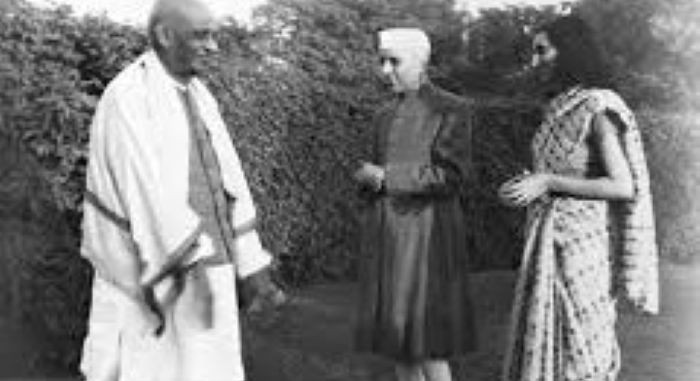
Remembering a time when power trusted its people
There was a time when leaders did not hide behind barricades or bulletproof glass. They walked among their people, spoke with them, and risked everything to remain human in the exercise of power. Proximity was not recklessness; it was a moral choice. When leaders trusted the people, the people, in turn, trusted them. Today, with technology capable of unprecedented protection and risk management, one wonders why closeness has become so rare, and why absence feels inevitable.
India was born into chaos. Partition had rent communities apart, leaving millions displaced and fearful. Leadership risked far more than criticism—it risked life itself. Yet in those formative years, leaders chose nearness. Jawaharlal Nehru spoke to crowds not as a distant figure but as one sharing anxieties. Sardar Vallabhbhai Patel moved through volatile regions with courage, not barricades. Mahatma Gandhi walked into neighbourhoods scarred by violence, believing that moral authority could still hold sway. As he once said, “The moment there is suspicion about a person’s motives, everything he does becomes tainted.”
Indira Gandhi, too, exemplified this principle in the aftermath of Operation Blue Star. Advised to remove Sikh bodyguards for her safety, she reportedly replied, “They are my people.” She refused to categorise citizens by fear, choosing moral courage over absolute security. The assassination that followed was tragic and irreversible, yet her choice raises an enduring question: should leadership protect itself by withdrawing from its people, or by reinforcing the bonds of trust that make society resilient?
Grief takes on a different quality when a leader dies among the people. After the deaths of Gandhi, Indira Gandhi, and Rajiv Gandhi, the nation’s sorrow was not just about loss—it was personal, collective, inward. Citizens seemed to whisper: he trusted us; she did not fear us; why could we not protect them? This grief reflects a subtle truth: leaders who walk among citizens create relationships beyond authority, inviting shared responsibility and moral investment.
What drew people to such leaders was not invincibility but honesty. They did not claim to be incapable of error. Indira Gandhi later acknowledged the Emergency as a mistake and submitted herself to the people again through elections, facing defeat and imprisonment. Expressions of regret after tragedies, like the anti-Sikh riots, mattered because they recognised suffering. Recognition does not undo harm, but it validates experience and preserves the ethical integrity of governance. Silence, by contrast, leaves wounds unhealed.
Somewhere along the way, leadership changed posture. Technology advanced. Security systems improved. Risk management became precise. Yet presence declined. Roads are cleared. Shops shut. Offices lock. Citizens, once partners in governance, are increasingly treated as risks to be managed. Security, which could have enabled closeness, became the justification for absence. And with absence came a subtle erosion of legitimacy.
Today, leaders are often described as “popular”—by votes, polls, and social media metrics. But popularity is not trust. Elections decide who governs; trust decides how governance is experienced. Electoral legitimacy alone cannot shield power from instability or alienation. Leaders insulated by procedure and perception become paradoxically more fearful. Trust is quieter. It is felt when criticism does not dissolve belonging, when authority does not need to announce its strength.
The shift is not entirely the fault of leaders. Administrative systems reward certainty over humility. Media punishes nuance. Societies often demand perfection without forgiveness. Distance has become normal. Silence has become acceptable. In this quiet, slow erosion, democracy thins out—not through dramatic collapse, but through habituated detachment.
Are there no Nelson Mandelas today? Perhaps the question is not absence but survival: would the world allow one to survive? Mandela’s strength lay in moral restraint, forgiveness, and the courage to relinquish power. Such qualities are costly in a world obsessed with optics, instant outrage, and certainty. Yet moral leadership does not disappear. It waits. It re-emerges when societies remember that power need not fear the people it governs.
Ironically, our age has more tools than ever to humanise leadership. Advanced security, discreet protection, and intelligent risk management could allow leaders to walk among people safely. Yet these tools are often used to perfect separation. Technology has made distance convenient, not necessary.
And yet hope persists. It lives in memory, in comparison, in the discomfort we feel when we realise what we have lost. It lives whenever a leader chooses to step into a crowd unscripted, vulnerable, human. Power is strongest when it is not afraid of its own people—shielded not by barricades, but by trust; not by silence, but by shared responsibility.
We may not recreate the world of yesterday, but we can rediscover its moral courage. That courage begins not with leaders alone, but with citizens who remember—and refuse to forget—what humane power once looked like. As Václav Havel observed, “Power does not corrupt. Fear corrupts… perhaps the fear of a loss of power.” The greatest leaders were never afraid of their people. Perhaps the greatest challenge of our time is to ensure that neither leaders nor citizens are ruled by fear, but by trust.
(Views are personal) (The writer is a retired officer of the IIS and a former Editor-in-Charge of DD News and AIR News , India’s national broadcasters, as well as Media-link Information Officer of PIB attached to various ministries. He has also worked as an international media consultant with UNICEF Nigeria and contributes regularly to various publications in India and abroad)






Related Items
Gandhi manuscript sells for record Rs 16.2 cr at Saffronart auction
Gujarat seeks global tech, manufacturing ties,during CM Patel's US Visit
Mallikarjun Kharge, Rahul Gandhi skip Red Fort Independence Day event