 Newsinc24 Team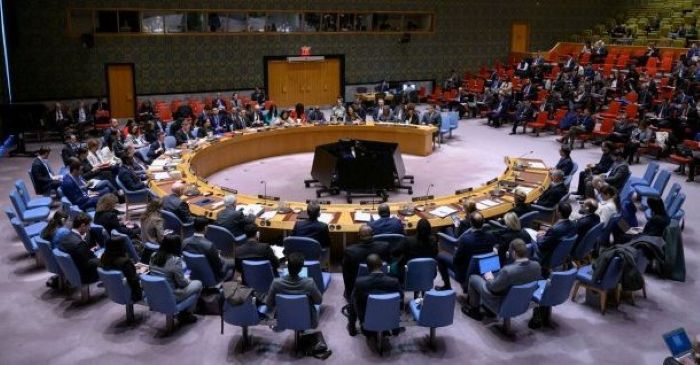
The United Nations Security Council has held an emergency meeting to discuss deadly protests in Iran amid threats by United States President Donald Trump to intervene militarily in the country. Members of the 15-member UN body heard from Iran’s deputy UN representative, who warned at the meeting on Thursday that Iranians did not seek a confrontation but would respond to US aggression, and accused Washington of “direct involvement in steering unrest in Iran”. Iran’s deputy UN envoy Gholamhossein Darzi told the council that his country “seeks neither escalation nor confrontation”. “However, any act of aggression, direct or indirect, will be met with a decisive, proportionate, and lawful response under Article 51 of the UN Charter,” Darzi said.
US representative Mike Waltz criticise the Iranian government’s response to the protests, noting that the ongoing internet blackout in Iran made it hard to verify the true extent of the crackdown by authorities there. “The people of Iran are demanding their freedom like never before in the Islamic Republic’s brutal history,” Waltz said, adding that Iran’s claims that the protests were “a foreign plot to give a precursor to military action” were a sign that its government was “afraid of their own people”.
UN Assistant Secretary-General Martha Pobee briefed the council, saying that the “popular protests” in Iran “have rapidly evolved into nationwide upheaval, resulting in significant loss of life” since beginning close to three weeks ago. She added that human rights monitors have reported “mass arrests” in Iran, “with estimates exceeding 18,000 detainees as of mid-January 2026”, but noted that the “UN cannot verify these figures”. She called on Iran to treat detainees humanely and “to halt any executions linked to protest-related cases”. “All deaths should be promptly, independently, and transparently investigated,” Pobee added.
Thursday’s meeting came as the US imposed further sanctions against the Iranian leadership, including Ali Larijani, the secretary of Iran’s Supreme National Security Council (SNSC), and several other officials, who it said were the “architects” of Tehran’s “brutal” response to the demonstrations. Iran has already been under heavy sanctions for years, further worsening the economic crisis that has, in part, spurred the recent wave of public protests.


Related Items
US hits 5 Iran oil tankers, sanctions all Iranian airlines
Amit Shah chairs 28th Western Zonal Council meeting in Goa
US sanctions Turkish bank to cut Iran's financial lifelines