 Newsinc24 Team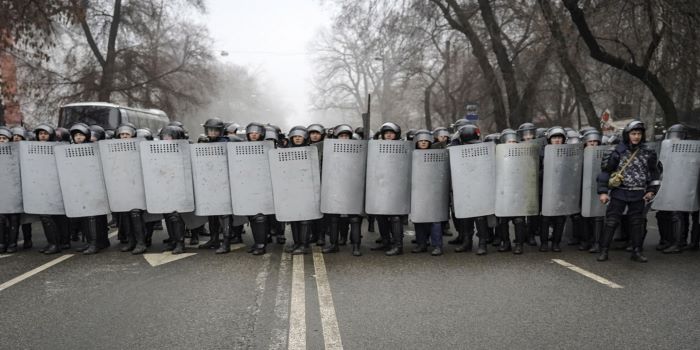
Collective Security Treaty Organization (CSTO), a Russia-led military alliance, has said, that it will dispatch peacekeeping forces to Kazakhstan after the country’s President asked for help in controlling protests that escalated into violence. The protests in the Central Asian nation were first sparked by rising fuel prices, but have broadened to include other political grievances. Protesters in Kazakhstan’s largest city Almaty stormed the Presidential Residence and the mayor’s office yesterday and set both on fire. The Kazakh Interior Ministry said eight police officers and national guard members were killed in the unrest and more than 300 were injured. Prime Minister Askar Mamin resigned amid the protest.
President Kassym-Jomart Tokayev claimed the unrest was the work of foreign-trained terrorist gangs. He has imposed a nationwide state of emergency that includes an overnight curfew and a ban on mass gatherings and has vowed a tough response to the protests. In a televised speech, President Tokayev said he had sought help from the CSTO - a Moscow-based alliance of six former Soviet countries, to help stabilise the country. Hours later, the CSTO’s council approved sending an unspecified number of peacekeepers.The US State Department said, it is closely following the situation in Kazakhstan and urged for restraint by authorities and protesters alike. President Tokayev is only the second person to lead Kazakhstan since it declared independence in 1991.
Many cities across Kazakhstan have been witnessing unrest as thousands of protesters took to streets against the sharp increase in price of liquefied petroleum gas (LPG), which most Kazakhs use as car fuel. The price rise came as the country ended a gradual transition to electronic trading for LPG to halt state subsidies for fuel and let the market dictate prices.Even though the government announced on Tuesday that fuel prices will be reduced to a level even lower than before the increase, and on Wednesday President Kassym-Jomart Tokayev sacked his cabinet, the protests are continuing. The fuel market reform was first broached in 2015 came into effect at the start of the month. It sought to remove state price caps for butane and propane - often referred to as 'road fuels for the poor' due to their low cost - while making sure the local market was well supplied. The anger among the public was already running high because of rising inflation which was closing in on 9% year-on-year - the highest in more than five years - leading the central bank to raise interest rates to 9.75%.






Related Items
ABVP protests in Bengaluru over KPSC irregularities; several detained
Putin credits PM Modi for growing Russia-India trade
30 US Universities under scrutiny over ties with China, Russia & Iran