 Ira Singh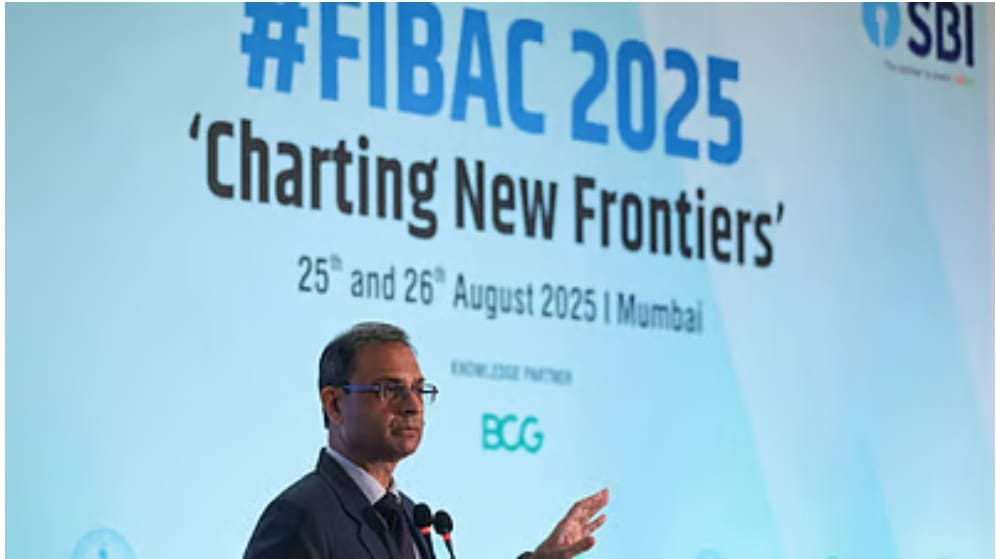
The Reserve Bank of India (RBI) will step in with policy measures to support sectors such as gems and jewellery, textiles, apparel, shrimps, and micro, small and medium enterprises (MSMEs), which are expected to bear the brunt of recently announced US tariffs, Governor Sanjay Malhotra said on Monday.“The government is looking into it. We, on the part of RBI, have been on an easing cycle. We had cut the repo rate by 100 basis points to provide ample liquidity to the economy,” Malhotra said, speaking at a banking conference in Mumbai. “Whatever support is required from us for the growth of the economy, including those sectors which are impacted more, if it so happens, we would not be found wanting in our job.”
US President Donald Trump recently announced a 50% tariff on Indian goods, alongside a 25% secondary tariff linked to India’s continued purchase of Russian oil. The secondary tariff will come into effect on August 27. The move has strained trade relations between New Delhi and Washington and created uncertainty among Indian exporters.The RBI Governor expressed cautious optimism that the ongoing trade talks could soften the impact. “We are hopeful that negotiations on tariffs will play out and there will be minimal impact,” he said.On the internationalisation of the rupee, Malhotra noted that the process will take decades, underscoring that it requires sustained efforts and expansion of trade in the local currency. “It cushions us from the volatility of foreign exchange,” he added.
Delivering his inaugural address at the FIBAC 2025 conference, jointly organised by FICCI and the Indian Banks’ Association, Malhotra highlighted the resilience of India’s external sector. The current account deficit (CAD) stood at 0.6% of GDP in 2024–25, well within sustainable levels, supported by robust services exports and strong remittance inflows despite a wider merchandise trade deficit.He further noted that capital flows have generally exceeded the CAD, boosting India’s foreign exchange reserves, which reached $695 billion as of August 15, 2025, providing import cover of over 11 months.Malhotra also pointed to significant fiscal improvements since the pandemic. The central government’s fiscal deficit is budgeted to decline from a peak of 9.2% of GDP in 2020–21 to 4.4% in 2025–26. “The quality of expenditure has improved. Effective capital expenditure, which includes capital grants-in-aid to the states, is budgeted at 4.3% of GDP for 2025–26. Corporate balance-sheets are healthy. Banks are well-capitalised, with sufficient liquidity buffers, robust asset quality, and reasonable profitability,” he said.The Governor’s remarks come at a time when exporters are anxious over tariff headwinds, while policymakers seek to safeguard India’s growth momentum in the face of global trade frictions.
(Business Correspondent)









Related Items
Bangladesh elects Mirza Fakhrul Islam Alamgir as new president
Trump threatens 'tremendous' economic costs on Iran partners
Trump declares Hormuz 'new US territory'