 Ira Singh
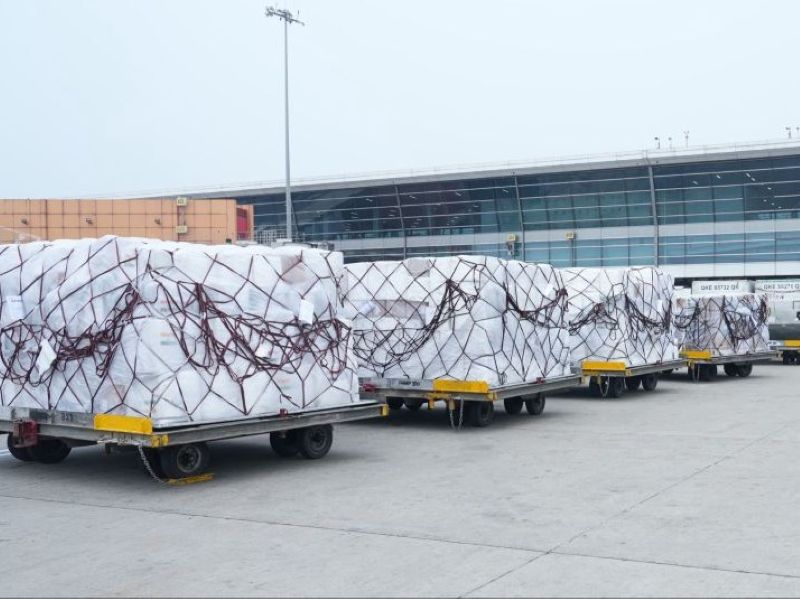
Indian companies facing high tariffs in the United States have been invited to explore manufacturing and assembly opportunities in Nigeria’s Lagos Free Zone (LFZ), which offers preferential access to advanced markets including the US and the European Union.
Adesuwa Ladoja, Managing Director and CEO of LFZ, stated on Sunday that recent tariff adjustments in the US have created significant challenges for Indian exporters, particularly in sectors such as textiles, leather, and automotive components. The US has imposed a 50 per cent tariff on a wide range of Indian-origin products, potentially impacting nearly USD 49 billion worth of exports.“What makes Lagos Free Zone uniquely positioned is that Nigerian exports to the US face tariffs as low as 14 per cent, significantly lower than those applied to many other countries,” Ladoja explained. “For Indian businesses, this means that by setting up operations in LFZ, they can manufacture or assemble products in Nigeria and enjoy a considerable tariff advantage compared to shipping directly from India.”
Beyond the US, LFZ provides access to other key markets. Nigerian exports benefit from the Generalized System of Preferences (GSP) with the European Union, offering Indian firms an opportunity to reach Europe with zero-duty or low-duty tariffs. Additionally, Nigeria’s participation in the African Continental Free Trade Area (AfCFTA) opens up a market of 1.4 billion people, where intra-African tariffs are being progressively reduced.“In essence, LFZ is not merely a cost-saving alternative but a strategic trade enabler,” Ladoja noted. “It allows Indian companies to de-risk global supply chains, maintain competitiveness in advanced markets like the US and EU, and expand rapidly across Africa.”
She stressed that LFZ should not be viewed only as a short-term tariff workaround but as a strategic base for Indian enterprises to build resilience, tap into Africa’s demographic dividend, and create long-term value. LFZ’s ecosystem is further strengthened by its integration with Lekki Port, West Africa’s deepest seaport, providing a direct and efficient gateway into Nigeria’s vast consumer market as well as neighbouring West and Central African economies.“We will deepen integration with Lekki Port to position LFZ as the most efficient gateway for trade, while also strengthening renewable energy and digital infrastructure to support the next wave of industrial growth,” Ladoja said.The zone has already attracted Indian investment, with Tata International establishing an assembly plant within LFZ to build commercial vehicles for the Nigerian market.
(Business Correspondent)












Related Items
India, Bengal not safe until borders are secured: Amit Shah
India composite PMI rises to 54.6 in Aug from 52 month low: HSBC
India & Brazil sign MoU in ICTs on sidelines of BRICS track meeting