 Newsinc24 Team
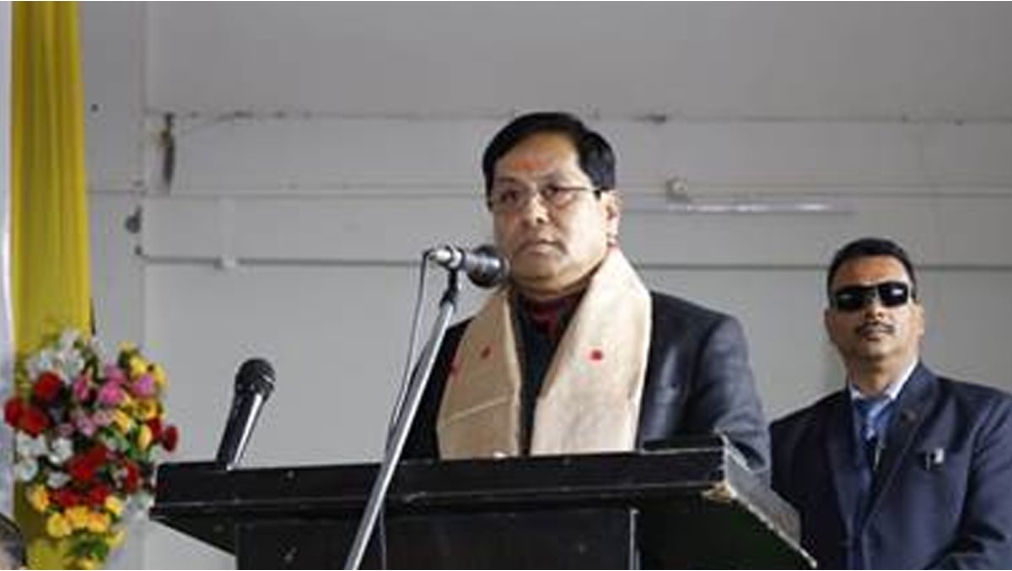
 Union Minister of Ports, Shipping and Waterways Sarbananda Sonowal on Friday underscored the transformative potential of India’s maritime sector in driving economic growth, as two key Memoranda of Understanding (MoUs) were exchanged at the Delhi School of Economics.The MoU between the University of Delhi and the Centre for Maritime Economy and Connectivity (CMEC) at the Research and Information System for Developing Countries aims to strengthen maritime education, research, and capacity building in alignment with India’s long-term maritime vision.
Addressing a seminar titled “Blue Economy: Its Imperatives for a Viksit Bharat,” Sonowal said the maritime sector will play a pivotal role in shaping India’s economic trajectory. “As we move towards Viksit Bharat, the maritime sector will play an even more transformative role in driving India’s economic growth, trade competitiveness and sustainable development. By strengthening the maritime talent pipeline—the core objective of this MoU—we are building a robust ecosystem to meet the growing demand for world-class maritime professionals,” he said.
Highlighting India’s strategic maritime advantages, the minister noted that the country’s coastline stretches over 11,000 kilometres, supported by 111 national waterways, making the strengthening of the maritime ecosystem a national priority. He added that the government’s maritime vision, guided by the SAGAR and MAHASAGAR doctrines, reflects a commitment to regional cooperation, maritime security, and shared prosperity.The agreement seeks to foster interdisciplinary collaboration between academia and policy institutions, focusing on skill development, research, and capacity building in emerging maritime domains. Key areas of cooperation include developing academic frameworks for maritime courses, undertaking joint research projects, conducting training programmes, and facilitating knowledge dissemination and professional guidance for students.
Describing the collaboration as a “forward-looking step,” Sonowal said it bridges academia and industry while creating opportunities for youth to engage with India’s expanding maritime sector.Emphasising the importance of human capital, the minister noted that India’s seafaring workforce has nearly tripled over the past 12 years and now accounts for about 12% of the global maritime workforce, with a target to reach 20% by 2030.
He also highlighted that India’s maritime transformation is being driven by an integrated approach encompassing port modernisation, multi-modal connectivity, sustainability initiatives, and digitalisation.The collaboration is expected to open new avenues for students and researchers in areas such as maritime logistics, green shipping, supply chain management, and maritime policy, contributing to the broader vision of a sustainable and globally competitive Blue Economy.
Additionally, another MoU was exchanged between RIS and the Delhi School of Economics to promote joint programmes in public policy research and training.The ceremony was attended by senior officials, academic leaders, faculty members, and students, marking a significant step towards integrating education, research, and policy in India’s maritime sector.