 Uday Kumar Varma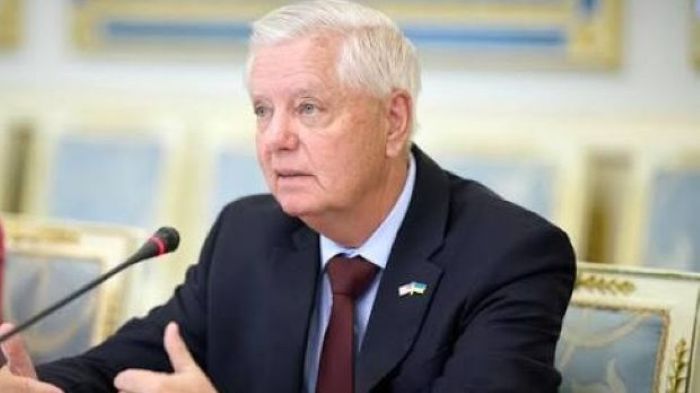
The death of Senator Lindsey Graham has attracted more attention in India than the passing of most American legislators ordinarily would. The reason is not difficult to find. Graham had, in recent years, become one of the sharpest critics of India’s trade practices and among the strongest advocates of punitive tariffs against Indian exports. His remarks were widely reported, often sharply criticised, and earned him few admirers in India. It is therefore understandable that, for many Indians, his name became synonymous with a policy that was seen as unfair to a trusted strategic partner.
That, however, raises an interesting question. Should an influential public figure be remembered solely for the issue on which he most directly confronted another country, or should he also be assessed in the larger context of the political life he led?
On trade, there is little reason to revise the Indian verdict. Graham consistently argued that the United States should respond firmly to countries which, in his view, denied American businesses fair access to their markets. India figured prominently in that argument. His advocacy of higher tariffs reflected a deeply protectionist strand in American politics that found little resonance in New Delhi. Many Indians understandably regarded his position as inconsistent and inimical with the spirit of an expanding India-US partnership.
Yet Graham’s record towards India was more complex than his trade rhetoric suggested. On questions of security and geopolitics, he viewed India as an increasingly important democratic partner in the Indo-Pacific. He repeatedly condemned cross-border terrorism and was often critical of Pakistan’s failure to act decisively against terrorist organisations operating from its soil. There is little evidence that he regarded India as a strategic adversary. His disagreements were principally over commerce, not over India’s place in the international order.
Nor did Graham display hostility towards the Indian-American community, whose growing influence in American public life he generally acknowledged with respect. His criticisms were directed at the policies of the Indian government rather than at Americans of Indian origin.
To understand Lindsey Graham, however, one must look beyond India altogether. Few American politicians reflected the transformation of the Republican Party as vividly as he did. Having once dismissed Donald Trump in the strongest possible terms, he eventually became one of the former President’s closest political allies. Critics saw this as political expediency; supporters viewed it as pragmatic adaptation to a changing political landscape.
Ironically, while Graham’s domestic politics evolved dramatically, his foreign policy convictions remained remarkably consistent. He remained one of the Republican Party’s strongest advocates of an activist American role in the world, supporting military assistance to Ukraine, unwavering backing for Israel, and a hard line against Iran and terrorism, even as many within his own party embraced a more inward-looking “America First” approach.
India will probably remember Lindsey Graham for the tariffs he advocated. America is more likely to remember him for the role he played in reshaping, and being reshaped by, the Republican Party during one of the most turbulent periods in its history. Neither memory is illegitimate. They simply reflect different encounters with the same political life.
India will probably remember Lindsey Graham for the tariffs he advocated rather than for the role he played in reshaping, and being reshaped by, the Republican Party during one of its most turbulent phases. That is neither surprising nor unfair. Nations remember foreign politicians by the way they touched their own interests. Notwithstanding his long and consequential public career, Graham will therefore remain, for many Indians, a man who seemed less than fair in judging India’s trade practices and unusually strident in advocating punitive tariffs against a country whose strategic partnership with the United States was otherwise steadily deepening.
(Uday Kumar Varma is an IAS officer. Retired as Secretary, Ministry of Information & Broadcasting)








Related Items
India calls for decisive BIMSTEC cooperation security
India's first hydrogen fuel cell train to transform rail mobility
India-UK FTA kicks in: UK-bound cargo takes off from several Airports