 Newsinc24 Team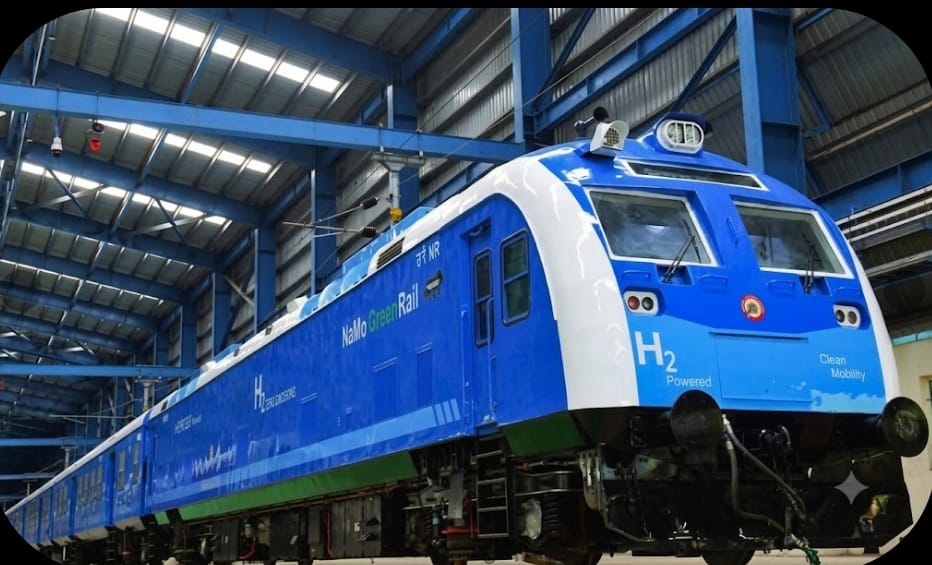
India is set to enter a new era of sustainable rail transport on Friday, July 17, as Prime Minister Narendra Modi will flag off the country's first hydrogen-powered passenger train on the Jind–Sonipat section in Haryana.Designed to carry around 2,600 passengers across 10 coaches, the Hydrogen Fuel Cell Trainset is among the largest hydrogen-powered passenger trains in the world and marks a major milestone in Indian Railways' clean energy transition.
#WATCH | Prime Minister Narendra Modi will flag off India's first hydrogen-powered train between Jind and Sonipat on July 17, marking an important step towards the adoption of clean and sustainable mobility in the railway sector.
— ANI (@ANI) July 16, 2026
PM Modi will visit Haryana, Chandigarh and Punjab… pic.twitter.com/sOHBfsbOZb
Unlike conventional electric trains that rely on overhead power lines, the hydrogen train generates electricity onboard using Proton Exchange Membrane (PEM) fuel cells. Hydrogen stored in high-pressure cylinders combines with oxygen from the atmosphere to produce electricity for the traction motors, with only water vapour and heat emitted as by-products.The train consists of two Hydrogen Driving Power Cars positioned at either end and eight passenger coaches. Each power car generates 1,200 kilowatts (1,600 horsepower), enabling the train to reach a design speed of 110 kmph. It will initially operate at a speed of 75 kmph on the 89-km Jind–Sonipat route.
The launch comes after Indian Railways completed one of the world's largest railway electrification drives, with more than 99 per cent of the Broad Gauge network now electrified. Officials say the hydrogen train represents the next phase in the country's push towards greener and more sustainable transport.To support operations, According to agency reports,Indian Railways has established the country's largest railway hydrogen refuelling facility at Jind. The integrated facility includes hydrogen production through electrolysis, storage, compression and dispensing infrastructure. Hydrogen is compressed to 500 bar for storage and supplied to the train at 350 bar through two dispensers, allowing both power cars to be refuelled simultaneously. The facility has a storage capacity of nearly 3,000 kilograms of hydrogen and has received approval from the Petroleum and Explosives Safety Organisation (PESO).
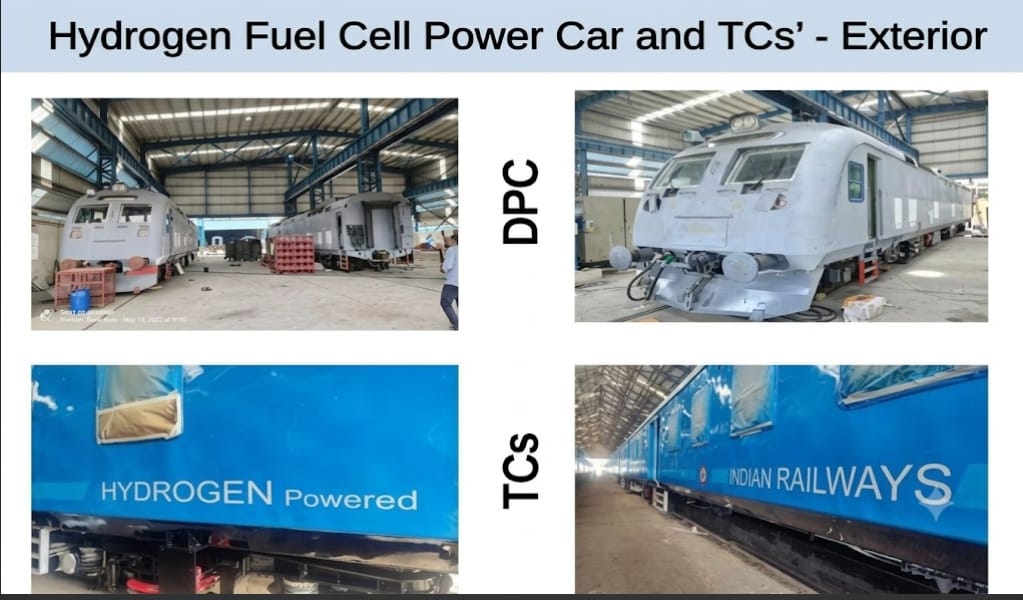
Safety has been a key focus of the project. The train is equipped with hydrogen leak detectors, heat, flame and smoke sensors, along with continuous ventilation systems that prevent hydrogen accumulation. Automated safety systems can isolate and shut off the hydrogen supply in case of any abnormality, while the driver's cabin features real-time monitoring of the hydrogen system and emergency operating controls.
The refuelling facility also incorporates multiple safety measures, including automatic shutdown systems, water spray arrangements, leak detection equipment and fire alarm systems. The entire hydrogen ecosystem has undergone independent safety evaluation by Germany's TÜV SÜD and complies with international standards, including NFPA-2 and the ISO 19880 series, as well as Indian statutory safety requirements.The project has been developed using indigenous capabilities. The Research Designs and Standards Organisation (RDSO) prepared the technical specifications and oversaw design approvals, Medha Servo Drives integrated the trainset, while the Integral Coach Factory (ICF) contributed to its exterior design and styling.
Although countries such as Germany, France, Italy, China and Japan have introduced hydrogen-powered trains on a limited scale, most operate with only two to four coaches. Indian Railways' 10-coach train demonstrates the potential to deploy hydrogen technology for high-capacity passenger services.Officials said the experience gained from the Jind–Sonipat project will help expand hydrogen-powered rail operations in the future, including on heritage routes such as the Kalka–Shimla railway. The initiative also supports the National Green Hydrogen Mission and India's long-term goal of achieving net-zero emissions, reinforcing the country's commitment to cleaner and more sustainable public transport.








Related Items
Cabinet approves five railway multitracking projects
Cabinet clears 4 railway multitracking projects worth Rs 9,450 crore
CBI arrests Railway Engineer while accepting Rs. 15 Lakh bribe