 Newsinc24 Team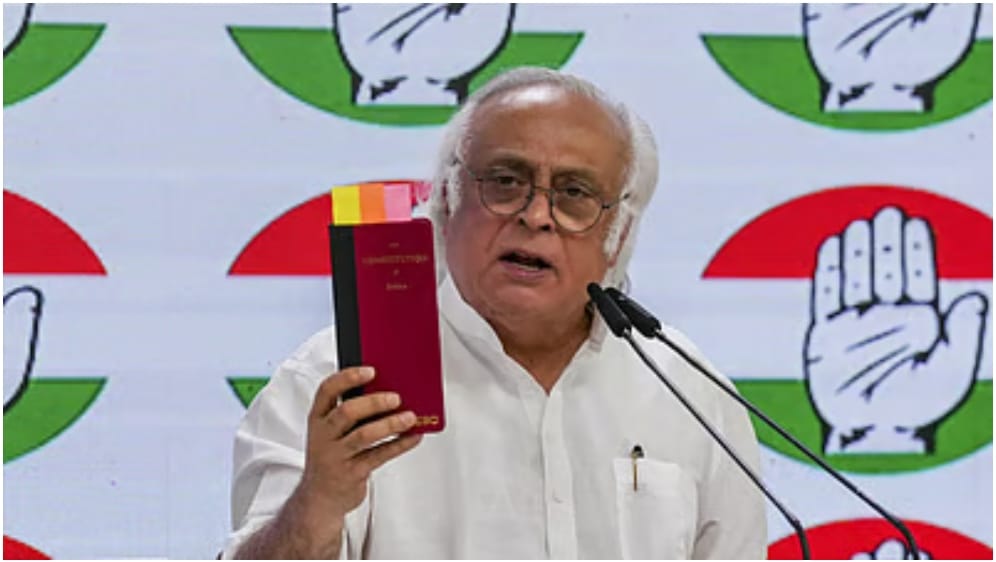
A day after the GST Council approved a sweeping overhaul of the Goods and Services Tax (GST) regime, the Congress party on Thursday termed the new framework as “GST 1.5”, asserting that the long wait for a “true GST 2.0” continues.Congress general secretary in-charge of communications Jairam Ramesh said the reforms, though significant, fail to address key concerns of states and businesses. He reiterated that the demand for extending GST compensation to states for another five years in the spirit of cooperative federalism remains unmet, adding that the issue has become “even more important now.”
Ramesh stressed that the Congress has consistently urged for a genuine GST 2.0 that would simplify the tax regime by reducing the number of rates, cutting taxes on mass consumption items, fixing the inverted duty structure, easing MSME compliance, and expanding GST coverage.“Faced with weak private consumption, subdued private investment, and endless classification disputes, the finance minister has finally acknowledged that GST 1.0 had reached a dead end,” Ramesh said on X. He described the original framework as flawed from inception, claiming that what was intended as a “Good and Simple Tax” became a “Growth-Suppressing Tax.”He also questioned the relevance of the GST Council, pointing out that Prime Minister Narendra Modi had already outlined the broad contours of the reforms during his Independence Day address. “Is the GST Council to be reduced to a formality?” Ramesh asked.
The Indian National Congress has for long been advocating for a GST 2.0 that reduces the number of rates, cuts the rates on a large number of items of mass consumption, minimises evasion, mis-classification, and disputes, does away with inverted duty structure (lower tax on…
— Jairam Ramesh (@Jairam_Ramesh) September 4, 2025
The 56th meeting of the GST Council, chaired by Finance Minister Nirmala Sitharaman on Wednesday, cleared a two-rate structure, replacing the earlier four slabs of 5, 12, 18 and 28 per cent. From September 22, the GST regime will be limited to 5 per cent and 18 per cent, with a special 40 per cent slab applicable only to high-end cars, tobacco, and cigarettes.Sitharaman said the decisions were taken unanimously, with no objections from states. She underlined that the overhaul aims to reduce complexity, stimulate domestic consumption, and ease the tax burden on households and businesses.Common-use goods such as roti/paratha, hair oil, ice creams, TVs, ACs, and washing machines will now attract lower tax rates. In a major relief for households, life and health insurance premiums, including family floater policies, have been fully exempted from GST, compared to the earlier 18 per cent levy.
According to officials, the government expects the rate cuts to encourage consumer spending and provide a cushion against the economic impact of US tariffs on Indian exports. While acknowledging the reform’s scale, Ramesh maintained that whether the so-called GST 1.5 will actually stimulate private investment, particularly in manufacturing, and ease the burden on MSMEs, “time alone will tell.”“The wait for a true GST 2.0 continues,” he said.


.jpg)