 Ira Singh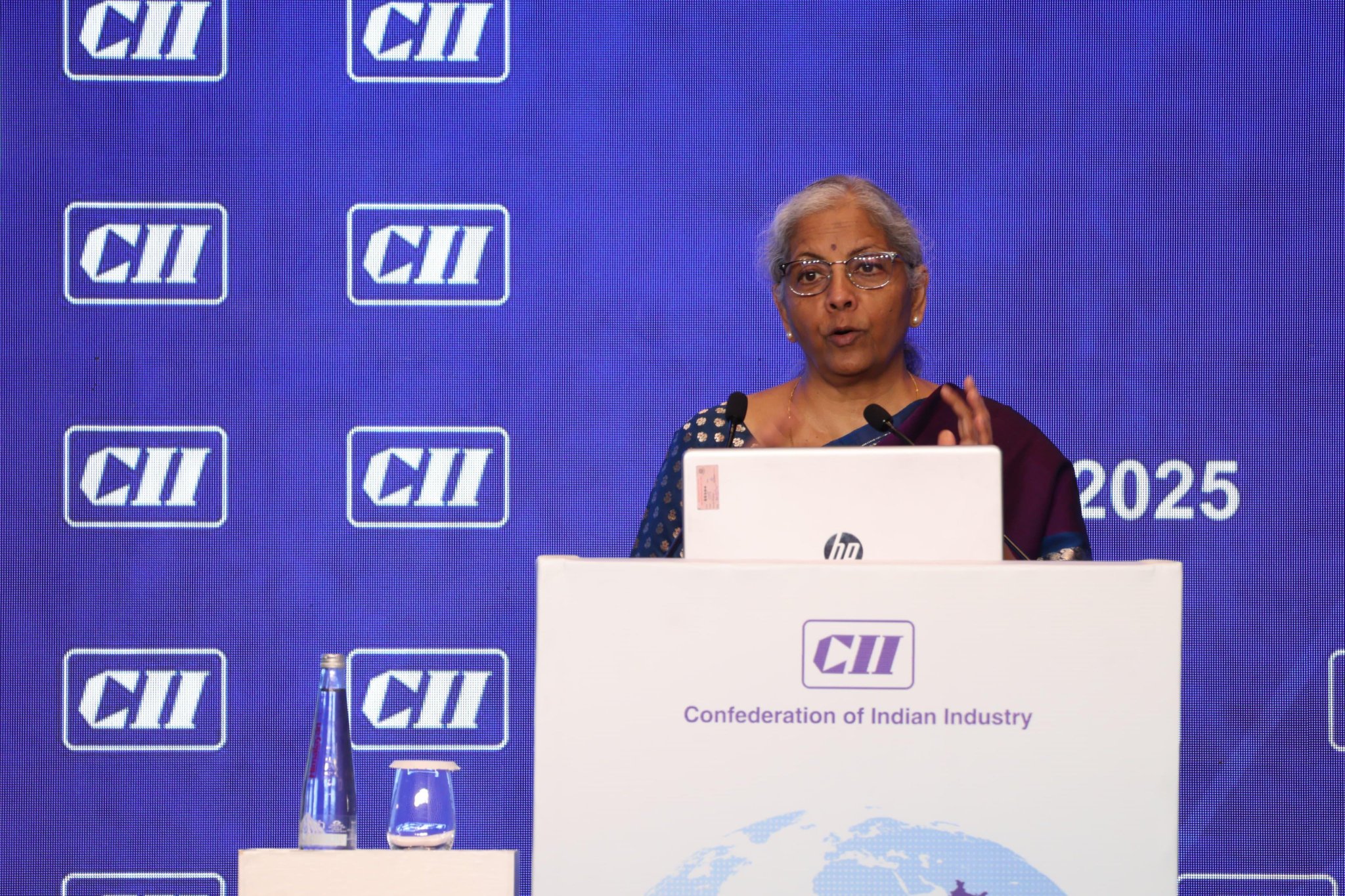
Union Finance Minister Nirmala Sitharaman on Monday said that Global Capability Centres (GCCs) are expected to add $100 billion to $150 billion to India’s economy by 2030. “GCCs currently contribute to direct gross value addition worth $68 billion in India, accounting for around 1.6% of GDP. By 2030, this could potentially rise to $100–150 billion,” Sitharaman said while addressing the CII GCC Summit.
Watch: Smt @nsitharaman's full keynote address at the Global Capability Centres (GCCs) Summit hosted by @FollowCII in New Delhi. @FinMinIndia @PIB_India #CIIGCCsSummit2025https://t.co/GR4rExmqhm
— Nirmala Sitharaman Office (@nsitharamanoffc) July 14, 2025
Highlighting the sector’s expansion, the Finance Minister noted that 1,000 GCCs were added between 2015 and 2024, with one new centre established almost every week in 2024 alone. A similar pace of growth is anticipated this year. Currently, GCCs employ 2.16 million professionals in India, a number projected to grow to 2.8 million by 2030.“This is a conservative estimate,” Sitharaman remarked, underlining the sector’s momentum.
Sitharaman described India’s GCCs as being at a “critical inflection point,” evolving from traditional back-office roles to strategic centres of research, innovation, and leadership.“Since 1985, it took over 30 years to reach 1,000 GCCs, but in just the last decade, an additional 800 have been established. India cannot afford to lose this GCC advantage,” she stressed, calling on industry leaders to accelerate efforts.
The Finance Minister credited India’s rise as a global talent hub for driving GCC growth. “India houses 32% of the global GCC talent pool, 28% of the world’s STEM workforce, and 23% of global software engineering talent,” she said, adding that the country has become a leading source of AI expertise.
Sitharaman reaffirmed the government’s commitment to facilitating GCC expansion through reduced approval timelines, enhanced tax certainty—including Advance Pricing Agreements (APAs)—and integrated administrative support.She also urged companies to invest in Tier 2 and Tier 3 cities, citing GIFT City as a successful example of regulatory facilitation.“India must not lose this opportunity,” the Finance Minister concluded, pledging full government backing to ensure GCCs remain a driving force in India’s economic transformation.
(Business Correspondent)














Related Items
Goyal eyes new avenues for Indian agri-food exports to Singapore
Indian ministers meet Singapore PM to strengthen strategic partnership
Sitharaman:Govt to soon constitute panel for 'Banking for Viksit Bharat'