 Newsinc24 Team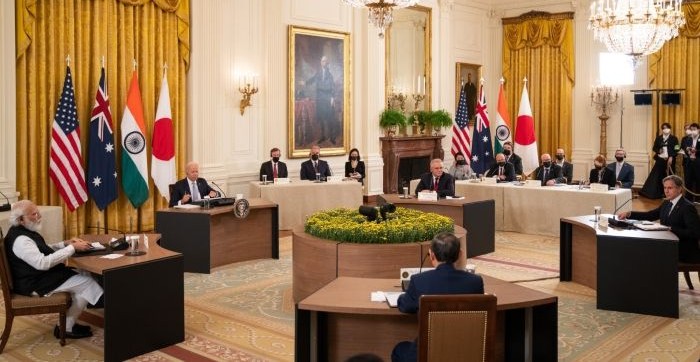
The Asia Society Policy Institute has published a new report entitled “Cementing the Quad in the Indo-Pacific" by Farwa Aamer, Director of South Asia Initiatives, and Emma Chanlett-Avery, Director for Political-Security Affairs
This report provides an analysis of the background, challenges, and potential of the Quadrilateral Security Dialogue (the Quad) involving the United States, Japan, India, and Australia. Through broad consultations with key regional experts, the narrative describes how South Asia, Southeast Asia, and the Pacific Islands perceive the Quad and the prospects for productive engagement.
Far from being hampered by its informal, leader-driven structure, the Quad’s flexibility is its defining strength. Unlike rigid multilateral institutions, the Quad can adapt rapidly, coordinate issue-based initiatives, and engage selectively, all qualities that uniquely position it to respond to the Indo-Pacific’s shifting power dynamics and to anchor U.S. strategy amid geopolitical uncertainty. Yet, flexibility does not ensure the Quad’s long-term relevance. To emerge as an enduring pillar of the regional order, the grouping must transform strategic convergence among its members into tangible initiatives that deliver visible, meaningful benefits for the Indo-Pacific.
Subregional engagement reveals both opportunities and constraints. In South Asia, India’s centrality provides legitimacy but risks reinforcing perceptions of exclusivity; Quad initiatives here must balance India’s leadership with inclusive engagement of its neighbors. Southeast Asia presents a more complex challenge, where the Association of South East Asian Nations’ (ASEAN’s) consensus-driven approach contrasts with the Quad’s nimbleness, generating concerns about diminished ASEAN centrality or the perception of an anti-China agenda. Success in this subregion will require careful messaging that emphasizes shared prosperity, resilience, and pragmatic cooperation. In the Pacific Islands, strategic ambitions matter less than delivering concrete support for climate resilience, disaster relief, and sustainable development—areas where the Quad can achieve immediate credibility and trust. Across these regions, two consistent patterns emerge: the Quad as an anti-China alliance narrative would not bode well for regional engagement, and Japan enjoys the highest trust among members, positioning Tokyo as a critical conduit for shaping regional perceptions.
Another strength lies in the Quad’s ability to harness the expertise and resources of all four members and deploy them strategically where they are most needed and welcomed. To consolidate its position, the grouping should leverage asymmetric leadership: Japan can lead on infrastructure and connectivity projects, India can leverage its Global South legitimacy to shape narratives, Australia can drive critical minerals cooperation, and the United States can offer its technological resources. Existing working groups should function as coordination platforms to engage regional partners on priority issues. Messaging should center on empowerment, resilience, and shared prosperity, avoiding zero-sum or anti-China framing. Key initiatives, such as the Minerals Security Partnership (MSP) and the expansion of the Indo-Pacific Maritime Domain Awareness (IPMDA) initiative, should be emphasized in regional engagements to demonstrate tangible results and reinforce the Quad’s credibility. A more ambitious—and perhaps longe
In addition, given the “America First” approach of the second Donald Trump administration, the Quad should position itself to appeal to U.S. commercial and strategic interests. Presenting the Quad as a cost-effective, burden-sharing framework offering tangible opportunities for American companies in infrastructure, technology, and resource projects will help sustain U.S. engagement. Nurturing and promoting public-private partnerships could drive further expansion of the commercial potential in the region.
By combining strategic agility with targeted, visible outcomes, the Quad can cement itself as a critical pillar of the Indo-Pacific order, making it a reliable and relevant platform for both its members and regional actors.














Related Items
India, Russia agree to advance bilateral investment treaty talks
India's electoral process among most transparent in world: CEC
India-EU FTA: European Commission moves to get it signed