 Newsinc24 Team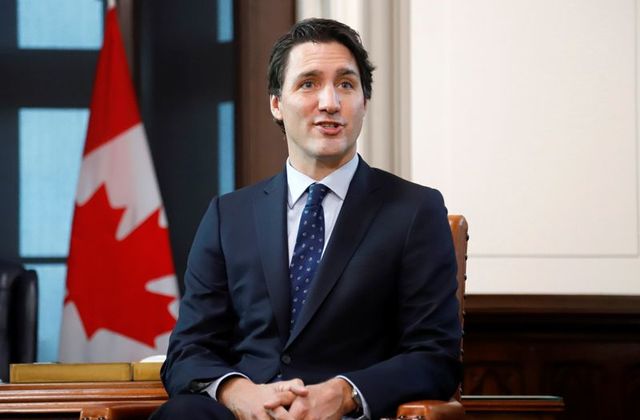
Canadian Prime Minister Justin Trudeau invoked rarely-used emergency powers to bring an end to trucker-led protests against Covid health rules, after police arrested 11 people with a "cache of firearms" blocking a border crossing with the United States. It marked only the second time in Canadian history such powers have been invoked in peacetime, and came as hundreds of big rigs still clogged the streets of the capital Ottawa, as well as two border crossings.
"The federal government has invoked the Emergencies Act to supplement provincial and territorial capacity to address the blockades and occupations," Trudeau told a news conference on Monday. Trudeau said the military would not be deployed at this stage, but that authorities would be granted more powers to arrest protesters and seize their trucks in order to clear blockades, as well as ban funding of the protests. As the threat of violence lingered, federal police said they arrested 11 protesters with rifles, handguns, body armor and ammunition at the border between Coutts, Alberta and Sweet Grass, Montana, just a day after another key US-Canada border crossing was cleared in Ontario.
The "Freedom Convoy" started with Canadian truckers protesting against mandatory vaccines to cross the border between Canada and the United States. But its demands now include an end to all COVID-19 health measures and, for many of the protesters, for the toppling of Trudeau's Liberal government -- only five months after he won re-election. The truckers have found support among conservatives and vaccine mandate opponents across the globe, even as COVID-19 measures are being rolled back in many places. Protesters blockaded the Ambassador Bridge, a vital trade route to Detroit, for six days before police cleared the protest on Sunday while others have shut down smaller border crossings in Alberta, Manitoba and British Columbia. Protests in Ottawa, the nation's capital, entered a third week.
The emergency law has only been used once before in peacetime, in 1970, by Trudeau's father, former Prime Minister Pierre Trudeau. Earlier on Monday, four provincial premiers -- in Alberta, Quebec, Manitoba and Saskatchewan -- said they opposed plans to invoke the act, saying it was unnecessary. The Canadian Parliament would have to approve the use of the emergency measures within seven days, and it also has the power to revoke them.








Related Items
TN to set up 1,600 MW thermal power station under PPP model
Pakistan: 'Legal Coup' gives absolute power to Field Marshal Munir
Canada hits US goods with $20 billion retaliatory tariffs