 Newsinc24 Team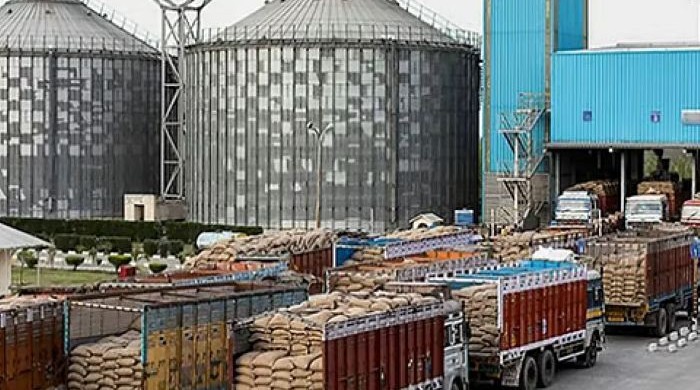
Every year, India is estimated to lose between 12 and 16 million tonnes of foodgrain due to post-harvest losses and storage inefficiencies. In a country that procures massive quantities of grain from farmers and provides food support to over 80 crore beneficiaries, reducing such losses is both an economic necessity and a food security imperative.
Recognising this challenge, the Food Corporation of India (FCI) has undertaken one of the world's largest grain storage modernisation programmes through the creation of a nationwide network of modern steel silos. The silo programme is designed to replace traditional storage methods with scientific and technology-enabled systems that preserve grain quality and minimise wastage.
Unlike conventional godowns, silos are equipped with moisture-control systems, aeration facilities, automated inventory management and mechanised grain handling. These features help maintain grain quality over long periods, reduce manual handling losses and improve operational efficiency throughout the supply chain.
The programme is being developed under FCI's Hub-and-Spoke model across 249 locations with a planned storage capacity of more than 108 lakh metric tonnes. Beyond merely creating additional storage space, the initiative aims to transform the way foodgrain is handled, transported and managed across the country. Scientific storage ensures better stock preservation, faster movement of grain and improved efficiency in the Public Distribution System.
Given the scale of investment and specialised infrastructure required, the programme is being implemented through a Public-Private Partnership (PPP) model. Since 2021, projects covering nearly 60 lakh metric tonnes of capacity have been awarded through open and competitive bidding processes.
Across the two phases of the Hub-and-Spoke programme, several private sector players participated in the bidding process. Adani Agri Logistics Ltd and Leap India Food & Logistics Pvt Ltd emerged as the two largest participants, together securing contracts for approximately 46.5 lakh metric tonnes of the 60 lakh metric tonnes awarded so far. However, a number of other companies also participated actively in the tenders, including SAR Transport Systems Pvt Ltd, Sabina Arora-led consortiums, Shree Karni Traders, Sandeep Traders, Mapsko Builders Pvt Ltd, India Potash Limited, Vedu Infra Pvt Ltd, OPG Power Generation Pvt Ltd and several others.
Tender data indicates that competition remained robust throughout the bidding process.
● In Phase-I, between four and seven bidders participated across the three projects, while in Phase-II individual projects attracted between three and fifteen bidders.
● Notably, Adani Agri Logistics secured all three Phase-I projects as the lowest bidder, while Leap India, despite participating in all Phase-I tenders, did not win any project because its quoted rates were higher.
● In Phase-II, the situation was reversed. Leap India emerged as the successful bidder in 12 of the 17 projects, while Adani participated in all projects but did not secure any contract because its bids were higher than competing bidders.
● Other companies such as SAR Transport Systems, Sabina Arora consortiums and Shree Karni Traders also secured projects in Phase-II based on competitive bidding outcomes.
The distribution of capacity also reflects the competitive nature of the programme.
● The largest participant, Adani Agri Logistics, secured 28.25 lakh metric tonnes of capacity, representing less than half of the total capacity tendered.
● Leap India secured 18.25 lakh metric tonnes, while the remaining capacity was awarded to other successful bidders.
● The allocation pattern demonstrates that contracts were distributed through competitive price-based bidding rather than concentration in the hands of any single player.
The strongest validation of the silo programme, however, comes from its operational performance.
● While damage in conventional storage facilities has steadily declined over recent years from 10,348 tonnes in 2023-24 to 7,858 tonnes in 2024-25 and further to around 2,247 tonnes in 2025-26, there has been no reported damage of foodgrain stored in silos since their inception.
This highlights the significant advantages of scientific storage systems in preserving grain quality and reducing wastage.
As India continues to modernise its food management infrastructure, the silo programme is expected to play a crucial role in strengthening food security, improving supply-chain efficiency and ensuring that grain procured from farmers reaches beneficiaries with minimal losses. At a time when every tonne of foodgrain matters, the expansion of modern silo infrastructure represents an important step towards a more efficient, resilient and future-ready food storage system.


Related Posts
India’s semiconductor market set to reach $200 Billion by 2035
Asian Games: India opens medal account with silver
India sends fresh tranche of relief material to Nepal