 Newsinc24 Team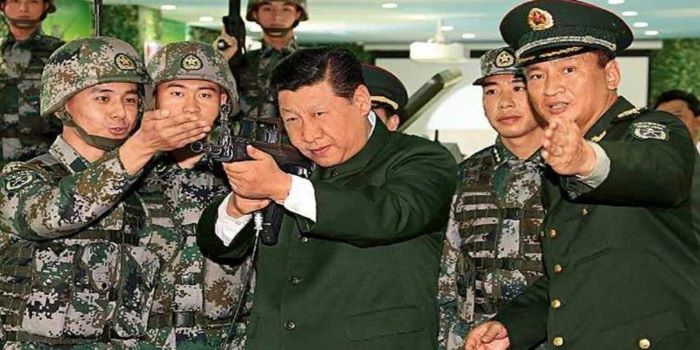
China on Wednesday reaffirmed its threat to use military force to bring self-governing Taiwan under its control, amid threatening Chinese military exercises that have raised tensions between the sides to their highest level in years. The statement issued by the Cabinet’s Taiwan Affairs Office and its news department followed almost a week of missile firings and incursions into Taiwanese waters and airspace by Chinese warships and air force planes. The actions have disrupted flights and shipping in a region crucial to global supply chains, prompting strong condemnation from the U.S., Japan and others. The Chinese statement said Beijing seeks “peaceful unification" with Taiwan but “does not pledge to relinquish the use of military force and retains all necessary options." An English-language version of the Chinese statement said Beijing would “work with the greatest sincerity and exert our utmost efforts to achieve peaceful reunification.” “But we will not renounce the use of force, and we reserve the option of taking all necessary measures. This is to guard against external interference and all separatist activities,” the statement said. In an additional response, China said it was cutting off dialogue on issues from maritime security to climate change with the U.S., Taiwan’s chief military and political backer. China says the threatening moves were prompted by a visit to Taiwan last week by U.S. House Speaker Nancy Pelosi, but Taiwan says such visits are routine and that China used that merely as a pretext to up its threats. China said it was cutting off dialogue on issues from maritime security to climate change with the U.S., Taiwan’s chief military and political backer. In response to the drills, Taiwan has put its forces on alert, but has so far refrained from taking active counter measures.On Tuesday, its military held live-fire artillery drills in Pingtung County on its southeastern coast.
Taiwan split with the mainland amid civil war in 1949 and the island’s 23 million people overwhelmingly oppose political unification with China, while preferring to maintain close economic links and the status quo of de-facto independence. Through its maneuvers, China has pushed closer to Taiwan’s borders and may be seeking to establish a new normal in which it could eventually control access to the island’s ports and airspace. Washington has no formal diplomatic ties with Taiwan in deference to Beijing, but is legally bound to ensure the island can defend itself and to treat all threats against it as matters of grave concern. Beyond the geopolitical risks, an extended crisis in the Taiwan Strait — a significant thoroughfare for global trade — could have major implications for international supply chains at a time when the world is already facing disruptions and uncertainty in the wake of the coronavirus pandemic and the war in Ukraine. Taiwan is a crucial provider of computer chips for the global economy, including China’s high-tech sectors.










Related Items
India’s trade surplus with US Narrows in FY26, China exports surge
China warns US over Hormuz blockade, says ‘don’t interfere’
UNSC: Russia and China veto resolution on Strait of Hormuz