 Newsinc24 Team
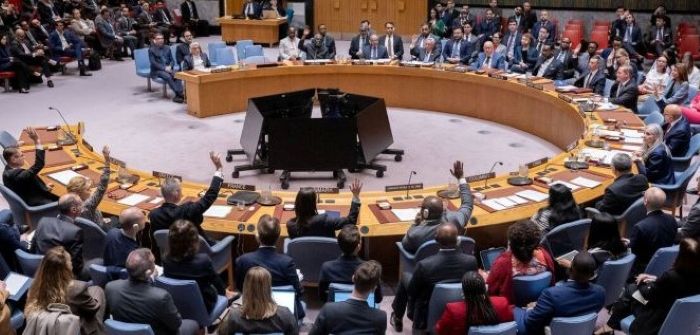
 Russia and China on Tuesday vetoed a UN Security Council resolution on reopening the Strait of Hormuz, a vital maritime chokepoint through which a fifth of the global oil passes, blockaded by Iran. The 15-nation UN Security Council voted on the resolution proposed by Bahrain, which got 11 votes in favour, two against and two abstentions. The resolution could not be adopted because veto-wielding permanent members Russia and China voted against the resolution.The draft resolution sought to strongly encourage States interested in the use of commercial maritime routes in the Strait of Hormuz – which lies between Iran, Oman and the United Arab Emirates – and to “coordinate efforts” defensively, to contribute to ensuring the safety and security of navigation there, including the use of escorts for merchant and commercial vessels.
The draft also demanded that Iran immediately cease all attacks on shipping and any attempt to impede transit or freedom of navigation in the strait. The text was submitted by Bahrain alongside Jordan, Kuwait, Qatar, Saudi Arabia and the United Arab Emirates. Speaking after the vote, Bahrain’s Foreign Minister Abdullatif bin Rashid Al Zayani expressed regret on their behalf. “The Council failed to shoulder its responsibility in relation to an illegal conduct that requires decisive action with no delay,” he said. “Failing to adopt this resolution sends the wrong signal to the world, to the peoples of the world, the signal that the threat to international waterways can pass without any decisive action by the international organization responsible for the maintenance of international peace and security.”
Explaining Russia’s vote, Ambassador Vassily Nebenzia said that the resolution presented Iranian actions as the sole source of regional tensions while illegal attacks by the United States and Israel were “not mentioned at all”.
Chinese Ambassador Fu Cong said the draft “failed to capture the root causes and the full picture of the conflict in a comprehensive and balanced manner.” He expressed hope that peace and stability would be restored and affirmed China’s commitment to addressing the situation properly by tackling the root causes.
Iran’s Ambassador Amir Saeid Iravani said the draft sought “to punish the victim for defending its sovereignty and vital national interests in the Persian Gulf and the Strait of Hormuz, while providing political and legal cover for further unlawful acts by the aggressors.”








Related Items
India backs UN map resolution, says territorial integrity is non-negotiable
India votes in favour of UNGA resolution endorsing new world map
Act on humanitarian fallout of conflicts:India urges UNSC