 Farwa Aamer
The results have been humbling for the massive BJP party and PM Modi's ambitions of a landslide. While he definitely has mass appeal and a large portion of the electorate endorses his vision for India, challenges persist and the opposition's surprising performance shows for it."Even with a coalition, should BJP fail to reach majority in the parliament, with Modi at the helm, we can expect continuity but cannot discard the influence of other coalition members on planned economic reforms, wider domestic policies or even foreign policy. It will all be more than just PM Modi now."
"Regardless, we can still expect the new government to deepen the India-US strategic partnership. Some frictions aside, the two countries have shared concerns over regional stability and are overseeing a burgeoning defense cooperation, we can expect a more assertive India aligning closely with US interests in the Indo-Pacific and expanding tech cooperation. This trajectory will also continue regardless of the outcome of the Indian elections."
"While China has already shared some intent of expanding efforts to bring the Sino-Indian relations back on track, India is likely to maintain its stance on China. The ongoing border tensions and economic competition will see India bolstering its military capabilities and seeking stronger alliances to counterbalance China's influence. If BJP wins the majority, this would also include delivering on PM Modi's promise since the New Delhi G20 summit on increasingly becoming the voice of the Global South and an alternative market to China for foreign investments. We can see IMEC pick up more earnestly which already is touted as an alternative to China's BRI."
"The new government will likely prioritize a 'Neighborhood First' policy with a pragmatic twist, enhancing connectivity and economic ties while maintaining a cautious eye on regional security dynamics. If BJP maintains power, relations with Pakistan may remain strained, especially given the leading party's narrative on the road to elections. It is, however, in India's interest to promote holistic regional cooperation where possible, especially on shared challenges of climate change."
"Expect new government to focus heavily on economy and India's economic diplomacy, focusing on expanding trade ties, attracting foreign investment, and asserting India's role as a key player in global supply chains, particularly in sectors like technology and pharmaceuticals.As global geopolitics shift, India will continue to navigate its path by balancing relations with major powers, ensuring its sovereignty and regional influence remain uncompromised." There is also a test now for the BJP and allies to deliver on the campaign promises to India's growing population, especially on economic resilience, job creation, and rural livelihood support.
Rishi Gupta, Assistant Director, Asia Society Policy Institute in New Delhi.
As the ruling Bhartiya Janta Party-led National Democratic Alliance (NDA) inches towards forming the government for the third consecutive time, here are some key observations:
1. The BJP-led NDA was expected to outperform its last two results by winning 400 seats, this time out of 543 in the lower house of the parliament in the general elections; the BJP’s race seems to have concluded in under 250 seats.
2. Compared to the 2014 and 2019 elections, when the BJP had a majority of its own, the party has not crossed the magic mark of 272 seats required to form the government with a simple majority.
3. The BJP will need to ensure that its pre-poll coalition partners adhere to the party’s leadership and do not join the Congress-led I.N.D.I.A alliance to form a government because, as an NDA coalition, the BJP has the needed numbers to form the government.
4. The opposition, including the I.N.D.I.A alliance has exceedingly performed well in the elections, and there are many reasons for this, including anti-incumbency in certain states, resistance to BJP’s ‘Hindutva’ ideology among minority groups, state-specific local issues, and unemployment.
5. The BJP still has the best chance, but it will be a coalition government, which is often unstable and runs into conflicts of power and interests. Smaller parties demand bigger stakes in the government now and then.
6. Although the BJP will possibly form the government, it needs to do a lot of rethinking and introspection, especially regarding why its development politics did not convince the voters this time.
7. As the clouds clear, it will be interesting to see whether the minority Muslim population voted for the BJP or not because the BJP’s ‘Hindutva’ ideology is often seen as conflicting with the Constitution’s secular nature.
Why has the BJP lost:
1. The assumption that the BJP was undefeatable under Prime Minister Narendra Modi, whose two terms have seen India’s economic rise, seems misplaced.
2. In states like Uttar Pradesh and Maharashtra, which bring the largest share of the seat tally to any party, BJP has suffered huge losses.
3. The regional parties have made a comeback in national politics, particularly in the states of Uttar Pradesh, Maharashtra, and West Bengal—all have gone to regional parties allying with the I.N.D.I.A alliance.
4. The BJP continues to face challenges in winning significant support in the southern states of Tamil Nadu and Kerala due to the strong presence of regionalparties. The BJP’s ‘Hindutva’ philosophy, rooted in Hindu nationalism, encounters resistance in these states because the Southern states still stick to their historical and cultural roots of social justice and regional identity.
5. The BJP was expecting the construction of the Ram Temple in Ayodhya—a disputed site between Hindus and Muslims for decades and finally won by Hindus in the apex court as their place of worship. It would help them earn the majority of Hindu votes. But Hindu votes have been largely divided.
Modi 3.0: Challenges and Prospects-
1. The BJP-led NDA government has promised to make India the third-largest economy by 2017, which will not be difficult, considering the current GDP growth rate of 8.5 per cent. However, a coalition government always runs into trouble, especially when devising economic plans. The coalition's compulsions will be a catalyst in the development sector.
2. The BJP faces the challenge of addressing large-scale unemployment, which seems to have worked in the opposition’s favour as they focused on it in their election campaigns and manifesto. The BJP was seemingly in denial of the scale and status of unemployment in India.
3. The BJP will need to introspect its reliance on Hindu voters, as this group is increasingly divided. While the construction of a temple in Ayodhya has been a significant issue, it may not be sufficient to secure their votes. Economic concerns, social issues, and regional dynamics are also crucial factors that the BJP must address to maintain broad support among Hindu voters.
Foreign policy in the next five years:
1. In his third term, Modi's foreign policy goals will focus on securing India’s permanent membership in the UN Security Council (UNSC), forming strategic alliances, effectively addressing the China challenge, revitalizing ties with neighboring countries, and playing a pivotal role in world politics.
2. Modi 3.0 may usher in comprehensive economic reforms aligned with the aspirations of Viksit Bharat (Developed India) by 2047. These reforms will likely include market reforms, a push for free trade agreements, an emphasis on digital infrastructure and energy transition, and building economic resilience to absorb global financial shocks.
3. On the foreign policy front, the BJP emphasizes its pursuit of UNSC membership, which ultimately requires reforming the United Nations. Reforming the UNSC will be a significant challenge, particularly because China, a P5 member, is clearly not ready for India. However, the BJP will seek to make the best use of Quad-like ‘minilateral’ groupings. India will not wait indefinitely for UNSC reform.
4. The China challenge remains substantial, with the PLA continuing to claim Indian territories. The BJP will focus on upgrading India’s defense capabilities and enhancing infrastructure along the India-China border.
5. Ties with the United States have strengthened under Modi’s leadership. India finds a welcoming space in the United States. Following recent cooperation in the trade and tech sectors, bilateral cooperation is expected to grow further.
6. Modi will continue to maintain traditional ties with Russia despite the growing bond between Moscow and Beijing and mounting pressure over the Ukraine issue.
7. India has developed a thick skin on the Ukraine issue. While advocating for a peaceful resolution of the war, it also focuses on its national interests, including buying oil and defense equipment.
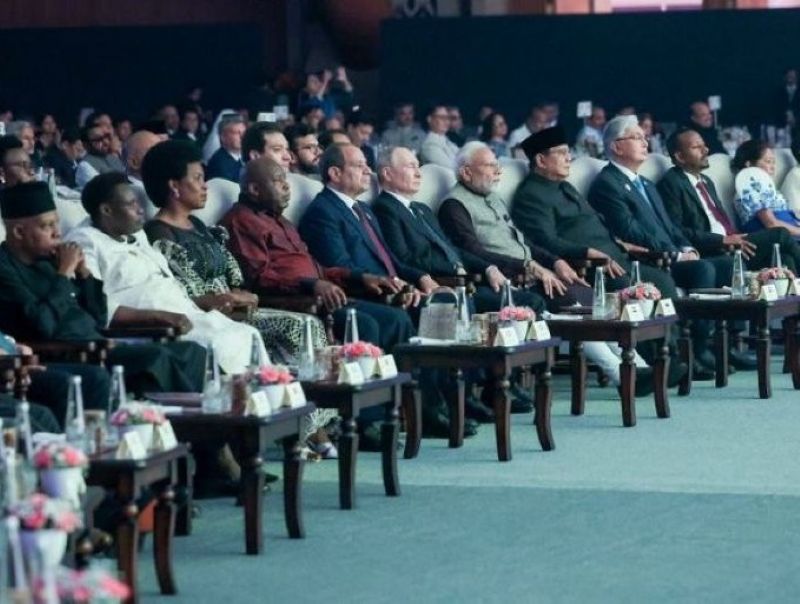
8. India will seek a leadership role in the Global South and present itself as a strong voice for Global South countries. The G20 Summit in Delhi in 2023 provided momentum for Indian foreign policy, which Modi 3.0 will certainly aim to continue.
(Farwa Aamer, Director of South Asia Initiatives at the Asia Society Policy Institute, New York)







Related Items
Trump promises $5,000 payout to US adults if Republicans win election
Trump hails AfD's record win in German state election
UK Reform leader Farage faces renewed probe after by-election win