 Uday Kumar Varma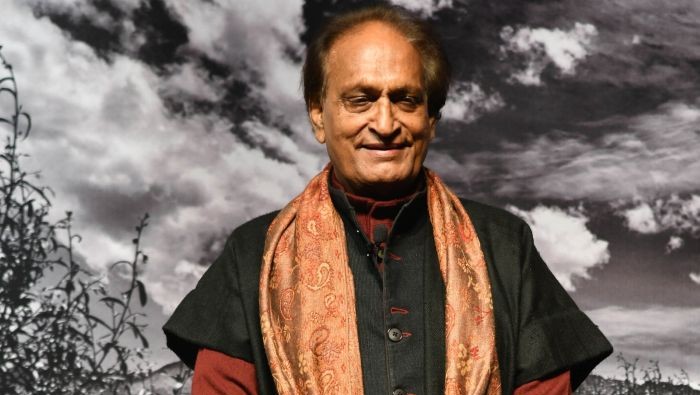
It has been more than a week since Raghu Rai departed. The first wave of tributes came swiftly—glowing, rich, heartfelt, and entirely deserved. And yet, some lives do not yield themselves fully to immediacy. They linger, gather depth within us, and return with a quiet insistence, asking to be reflected upon. This tribute arises from that stillness—a delayed response, perhaps, but a more considered one. There is a certain solace in writing about him, as though one is, in some small way, participating in the attentive gaze he brought to the world.
I did not know him personally. But I encountered him in a way that few can claim. When the Bhopal tragedy unfolded, I was serving there (as many of us in this group were) —witness to a city overtaken by grief, confusion, and an almost unspeakable silence. In the years that followed, one image came to define that catastrophe for the world—his haunting photograph from the Bhopal gas tragedy. For me, it was not merely a powerful image; it was a recognition. It captured, with an unflinching tenderness, what many of us had lived through but could scarcely articulate. That moment forged, silently, my enduring regard for the man behind the lens.
His photographs were never mere records; they were encounters. They did not simply show India; they revealed it—alive with contradictions, steeped in emotion, and profoundly human. He had the rare ability to see beyond the visible, to find meaning in the ordinary and dignity in the overlooked. Hu could see what others could not.
A camera, we often say, is only a machine. In lesser hands, that is where its story ends. But in the hands of an artist, it becomes an instrument of perception—almost of conscience. What set Raghu Rai apart was not only his technical brilliance, but the alchemy by which he transformed the mechanical into something deeply human, the mundane into sublime. His images feel lived-in, as if they carry the weight of experience rather than the mere imprint of a moment.
While that single photograph brought him global recognition, his body of work resists such easy summation. From the restless energy of Indian streets to the stillness of its sacred spaces, from public spectacle to private sorrow, his lens moved with equal ease and empathy. There was no intrusion in his gaze—only an abiding respect for life as it unfolded.
There was also, unmistakably, a patience in his craft. He seemed willing to wait for the moment to arrive at its own truth. In that sense, he was less a taker of photographs and more a listener to the world. He allowed life to reveal itself, and in doing so, he honoured it. That is why his images endure—they were never hurried, never imposed.
In an age defined by haste and noise, Raghu Rai stood for something far more enduring: attention, empathy, and truth. He reminded us that to see is not a casual act; it is a discipline—a form of quiet reverence.
He may have set down his camera, but the world he revealed continues to look back at us—steadily, searchingly—asking whether we, too, have learned to see.
(Uday Kumar Varma is an IAS officer. Retired as Secretary, Ministry of Information & Broadcasting)
Related Posts
President, PM, others pay floral tributes to former PM Vajpayee at ‘Sadaiv Atal’
President,VP and PM pay tributes to war heroes on Kargil Vijay Diwas
Parliamentarians pay floral tributes to Netaji Subhach Chandra Bose