 Ira Singh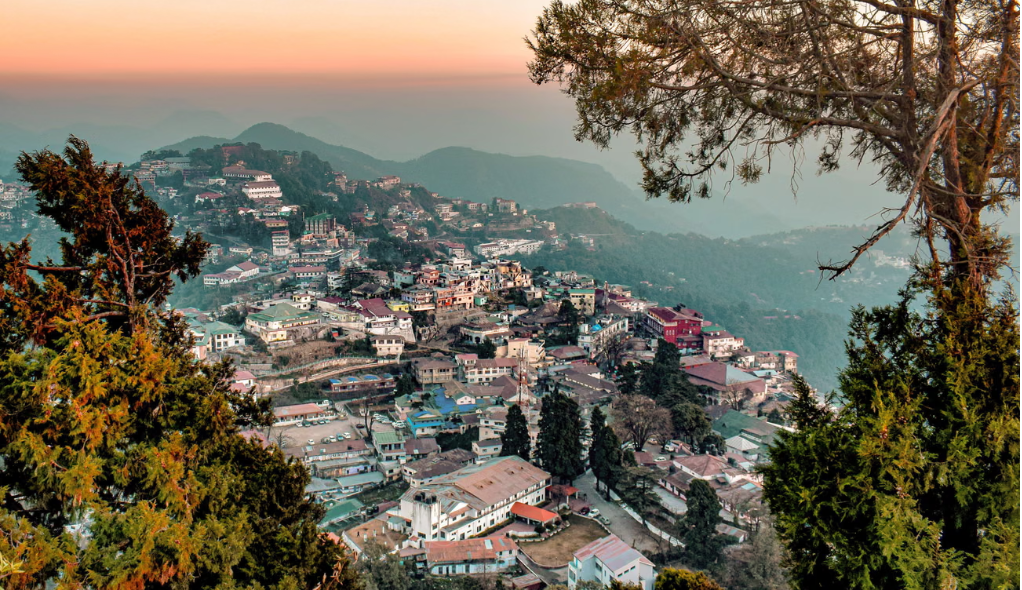
Perched high in the Garhwal Himalayas, Mussoorie has long lived up to its poetic title the “Queen of the Hills.” Mist-laden mornings, quiet forest trails, and colonial-era charm once defined its identity. Today, however, that image is increasingly colliding with a harsher reality: traffic-choked roads, vanishing green cover, and a mounting ecological strain that threatens to redefine the hill town’s future.Just a few kilometres away, Landour once a tranquil refuge tells a similar story. The scenic drive that once offered sweeping Himalayan views and crisp mountain air has turned into a slow crawl through lines of vehicles. Narrow roads, originally designed for minimal traffic, now struggle to accommodate hundreds of cars daily. Journeys that once felt like an escape into nature have become endurance tests marked by honking horns and exhaust fumes.
A Tourism Boom Driven by Rising Heat
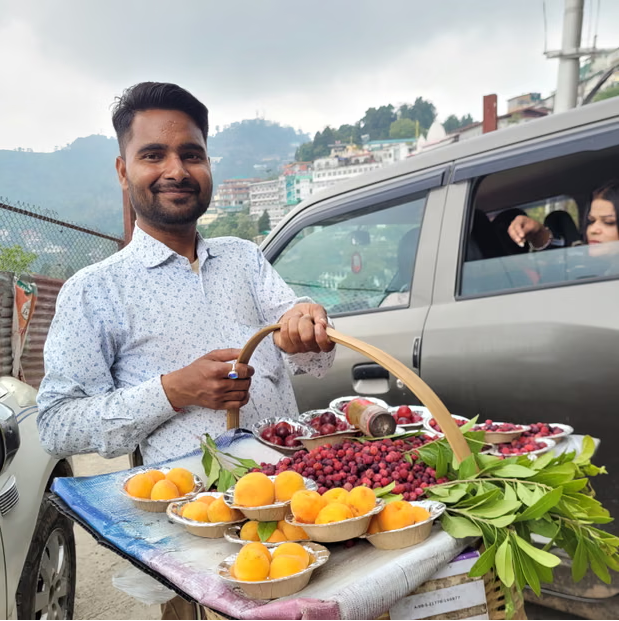
The transformation has been swift and dramatic. As extreme heat intensifies across northern India, hill stations have become vital escape routes. In 2024 alone, over two million tourists flocked to Mussoorie and Landour—a sharp rise from previous years. The surge reflects a broader climate pattern: as plains grow hotter, the mountains are drawing ever-larger crowds.“Before this, very few tourists would come here,” said Ankita Singh, reflecting on Landour’s changing landscape. “The social media reels made it popular. In the last five to six years, the number of tourists has grown exponentially.”Social media exposure during the pandemic accelerated this shift, turning once-hidden corners into viral destinations. What followed was an unprecedented influx of visitors and pressure.For many, the boom has brought opportunity. “If it’s hot in the plains, our business is good,” said Naresh Chauhan, a young guide who migrated to the region seeking better prospects. The rising tourist footfall has boosted local incomes, creating a thriving seasonal economy.Yet, beneath this economic upside lies a deeper, more fragile reality.
Concrete Over Green: The Cost of Expansion
The most visible change across Mussoorie is its vertical expansion. Hillsides that once held dense forests and natural drainage channels are now carved into terraces of hotels, guesthouses, and commercial buildings. Construction often unplanned has surged to meet growing tourist demand.But the Himalayan terrain is inherently fragile. Much of Mussoorie sits on steep slopes and geologically weak formations. Experts warn that excessive excavation, hill cutting, and deforestation are destabilising the land. Cracks in roads and buildings, minor landslides, and soil erosion are becoming increasingly common.The ecological consequences extend beyond the visible. Natural springs, once reliable water sources, are drying up. Pre-monsoon months now bring water shortages, worsened by the spike in tourist consumption. Forest loss has reduced the land’s ability to retain moisture, while concrete surfaces accelerate runoff, intensifying erosion.
Climate Change Reaches the Hills
While Mussoorie continues to offer relief from the scorching plains, even the hills are warming. Residents now report a noticeable rise in temperatures, with fans and cooling systemsonce unnecessary becoming increasingly common.Scientists warn that climate change is amplifying risks in mountainous regions. Erratic rainfall patterns, longer dry spells, and sudden intense downpours are reshaping the Himalayan climate. When heavy rains hit slopes already weakened by construction, the results can be devastating triggering landslides, flooding, and structural damage.The warning signs are already visible: cracked hillsides, sinking slopes, and changing weather patterns. What was once a stable ecosystem is showing clear signs of stress.
Infrastructure Under Pressure
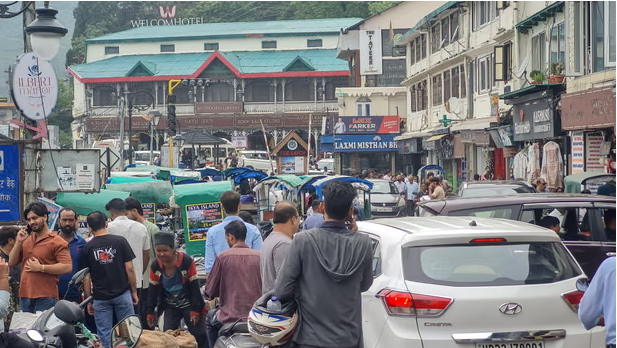
Mussoorie’s infrastructure, never designed for such volumes, is struggling to cope. During peak tourist months, thousands of vehicles enter the town daily, overwhelming narrow mountain roads and limited parking spaces. Traffic congestion now begins well before the town’s entry points, often stretching for kilometres.Waste management has emerged as another major challenge. The surge in visitors has led to a sharp rise in garbage—plastic waste, construction debris, and untreated sewage—placing additional strain on the environment. Disposal systems frequently fall short, leaving waste scattered across hillsides and forest edges.
Changing Character, Fading Charm
For long-time residents and returning visitors, the transformation is not just environmental it is cultural. The quiet, close-knit character of the hill town is gradually giving way to a commercialised tourism economy.What was once a peaceful retreat now often resembles an overcrowded urban centre during peak seasons. The sense of calm that defined Mussoorie is increasingly difficult to find.
A Delicate Economic Balance
The challenge, however, is complex. Tourism is the backbone of Mussoorie’s economy, supporting thousands of livelihoods—from guides and hotel workers to small vendors and transport operators. Any attempt to curb visitor numbers or construction directly impacts local incomes.This creates a delicate balancing act: preserving the environment while sustaining economic activity.Experts argue that the solution lies not in halting development but in redefining it. Sustainable tourism models, strict construction regulations, and scientific assessments of the region’s carrying capacity are increasingly seen as essential.
Signs of Hope Amid Concern
Amid the growing crisis, there are also efforts aimed at ecological restoration. Retired Colonel Chandra Sharma pointed to visible improvements driven by long-term conservation work.“The closure of these quarries marked a major turning point for the valley’s environmental recovery,” he said, recalling the damage caused by past limestone mining. He highlighted ongoing afforestation efforts by the Territorial Army’s Ecological Battalion, noting that forest cover is gradually returning in some areas.“The effort is slow but visible. Forest cover is gradually returning, and nature is responding positively,” Sharma observed, expressing cautious optimism about the future.
Mussoorie today stands as more than just a popular hill station it is a reflection of a broader Himalayan crisis. Across northern India, mountain towns are facing similar pressures from climate change, tourism, and rapid urbanisation.The risks are no longer theoretical. They are unfolding in real time.Cracks in the earth, drying springs, congested roads, and thinning forests are not isolated problems they are signals of a system under strain. Without timely intervention, experts warn, these pressures could escalate into larger environmental disasters.The story of Mussoorie is ultimately a question of limits how much a fragile ecosystem can absorb before it begins to push back.
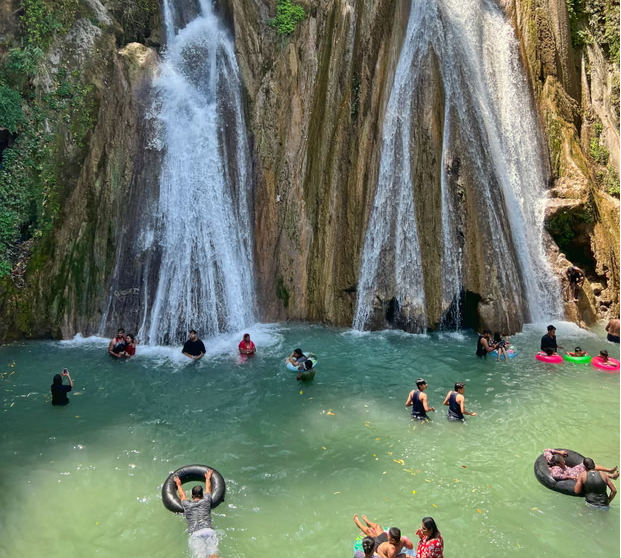
For now, the "Queen of the Hills" still stands, drawing millions with its beauty. But beneath the surface, the balance is shifting. Whether Mussoorie can reclaim its lost calm—or continue down a path of unchecked expansion may well determine the future of India’s mountain landscapes.
(Asstt.Editor)


Related Posts
India, Uganda reaffirm mutual appreciation for bilateral partnership
India's core sector output slows to 4.8% in August
Asian Games: Suchika wins historic bronze medal for India in MMA