 Ira Singh
A fresh wave of geopolitical tensions in West Asia is putting the global disinflation cycle at risk, with rising energy prices reigniting inflationary pressures and forcing central banks to rethink the pace of monetary easing. Investors and policymakers are now awaiting the release of the US Consumer Price Index (CPI) data for June on July 14, a key indicator that could shape the trajectory of global interest rates in the coming months.The renewed inflation concerns come after the International Monetary Fund (IMF) lowered its 2026 global growth forecast to 3 per cent from the 3.1 per cent projected in April, citing disruptions caused by the conflict involving Iran, supply chain disruptions and elevated energy prices. At the same time, the Fund raised its global inflation forecast to 4.7 per cent in 2026 from 4.1 per cent in 2025, warning that the disinflation trend seen since early 2024 has stalled.
Global growth is forecast at 3.0% in 2026, while inflation is projected to rise to 4.7%. Risks are more balanced than in April, but downside risks remain. Policy should aim to restore price stability, rebuild buffers, and strengthen cooperation. https://t.co/EWThm8NLlj pic.twitter.com/Dxwksj2cDX
— IMF (@IMFNews) July 8, 2026
The IMF said the world economy is navigating two opposing forces: an energy shock triggered by the Middle East conflict and a technology-driven investment boom led by artificial intelligence. While AI investments and renewable energy have helped cushion growth in several economies, higher oil prices continue to weigh on inflation and consumer spending. According to the IMF, attacks on energy infrastructure and disruptions to shipping through the Strait of Hormuz have pushed commodity prices higher, raising transportation and production costs globally. Although oil prices have eased from their peak after the announcement of a ceasefire, geopolitical uncertainty remains elevated and poses a significant downside risk to the global economy.
Market participants believe the June US inflation data could become the next major trigger for global financial markets. Economists expect the report to indicate whether recent energy price shocks have begun feeding into broader consumer prices. A hotter-than-expected inflation reading would strengthen expectations that the US Federal Reserve could maintain a "higher-for-longer" interest rate stance, while a softer print could revive hopes of monetary easing later this year.
Recent surveys already point to mounting inflation concerns among American households. The New York Federal Reserve's June Survey of Consumer Expectations showed one-year inflation expectations climbing to their highest level since September 2023, reflecting concerns over energy prices despite improving labour market sentiment. For emerging economies such as India, the inflation outlook has become more challenging. The IMF has projected India's economic growth to moderate to 6.4 per cent in FY2026-27, citing weaker global demand and higher energy costs. While India's macroeconomic fundamentals remain relatively strong, sustained increases in crude oil prices could widen the import bill, pressure the current account deficit and complicate the Reserve Bank of India's monetary policy decisions.
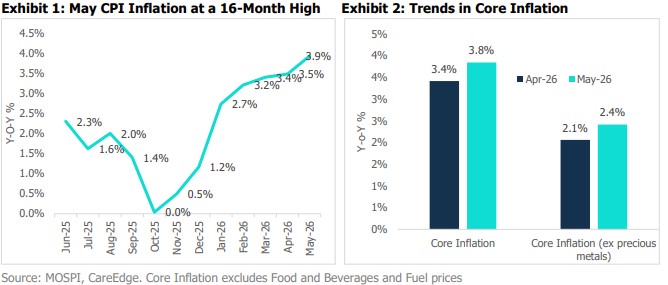
China is also expected to witness slower growth, with output projected to moderate to 4.6 per cent in 2026, while oil-producing economies in the Middle East are likely to experience the sharpest economic slowdown because of the direct impact of the conflict on production and exports. The United States, however, has maintained its 2026 growth projection of 2.3 per cent, supported by resilient investment and technology spending.
From a market perspective, analysts say inflation has once again become the defining macroeconomic variable. Higher energy costs typically feed into transportation, manufacturing and food prices, delaying the return of inflation to central bank targets. This, in turn, raises borrowing costs for businesses and households, weighs on investment and increases volatility across equity and bond markets.Economists also point out that the current inflation cycle differs from previous episodes. Unlike the pandemic-driven supply disruptions or the commodity shock following the Russia-Ukraine war, the latest surge is being shaped by geopolitical risks to global energy supplies at a time when many central banks were preparing to shift towards lower interest rates. The renewed uncertainty has complicated the policy outlook.
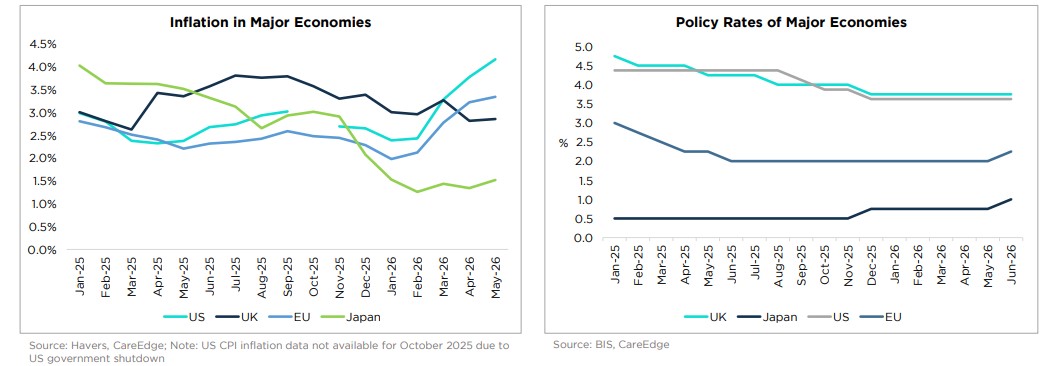
The IMF has urged central banks to remain focused on price stability while carefully assessing the impact of volatile commodity prices and AI-driven investment on economic activity. It also cautioned governments against allowing temporary energy-related fiscal support measures to become permanent, stressing the need to rebuild fiscal buffers amid rising global debt levels. With financial markets closely watching the June US CPI report and geopolitical risks remaining elevated, economists believe the coming weeks could determine whether the global economy resumes its disinflation path or enters another prolonged phase of inflation-driven monetary tightening.
(Business Correspondent)

















Related Items
India’s forex reserves rise by $9.9 bn to $716.9 bn,6-month high
BRICS FMs, Central Bank Governors meeting begins in Jaipur
CBI chargesheets Bank official, firm owner in digital arrest scam