 Newsinc24 Team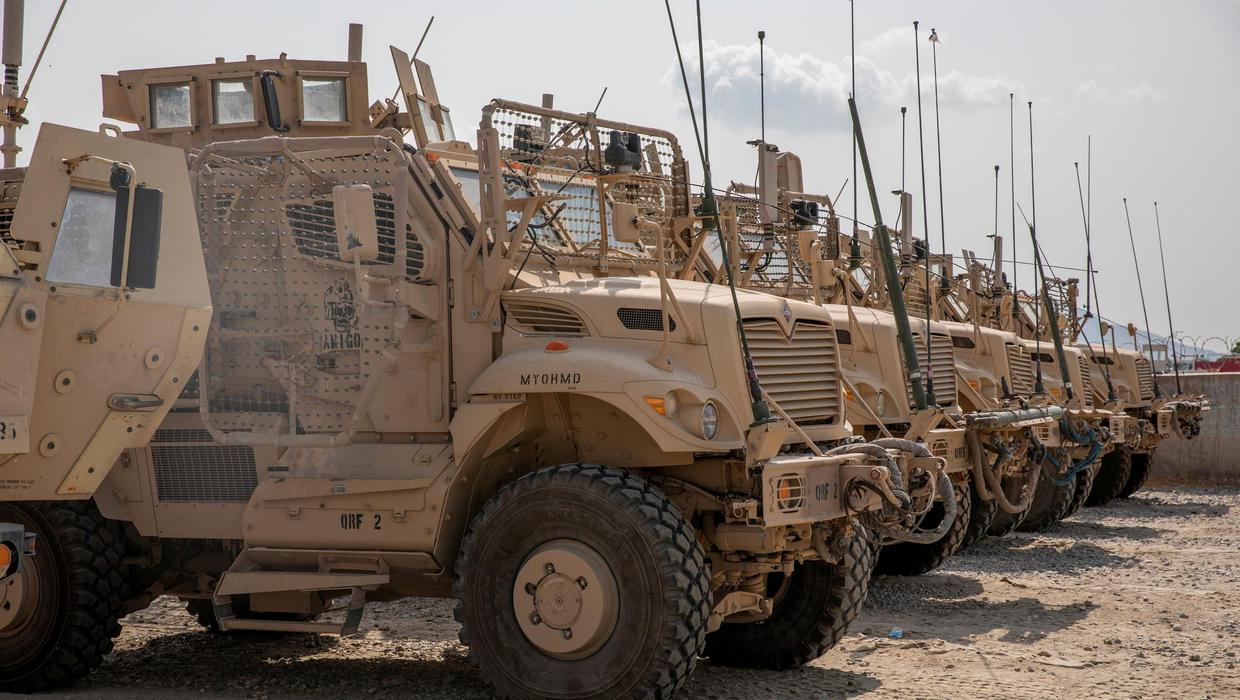
The Americal Military Analysts to study the US failure to produce a sustainable Afghan army and police force, and the reasons for their collapse before the Taliban which captured an array of modern military equipment when they overran Afghan forces who failed to defend district centers. Bigger gains followed, including combat aircraft, when the Taliban rolled up provincial capitals and military bases with stunning speed, topped by capturing the biggest prize, Kabul, over the weekend.
Built and trained at a two-decade cost of USD 83 billion, Afghan security forces collapsed so quickly and completely in some cases without a shot fired that the ultimate beneficiary of the American investment turned out to be the Taliban. They grabbed not only political power but also US-supplied firepower guns, ammunition, helicopters and more. A US defence official on Monday confirmed the Taliban's sudden accumulation of US-supplied Afghan equipment is enormous.The forces turned out to be hollow, equipped with superior arms but largely missing the crucial ingredient of combat motivation.
Money can't buy will. You cannot purchase leadership, John Kirby, chief spokesman for Defense Secretary Lloyd Austin, said Monday.Doug Lute, a retired Army lieutenant general who help direct Afghan war strategy during the George W. Bush and Barack Obama administrations, said that what the Afghans received in tangible resources they lacked in the more important intangibles.The principle of war stands moral factors dominate material factors, he said. Morale, discipline, leadership, unit cohesion are more decisive than numbers of forces and equipment. As outsiders in Afghanistan, we can provide materiel, but only Afghans can provide the intangible moral factors. But, the Taliban insurgents, with smaller numbers, less sophisticated weaponry and no air power, proved a superior force. U.S. intelligence agencies largely underestimated the scope of that superiority, and even after President Joe Biden announced in April he was withdrawing all U.S. troops, the intelligence agencies did not foresee a Taliban final offensive that would succeed so spectacularly.
The failures, however, go back much further and run much deeper. The United States tried to develop a credible Afghan defense establishment on the fly, even as it was fighting the Taliban, attempting to widen the political foundations of the government in Kabul and seeking to establish democracy in a country rife with corruption and cronyism.Year after year, US military leaders downplayed the problems and insisted success was coming.
Some elements of the Afghan army did fight hard, including commandos whose heroic efforts are yet to be fully documented. But as a whole the security forces created by the United States and its NATO allies amounted to a house of cards whose collapse was driven as much by failures of US civilian leaders as their military partners, according to Anthony Cordesman, a longtime Afghanistan war analyst at the Center for Strategic and International Studies.The Afghan force-building exercise was so completely dependent on American largesse that the Pentagon even paid the Afghan troops' salaries. Too often that money, and untold amounts of fuel, were siphoned off by corrupt officers and government overseers who cooked the books, creating ghost soldiers to keep the misspent dollars coming.












Related Items
Op Sindoor defined India's response to provocation: Army chief
EU, NATO warn Moscow after Russian drone hits building in Romania
Army officers survive chopper crash in Leh, their selfie goes viral