 Krishan Gopal Sharma
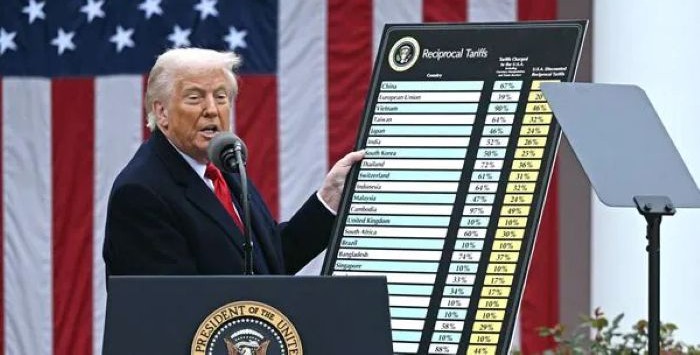
 When Donald Trump returned to the White House earlier this year, the world expected disruption. What many in India perhaps did not anticipate was the speed and severity with which U.S.–India trade relations would be jolted. Under the guise of "reciprocal tariffs," the Trump administration imposed a 25% duty on Indian imports—followed swiftly by a second 25% levy, this time as retribution for India’s continued import of discounted Russian oil.
The result? A 50% tariff wall that has caught Indian exporters off guard, disrupted long-standing supply chains, and sent diplomatic ties into an unplanned chill. For all the talk of shared democratic values and strategic alignment in the Indo-Pacific, Trump’s tariff barrage has exposed the fragility of the U.S.–India partnership when hard interests collide.
But there is a silver lining. As painful as this moment is for India's export sector and broader economy, it also offers an opportunity—if New Delhi is willing to grasp it. The tariff shock has made one thing abundantly clear: India must reduce its overdependence on any single market and pursue a more resilient, autonomous, and strategically diversified economic future.
The Impact:
The immediate impact of the tariffs has been most acutely felt in India’s labor-intensive sectors: textiles, garments, gems and jewelry, seafood, and auto components. These industries thrive on thin margins and price competitiveness. A 50% tariff in their largest export market is effectively a death sentence for many contracts.
Consider the seafood industry. India is one of the world’s largest shrimp exporters, and the United States is its biggest customer. But after the tariff hike, U.S. buyers began cancelling orders or demanding steep price cuts. Across Andhra Pradesh and Tamil Nadu, shrimp processors are scaling back operations. Thousands of informal jobs are at risk.
Similar pain points are emerging in diamond polishing units in Gujarat, leather tanneries in Kanpur, and textile mills in Tamil Nadu. These sectors employ millions—many from rural or semi-urban areas—and they now face a contraction that will not be easy to reverse.
Geopolitical Whiplash
Beyond trade, the tariffs have thrown a wrench into what was widely seen as a maturing strategic partnership between India and the United States. For over a decade, the two countries had been drawing closer—through defense deals, technology sharing, and multilateral forums like the Quad. Trump’s tariff offensive, especially when linked to India’s energy ties with Russia, raises doubts about Washington’s reliability as a partner.
This isn’t about ideology—it’s about consistency. India has always valued strategic autonomy. But under Trump, U.S. foreign policy once again appears unpredictable and transactional. The message is unmistakable: when political winds shift in Washington, even trusted partners can become economic targets.
Former Australian Prime Minister Tony Abbott put it bluntly when he warned that the U.S. pressure on India could fracture the Quad. He may be right. If America views India primarily through the lens of energy politics and trade deficits, it risks undermining a relationship that has far broader strategic significance.
India’s Course Correction
To its credit, India has responded not with outrage, but with recalibration. Rather than retaliating with tariffs of its own, New Delhi is pushing ahead with a longer-term agenda: diversifying export markets, investing in domestic manufacturing, and accelerating trade deals with other global players.
Free trade agreement talks with the European Union and the United Kingdom have gained urgency. So have conversations around joining the CPTPP, a bloc that could offer India better access to high-income Asia-Pacific markets. There is also a quiet but determined effort underway to expand economic ties with Africa, ASEAN, the Middle East, and Latin America.
At the same time, the government is beginning to support affected sectors through freight subsidies, export incentives, and relief on GST. These measures will provide short-term relief, but they are also part of a broader pivot. India is rethinking its role in global trade—from being primarily an exporter of low-cost goods to becoming a competitive player in high-value manufacturing, technology, and services.
An Unintended Reform Catalyst
History has shown that external shocks can serve as powerful catalysts for reform. The 1991 balance of payments crisis led to India’s economic liberalization. The 2020 COVID-19 pandemic pushed digitization, remote work, and manufacturing resilience. Trump’s tariff barrage in 2025 may well join that list—not because it was well-designed or justified, but because it forces India to confront uncomfortable realities.
We have long spoken of becoming a manufacturing hub. Now, we must back that vision with action—through labour reforms, logistics infrastructure, export finance, and skill development. We have aspired to be a credible alternative to China in global supply chains. That won’t happen unless we reduce our dependence on subsidies and low wages and instead focus on innovation and competitiveness.
The United States, too, must decide what kind of partner it wants India to be. If it seeks a durable strategic alliance, it cannot afford to alienate India through unilateral trade aggression. The reality of global geopolitics is that nations like India will continue to hedge, diversify, and assert their autonomy. Coercion—economic or otherwise—is unlikely to produce alignment.
A Turning Point
There’s no denying that Trump’s tariffs have dealt India a blow. Exporters are hurting. Jobs are at risk. Markets are nervous. But this could also be a pivotal moment—a chance to reset India’s trade priorities, double down on domestic strength, and position itself as a resilient, globally integrated economy.
Strategic autonomy is not isolation. It is the ability to navigate a world where alliances shift, politics intrude on economics, and uncertainty is the only constant. If India emerges from this episode more self-reliant, more diversified, and more competitive, then what feels like a setback today may, in retrospect, look like a necessary jolt. The tariff war may have begun in Washington. How it ends will be decided in New Delhi.
<><><>
(The author is a freelance Journalist. Retired officer from Indian Information Service. Views are personal).
K.G Sharma (kgsharma1@gmail.com; Mobile: 9811340809)










Related Items
India vows to protect energy security, warns of impact on US ties
Trump lauds India's crackdown on poppy farming
US judge blocks Trump rule limiting stay for foreign students, journalists