 Krishan Gopal Sharma
When Volume Replaces Vision
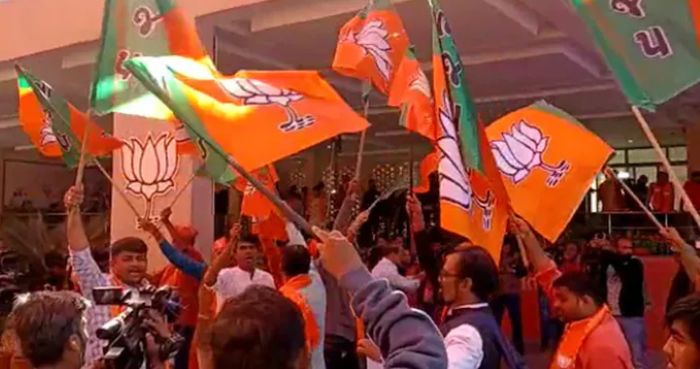
There is a familiar moment in every election season when the air thickens. Slogans grow louder, identities are sharpened, investigations appear on cue, and social media becomes a conveyor belt of half-truths and manufactured outrage. None of this feels new anymore. That, precisely, is the danger. What should alarm us now barely registers. Indian democracy—like several others across the world—has not collapsed; it has been worn down, standard by standard, until lowered expectations pass for realism. This is not simply about who wins elections. It is about what kind of politics has come to feel acceptable.
From Argument to Acoustics
Public debate has steadily given way to public performance. Politics is conducted less through persuasion than through saturation. Media—television studios, digital platforms, and messaging apps—functions increasingly as amplification rather than interrogation. Questions are framed to provoke, not to clarify. Silence is treated as defeat; restraint as weakness.
In this ecosystem, seriousness is a liability. Talking about employment, inflation, health systems, or climate stress requires patience and coherence. Talking about enemies, pride, and grievance requires only volume. Electoral politics, rationally responding to incentives, chooses the latter. This is how performance replaces governance without announcing itself as such.
The Architecture of Betrayal
To those who have spent a century nibbling at the foundations of the Republic, know that their 'hundred-year plan' has succeeded not in building a nation, but in perfecting its bankruptcy. They mistook the hollowing out of institutions for their capture, and confused the silence of the fearful with the consent of the governed. In place of curiosity, they installed performance; in place of law, a carefully curated rule of influence. An entire constituency was taught to celebrate its own helplessness as though it were power.
They weaponised what they called strategic minimalism, offering cheap symbols instead of jobs, health, or dignity. In doing so, they betrayed the very poor they claimed to champion, extracting loyalty while delivering deprivation. The deepest wound they inflicted, however, was not ideological but moral. History’s sharpest judgment would fall on their hypocrisy: the way they desecrated the country’s pluralistic soul while loudly reciting verses of devotion they plainly did not believe.
They won a decade through spectacle, noise, and muscle, mistaking dominance for durability. But the future looks slipping from their grasp. When the performance inevitably exhausts itself and reality forces its way back in, all that will remain will be a state too hollowed to function and a people who had simply finished believing in them.The Alibi of “No Alternative”
Few claims are as effective—or as corrosive—as the insistence that there is no alternative. It does not argue policy; it argues futility. It teaches citizens to confuse stability with inevitability and compromise with maturity. In India, as elsewhere, this logic thrives when opposition is fragmented, institutions weakened, and media ecosystems aligned with power. Yet “no alternative” is rarely a description; it is a project. Alternatives do not disappear on their own; they are crowded out, discredited in advance, or denied oxygen until invisibility is mistaken for absence.
Criminality as a Political Constant
Perhaps the most chilling normalisation is the routine presence of candidates with serious criminal charges. This is no longer treated as scandalous; it is discussed as arithmetic. Parties justify such choices as 'winnability'. Voters, offered constrained options, make defensive calculations. Over time, abnormality becomes background.
This is not because society has lost its moral compass. It is because institutional failure teaches people to prioritise access over ethics. When courts crawl, policing is uneven, and administration is fragile, power appears more reliable than law. Criminality is rebranded as capacity. That shift corrodes democracy at its roots because it teaches citizens to expect less—and leaders to deliver even less.
The Misreading of the Voter
The prevailing narrative casts voters as gullible, tribal, or cynical. This is convenient and wrong. What is widespread is not ignorance but fatigue. The repetition of the same tactics dulls their effect. The same slogans, the same cultural cues, and the same moral exemptions eventually produce exhaustion rather than enthusiasm.
Alongside fatigue sits indignation—quieter, deeper, and more dangerous for power. People notice the gap between promise and performance, between moral posturing and ethical conduct. They may not protest; they may even comply. But belief thins. Consent becomes conditional. The system looks stable while legitimacy quietly erodes. Political parties often mistake turnout for trust; the two are no longer the same.
Why Substance Struggles to Surface
Leaders of substance rarely thrive in environments hostile to complexity. Serious governance depends on institutions that reward learning, continuity, and restraint. Many of those ladders—student politics, unions, local government, and independent media—have weakened or been hollowed out. Leadership is increasingly curated from the top, not cultivated from below. The result is a politics of instant recognisability. Substance survives, but mostly offstage: in municipal offices, state departments, courtrooms, and classrooms. It waits, unfashionable and untelevised, for conditions to change.
A Dawn That Does Not Shout
The most dangerous moment for any republic is when decline is normalised and resignation mistaken for wisdom. Correction rarely arrives with fireworks. It does not announce itself as a moral awakening; it begins locally, unevenly, and often quietly. A city votes for competence over spectacle; a state rewards delivery over slogans. A 'boring' administrator outperforms a charismatic performer. Proof accumulates. Expectations shift.
Eventually, even dominant parties adapt—not out of conviction, but necessity. Volume drops because it no longer converts. Institutions, once dismissed, regain relevance because stability demands them. This is not optimism; it is a historical pattern. Just as the sun rises without the need for a fanfare, substance has a way of returning when the noise finally exhausts itself. Democracy remains a living thing, and like all living things, it eventually tires of the dark and seeks the light of a new, quieter dawn.
(Disclaimer: References, analogies, and characterisations in this article are used strictly for analytical and explanatory purposes. They are not intended to denigrate, target, or diminish any individual, group, or institution.)
(The writer is a retired officer of the Indian Information Service and a former Editor-in-Charge of DD News and AIR News (Akashvani), India’s national broadcasters, as well as Media-link Information Officer of Press Information Bureau (PIB) attached to various ministries. He has also worked as an international media consultant with UNICEF Nigeria and contributes regularly to various publications in India and abroad)
<><><>









Related Items
Trump fires 2 members US election commission, Vice Chair quits
Gujarat Police launch cyber safety campaign for women, children
Delhi CM Rekha Gupta launches Green Drive portal for Tree Campaign