 Dr Ashok Pandey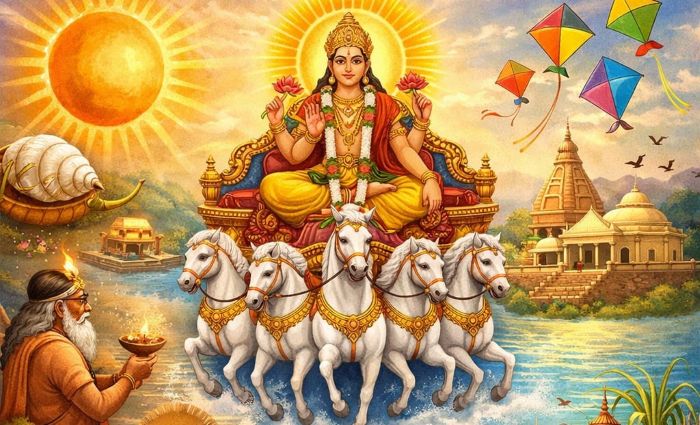
With the beginning of the Gregorian year, the first major festival celebrated in our country is Makar Sankranti. There are many planets in the solar system, but among them two celestial bodies have a direct and undeniable influence on our daily lives. Even if a person does not believe in other planets or constellations, the influence of the Sun and the Moon cannot be denied. These two alone provide momentum and direction to human life. The Sun and the Moon have a significant impact on the weather and climate of our planet.
The very word Sankranti means change.
When the Sun remains in the southern course (Dakshinayan), the effect of winter is stronger and the days are relatively shorter. However, when the Sun begins its movement toward the north, known as Uttarayan, the days start becoming longer. During this period, sunrise shifts slightly toward the northeast from the east, and sunset shifts slightly toward the northwest from the west.
In this situation, the Sun’s rays fall on the Earth for a longer duration and with greater intensity, as a result of which the weather gradually begins to warm. Although most Indian festivals are determined according to lunar dates, Makar Sankranti is a festival that is based on the movement of the Sun.
Every year, on 14 January, the Sun enters the phase of Uttarayan.
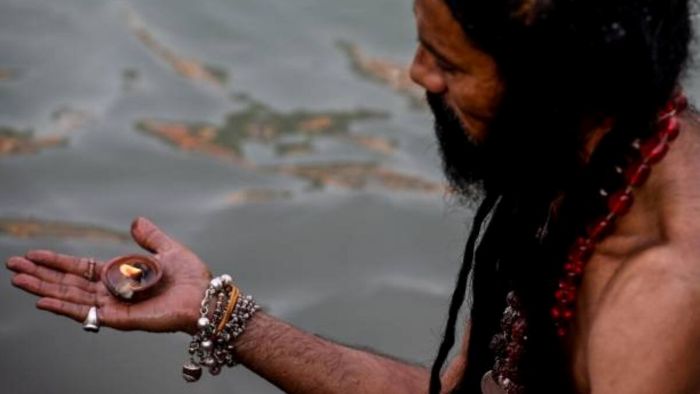
This year, on 14 January at 3:13 p.m., the Sun God moves from Sagittarius (Dhanu), ruled by Jupiter, into Capricorn (Makar), ruled by Saturn. This festival is celebrated in various forms across almost all parts of India. On this day, the Sun completes its journey in Sagittarius and enters Capricorn, the earth-element sign of his son Saturn. On this occasion, people take ritual baths in rivers—especially the Ganges—and engage in charity and donations. Major bathing fairs are organized on the auspicious occasion of Makar Sankranti at Prayagraj, the king of pilgrimage sites, and at Gangasagar.
In Gorakhpur, the famous Khichdi Mela begins on this day at the temple of Adi Yogi Shri Guru Gorakhnath. At the same time, a large number of devotees gather at Maghar, the place of nirvana of Saint Kabir Das. Khichdi holds special significance because during seasonal transitions, easily digestible food is considered beneficial. On this day, sesame seeds are also donated. Sesame is believed to have a warming effect, and it is said that through charity, even those who do not possess sesame seeds receive them.
In South India, this festival is known as Pongal; in Assam, as Bihu; in Punjab and Jammu & Kashmir, as Lohri; and in the Sindhi community, as Lal Lohi. In Gujarat and Varanasi, the sky on this day is filled with colorful kites.
According to mythological belief, on this very day King Bhagiratha brought the River Ganga down from heaven to Earth and guided her through the hermitage of Sage Kapil to the ocean. Through the sacred waters of the Ganga, the sixty thousand cursed sons of King Sagara attained liberation. Owing to this faith, Gangasagar became established as a sacred pilgrimage site.
In Maharashtra, it is believed that from this day onward, the movement of the Sun God advances step by step, like a grain of sesame.
According to the Tamil almanac, the New Year also begins on this day. The entire world receives energy from the Sun. After Uttarayan, when the Sun remains present over the Earth for a longer duration, this energy increases. As a result, human working capacity improves; nights become shorter and days longer, providing more time for activity. Along with this, seasonal changes also begin to take place. May all be auspicious.
(Dr Ashok Pandey,Spiritual Healer, Vastu Consultant and Astrologer Pune - +91-7574885030, +91- 9425006196)








Related Items
Magh Mela:Over 21 lakh take holy dip at Sangam on Makar Sankranti
Amit Shah celebrates Pongal with party workers in Tamil Nadu
Amit Shah flies kites to celebrate Makar Sankranti in Ahmedabad