 Ira Singh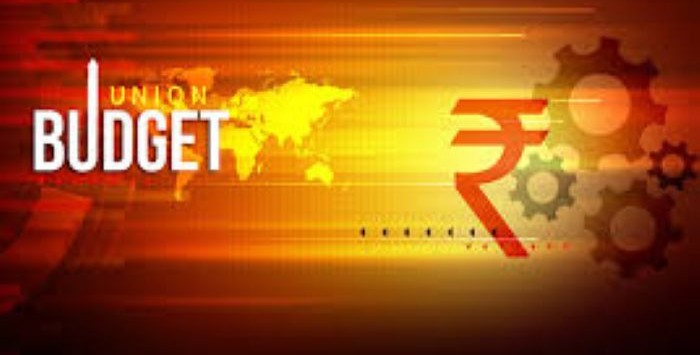
As Budget 2026 draws closer, the message from taxpayers is getting louder and clearer: relief is needed, and soon. With inflation stretching household budgets and salaries struggling to keep pace, individuals are looking to the Union Budget for meaningful changes in personal income tax—higher exemptions, gentler rates, and more room for deductions.A recent reader survey highlights these expectations. Nearly 44% of respondents want lower tax rates across income slabs, while about 18.7% are pushing for a higher basic exemption limit. The numbers reflect a common concern—current tax slabs are no longer aligned with today’s cost of living. At present, income tax kicks in at ₹2.5 lakh under the old tax regime and ₹4 lakh under the new regime, thresholds many believe are outdated.
Standard deduction: An easy win?
One of the simplest ways to offer relief could be through the standard deduction. While only a smaller share of respondents flagged this as a priority, tax experts say it deserves serious attention.Chartered Accountant Abhishek Soni, co-founder of Tax2Win, argues that the current standard deduction of ₹75,000 under the new tax regime does not adequately reflect rising work-related expenses and inflation. He believes increasing it to ₹1 lakh is both feasible and impactful.“An enhanced standard deduction would give direct tax relief to salaried employees and pensioners without complicating the system,” Soni says. “Since it applies automatically, it’s one of the most efficient ways to put more money back into taxpayers’ hands.”
Lower rates or wider slabs?
While cutting tax rates is an attractive proposition, experts suggest widening income slabs may deliver broader and more sustainable relief. According to Soni, expanding slabs allows middle-income earners to remain in lower tax brackets for longer, easing the burden without significantly denting government revenues.“From a practical standpoint, slab expansion works better. It balances taxpayer relief with fiscal stability,” he explains.Chartered Accountant Suresh Surana points out that the government has already been moving in this direction in recent years, especially under the new tax regime. Measures such as slab rationalisation, selective rate reductions, and enhanced rebates have helped lower the effective tax burden for a large segment of taxpayers.“These steps have particularly benefited middle-income households, boosting disposable incomes while simplifying the tax structure,” Surana says.However, he adds that in the current environment, regular upward revisions of slab thresholds are crucial to counter inflation-driven “bracket creep,” where taxpayers end up paying higher taxes without any real increase in purchasing power. A calibrated reduction in marginal rates, especially in the middle slabs, could further ease pressure on household finances.
Time to raise the basic exemption limit?
Another key demand is an increase in the basic exemption limit under both the old and new tax regimes. Soni believes this would make the tax system fairer and more realistic.
“A higher exemption ensures low- and middle-income earners aren’t taxed too early, especially when essential expenses have risen sharply,” he says. “It also simplifies taxation by offering relief upfront, even before deductions come into play.”
More deductions under the new tax regime?
While the new tax regime is popular for its simplicity, many taxpayers feel it falls short in addressing long-term financial needs. Nearly one-fifth of respondents want more deductions under the new system.Currently, only employer contributions to the National Pension System (NPS) qualify for deduction under the new regime, while self-contributions—allowed under the old regime—are excluded. Surana believes this is a gap worth addressing.“The new regime has made commendable progress on simplicity and lower rates, but it doesn’t fully reflect middle-class realities like retirement planning,” he says. “Allowing deductions for self-contributions to NPS would encourage long-term savings without significantly complicating the framework.”
The big question
As expectations build, the big question remains: how much can Budget 2026 realistically deliver? With fiscal constraints on one side and voter sentiment on the other, the government faces a delicate balancing act.Still, targeted moves—higher exemptions, wider slabs, a better standard deduction, and selective deductions under the new regime—could go a long way in easing tax stress for millions. For now, taxpayers are watching closely, hoping this Budget finally tips the scales in their favour.
(Business Correspondent)
Related Posts
India sends fresh tranche of relief material to Nepal
US, Australia offer $580 million in support for Pacific islands
Focus on timely delivery, global-standard quality: Rajnath to DPSUs