.jpg)
 Newsinc24 Team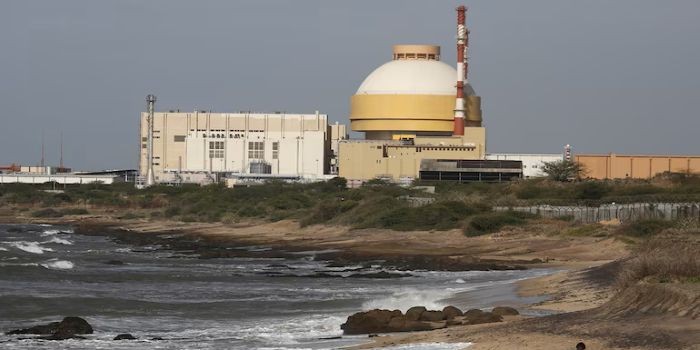
nessinPresident Droupadi Murmu has granted assent to the Sustainable Harg and Advancement of Nuclear Energy for Transforming India (SHANTI) Bill, passed by Parliament during the Winter Session. A government notification said that the President granted assent to the SHANTI bill on Saturday. The Bill subsumes all laws dealing with the civil nuclear sector and also opens it up for participation by private players.
The SHANTI Bill repealed the Atomic Energy Act of 1962 and the Civil Liability for Nuclear Damage Act, 2010, which had proved to be an impediment in the growth of the civil nuclear sector in India. The law enables private companies and joint ventures to build, own, operate and decommission nuclear power plants under a license from the government. It states that mining of uranium and thorium, enrichment, isotopic separation, reprocessing of spent fuel, high-level radioactive waste management and heavy water production will remain exclusively with the central government or government-owned entities.Earlier, nuclear power generation was restricted to the Union government and government-controlled entities such as the Nuclear Power Corporation of India Limited (NPCIL) under the Atomic Energy Act, 1962. The SHANTI bill changes this by allowing limited private participation, subject to strict regulation.
The Minister of State (Independent Charge) for Science and Technology, Dr Jitendra Singh, stated in Parliament that the bill seeks to modernise India’s nuclear framework in line with contemporary technological, economic, and energy realities, while retaining and strengthening the core safety, security and regulatory safeguards that have been in place since the Atomic Energy Act, 1962. The minister explained that times have changed and technology has evolved, making it feasible to expand the role of nuclear energy in the power sector. He pointed out that nuclear energy has applications beyond electricity generation, including cancer care, agriculture and industry. The minister also highlighted that concepts such as Small Modular Reactors (SMRs) and Bharat Small Reactors were unimaginable 15 years ago but are now emerging as safe, efficient, and flexible solutions for clean, round-the-clock power generation.










Related Items
Motion of Thanks to President’s address passed in Lok Sabha
PM Modi thanks Sri Lankan President at sacred Relics exposition
Manipur: President’s rule revoked, Y K Singh stakes claim to form govt