 B I Saini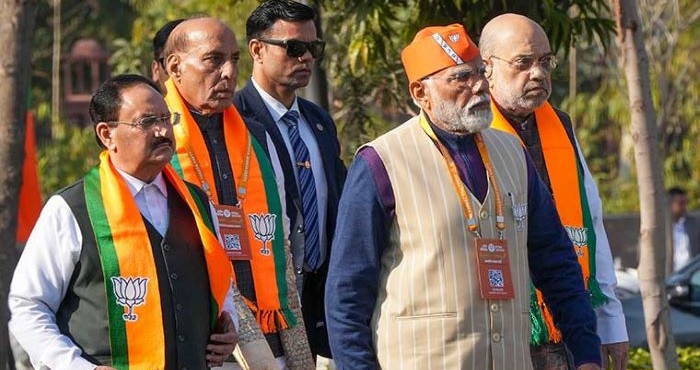
The more things change, the more they remain the same. What French philosopher and author Jean-Baptiste Alphonse Karr said in 1849 is a hundred percent true of the situation in India, especially in the political sphere. When the results of this year’s Lok Sabha elections came out last month, many people including political analysts thought that they marked the beginning of a period of change. The BJP, which has been ruling the country for the past decade with an absolute majority, could not get an absolute majority this time. Consequently, though Narendra Modi continued as Prime Minister for the third time in a row, the BJP has to depend on the support of a couple of regional parties for remaining in power.
Many people including analysts thought that Prime Minister Narendra Modi, faced with an eroded mandate, will try to chalk out a new political agenda to deal with the emerging scenario. But the way the new government is functioning, there does not appear to be any course correction.
This became clear the day the new government was sworn in.There is no change in the ministers holding charge of the major portfolios. The ministries of Home, Defence, Finance and External Affairs continue with the political leaders, who held them in the outgone cabinet. The changes are at lower levels only. The other parties in the government have been entrusted with inconsequential ministries and departments.
There is also very little change in the government’s attitude towards the opposition parties. There is no sign so far of increased emphasis on stepping up of consultation with the opposition parties, recognising the increase in their numbers in the Lok Sabha, the lower house of parliament.
There are also very little signs of the Narendra Modi government changing its perspective on major challenges facing the country. Jammu and Kashmir is still being tackled as a law and order issue, and not on the political level. There is no recognition that there is need for reaching out to the people of Jammu and Kashmir, and to involve them at the political level.
There is also no sign of any significant political move to deal with the crisis in Manipur.
The first budget of the new Narendra Modi government will be coming out on Tuesday, July 23. Hopefully, it will herald a reach out to the general public and the middle classes, and not just serving the interests of the super rich and wealthy, which has been the fallout of the economic policies pursued in the last ten years. The budget will show if the government wants to make a new beginning at least in the economic sphere.
Going by the way the Narendra Modi government has been functioning so far, the prospects of a new beginning look bleak. One can hope for the best, perhaps the need for a new beginning is recognised in the top echelons of the ruling elite. Otherwise, it will be one more case of the universal principle enunciated by the French philosopher coming true.
(B I Saini is an IIS officers, retired as DG, News AIR. He is a senior political Analyst)








Related Items
The ticking time bombs of the Himalayas
Vande Mataram rendered for first time at Red Fort, PM hoists National Flag
Gunman opens fire at Thai government office, two injured