 Newsinc24 Team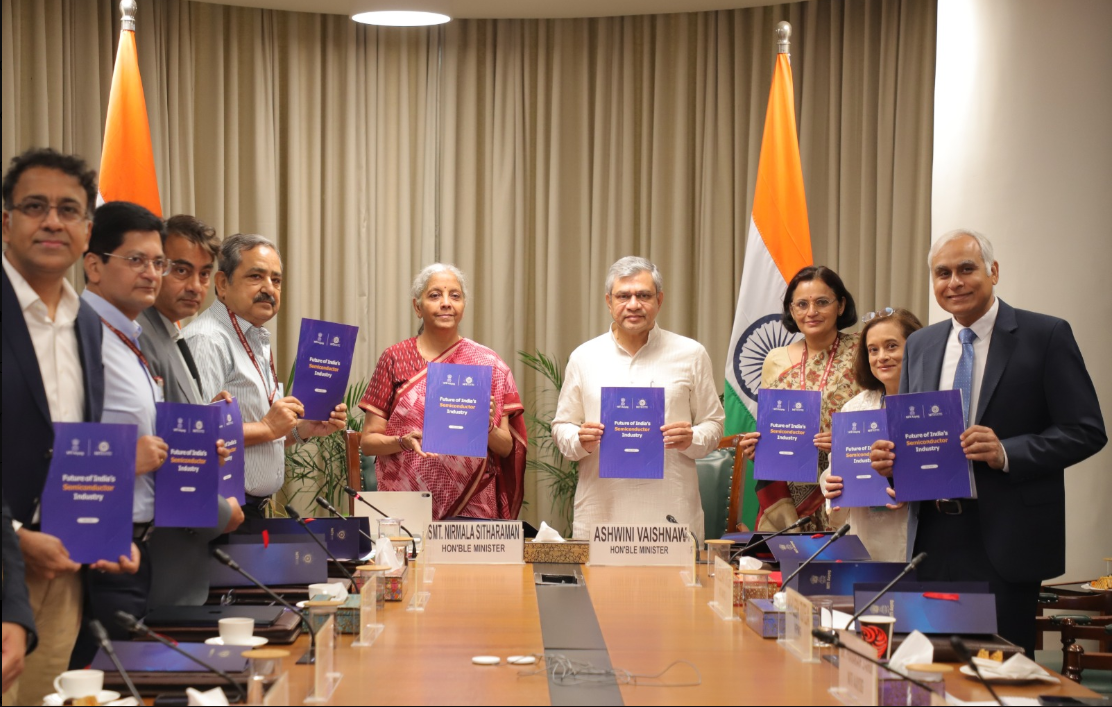
India’s semiconductor market is projected to reach nearly $200 billion by 2035, driven by rising demand across sectors such as electronics, automotive, telecommunications, artificial intelligence and industrial manufacturing, according to a NITI Aayog report released on Friday.The report, titled 'Future of India's Semiconductor Industry', highlighted that despite the rapid growth in domestic demand, around 90-95% of India’s semiconductor requirements are currently met through imports. This dependence results in significant foreign exchange outflows and exposes critical sectors to global supply chain disruptions.To establish a globally competitive semiconductor ecosystem, India will require cumulative investments of approximately $135-180 billion over the next decade. The report noted that these investments should be channelled into semiconductor design, fabrication facilities, advanced packaging, materials production and supporting infrastructure.
According to agency reports, NITI Aayog recommended that the government commit at least one-third of the required investment to reduce project risks and provide long-term confidence to investors. It also called for prioritising public funding in key areas such as fabrication plants (fabs), advanced packaging, compound semiconductors and critical design infrastructure.The report estimated that the global semiconductor market will exceed $1.5 trillion by 2035, creating a significant opportunity for India to strengthen its position in the global value chain.Rather than merely participating in the global semiconductor race, India should aim to build a semiconductor value chain worth $120-150 billion by focusing on strategic self-sufficiency and ecosystem development, the report said.“Instead of chasing the global wafer race from behind, India should define its own pathway—one that is not only distinct but shaped by strategic self-sufficiency, ecosystem strength and global indispensability,” the report stated.
Debjani Ghosh, Distinguished Fellow at NITI Aayog, stated India has already laid a strong foundation through the India Semiconductor Mission, with investments being made in fabrication, assembly, testing and packaging, supported by the country’s deep pool of semiconductor design talent.“Yet, as the technology landscape continues to evolve rapidly, India must look ahead to identify emerging opportunities to leapfrog, rather than only strengthening its ability to catch up,” Ghosh said.She added that India should leverage its strengths in semiconductor design, software capabilities, engineering talent, domestic demand, materials potential and trusted international partnerships. At the same time, sustained investments are needed in frontier research and development, advanced outsourced semiconductor assembly and testing (OSAT), critical materials, semiconductor intellectual property, skilled workforce development and long-term institutional capacity.The report further stressed the importance of policy stability, predictable incentives and coordinated execution across the semiconductor value chain to help India emerge as a major global semiconductor hub over the coming decade.



Related Posts
Asian Games: Suchika wins historic bronze medal for India in MMA
India-New Zealand FTA to come into force on October 20: Piyush Goyal
India’s semiconductor market set to reach $200 Billion by 2035