 Krishan Gopal Sharma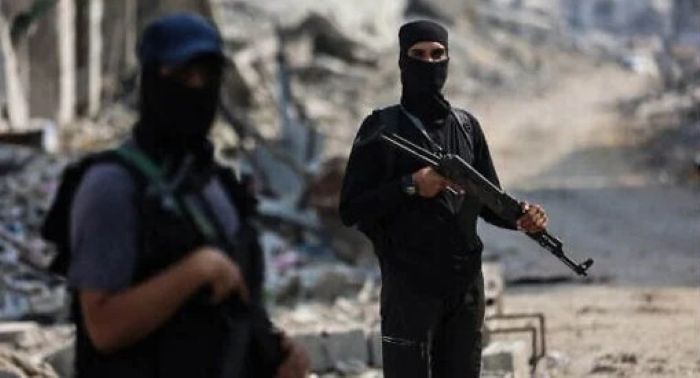
Hubris, Hegemony and the Illusion of Permanence
"Those whom the gods wish to destroy, they first make proud."
— Ancient Greek proverb
The Trigger
The renewed confrontation between the United States and Iran in 2026 once again reminded the world how easily geopolitical crises can escalate into existential rhetoric. Warnings of civilisational catastrophe, followed by hurried diplomacy, fragile ceasefires and renewed military exchanges, reflected more than a regional conflict. They exposed an enduring habit of great powers: the conviction that overwhelming strength can shape history according to their own design.
The episode is not unique. It belongs to a pattern that has recurred throughout history whenever dominant states have mistaken temporary superiority for permanent destiny.
The Illusion of Permanence
Every age has produced empires convinced that history had reached its culmination in their ascendancy. Military superiority, economic dominance and technological leadership have repeatedly fostered a belief that prevailing institutions are not merely successful but immutable.
History offers a harsher verdict.
Its pages are crowded with powers that once appeared invincible, only to survive today as archaeological ruins, museum exhibits or brief chapters in textbooks. Their decline rarely began with military defeat. It began much earlier, when confidence hardened into certainty and success evolved into complacency.
The greatest vulnerability of a dominant power is seldom external. It lies in its inability to recognise the moment when expansion becomes overreach and authority gives way to arrogance.
Power, paradoxically, often blinds those who possess it most completely.
Hubris: The Hidden Weakness of Power
The Greek tragedians understood hubris long before modern political science gave it a name. Excessive confidence does not merely distort judgement; it reshapes institutions.
When leaders begin to believe that their nation embodies a unique historical mission, dissent is increasingly viewed as disloyalty rather than democratic correction. Expertise gradually yields to ideological conformity, and governance becomes an exercise in affirming belief rather than solving problems.
History reveals a familiar sequence.
Competence is displaced by loyalty.
Institutions become instruments of political affirmation rather than public service.
Economic resources are diverted from education, research and productive investment towards surveillance, internal security and ideological mobilisation.
Perhaps most dangerously, leaders begin to believe that the historical laws governing the rise and fall of nations apply only to others.
This illusion has accompanied monarchies, colonial empires, fascist regimes, communist states and contemporary nationalist movements alike. The ideological labels differ; the underlying psychology remains remarkably consistent.
The Strength of Civilisations Lies in Diversity
The world's longest-enduring civilisations rarely survived through rigid uniformity.
Imperial China, the Achaemenid Persian Empire and large parts of the Indian subcontinent endured for centuries because they possessed an extraordinary capacity to absorb difference rather than eliminate it. Languages, customs, legal traditions and religious practices often coexisted within broader political frameworks.
Pluralism was not merely a moral virtue; it was a strategic asset.
When political authority weakened, society itself retained sufficient resilience to preserve civilisational continuity. Diversity acted as a buffer against collapse.
Attempts to compress ancient, complex societies into a single ideological identity have historically produced the opposite effect. Uniformity may strengthen political mobilisation in the short term, but it weakens the adaptability that enables civilisations to survive periods of crisis.
History repeatedly rewards flexibility over rigidity.
When Empires Mistake Wealth for Permanence
The trajectory of the Spanish Empire illustrates this lesson with remarkable clarity.
The immense inflow of silver and gold from the Americas created an illusion of inexhaustible prosperity. Rather than investing in productive domestic institutions, Spain became increasingly dependent upon imperial extraction. At the same time, religious intolerance drove out communities that had contributed significantly to commerce, finance and intellectual life.
The empire remained wealthy long after its structural weaknesses had begun to deepen.
When the flow of bullion declined, those weaknesses became impossible to conceal. Military prestige could no longer compensate for economic fragility, and Spain gradually surrendered its position to more adaptable rivals.
Its decline was not sudden. It was cumulative.
Germany and the Limits of Military Supremacy
Twentieth-century Germany demonstrated a different version of the same pattern.
Before the First World War, Imperial Germany's rapid industrial growth and military expansion unsettled the European balance of power, encouraging rival states to form counter-alliances.
A generation later, Nazi Germany pursued absolute domination through military conquest and racial ideology. Initial victories reinforced the belief that superior organisation and technological innovation could overcome every obstacle.
Instead, strategic overconfidence produced catastrophic miscalculations.
Opening multiple theatres of war simultaneously, underestimating the industrial capacity of opponents and confusing tactical brilliance with strategic invulnerability ultimately accelerated defeat.
Military excellence proved incapable of overcoming geopolitical reality.
Britain's Lesson: The Cost of Overreach
The British Empire reached a scale unprecedented in modern history.
Its naval supremacy, financial institutions and commercial networks enabled Britain to administer territories spanning every inhabited continent. Yet maintaining such an extensive global presence demanded enormous military, administrative and economic resources.
Two world wars fundamentally altered that equation.
Victory came at immense financial cost, leaving Britain indebted and increasingly unable to sustain the burdens of empire. Decolonisation was not simply the consequence of nationalist movements; it also reflected the arithmetic of overstretch.
The empire did not collapse because it was conquered.
It receded because maintaining dominance had become economically unsustainable.
"History is a vast early warning system."
— Norman Cousins
History offers more than a catalogue of vanished empires. It provides a framework for understanding the dilemmas confronting today's international order. The central lesson is not that powerful nations are destined to fall, but that power becomes most vulnerable when it ceases to recognise its own limits.
The Modern Dilemma: Power Without Prudence
The turbulence surrounding the 2026 confrontation between the United States and Iran illustrates this broader truth. Regardless of where one assigns responsibility for the immediate crisis, the episode exposed the fragility of an international system increasingly shaped by coercion rather than consensus.
Military power remains indispensable for national security. Yet history suggests that military superiority alone has rarely produced durable political settlements. Governments may be weakened by sanctions or force, but civilisations draw resilience from far deeper sources—shared memory, culture, language and collective identity.
These cannot be dismantled by missiles.
Attempts to impose political outcomes through overwhelming force often produce consequences beyond the battlefield. Regional instability disrupts energy markets, threatens maritime trade routes, fuels inflation and compels neighbouring states to recalibrate their strategic alignments. In an interconnected world, local conflicts rapidly acquire global economic consequences.
Equally significant is the erosion of trust. International agreements derive much of their value from predictability. When commitments appear vulnerable to abrupt political reversals or changing domestic priorities, confidence weakens not only between adversaries but also among allies. The result is an increasingly fragmented diplomatic landscape in which states seek insurance through alternative partnerships and regional coalitions.
The Limits of Hegemony in a Multipolar World
The international order is undergoing a profound transformation.
The post-Cold War era briefly encouraged the belief that one dominant power could shape global politics indefinitely. Today, however, economic influence, technological innovation and geopolitical leverage are distributed across a far wider range of actors.
China has emerged as a major economic and strategic power. India continues to expand its global influence through sustained economic growth, technological capability and diplomatic engagement. Regional organisations, middle powers and emerging economies now exercise influence that would have been difficult to imagine only a generation ago.
This evolution does not necessarily diminish the United States. It simply reflects a historical reality: international systems evolve.
The challenge for established powers is therefore not preserving absolute dominance but adapting to shared leadership.
History suggests that nations capable of accommodating change generally retain influence longer than those attempting to resist it through coercion alone.
The Danger of Ideological Certainty
The greatest risk facing any powerful nation is not external competition but internal certainty.
When political narratives become immune to criticism, institutions gradually lose their capacity for self-correction. Democracies flourish because they allow competing ideas to challenge prevailing assumptions. When ideological loyalty supersedes competence, policy becomes increasingly detached from reality.
This lesson applies universally.
No political ideology, religious movement or nationalist project possesses immunity from the temptations of hubris. Whether expressed through imperial ambition, revolutionary zeal or cultural exclusivism, the conviction that one's own historical mission is uniquely righteous has repeatedly produced strategic misjudgements.
History judges outcomes, not intentions.
Its verdict is usually delivered decades after the slogans have faded.
A Lesson for India—and for Every Democracy
India's own civilisational experience offers a particularly instructive perspective.
For millennia, the subcontinent absorbed successive waves of migration, commerce, conquest and cultural exchange without losing its essential continuity. Its strength lay not in rigid uniformity but in an extraordinary capacity to accommodate diversity within a shared civilisational framework.
That inheritance carries an important contemporary lesson.
India's greatest strategic asset is not demographic scale, military capability or economic potential alone. It is the pluralistic ethos that has enabled one of the world's oldest civilisations to endure despite repeated periods of upheaval.
As global politics becomes increasingly polarised, India has an opportunity to champion dialogue over confrontation, strategic autonomy over bloc politics, and coexistence over ideological absolutism. Such a role would be consistent not only with its diplomatic traditions but also with its civilisational character.
The same principle extends beyond India.
Every democracy ultimately derives its resilience from institutions that remain open to criticism, diversity and peaceful correction.
The Real Measure of Greatness
Empires seldom disappear overnight.
Their decline usually begins with a quieter transformation—the gradual substitution of confidence with arrogance, prudence with certainty, and leadership with domination.
The warning signs are remarkably consistent across centuries. Strategic overreach, economic imbalance, institutional rigidity and ideological intolerance rarely appear in isolation. Together, they signal that power has begun to lose the capacity for self-restraint.
The most enduring nations are not those that never make mistakes. They are those capable of recognising them before they become irreversible.
Military strength commands respect. Economic prosperity generates influence. Technological leadership creates opportunity.
But wisdom remains the only foundation upon which lasting greatness can rest.
Conclusion: History's Footnotes
Every empire once believed itself exceptional.
Rome imagined its order eternal. Spain believed its wealth inexhaustible. Britain assumed the sun would never set upon its empire. Others made similar claims in different languages and under different banners.
History remembered them all.
Not because they were powerful, but because they forgot that power itself is transient.
The true lesson of history is therefore neither pessimism nor fatalism. It is humility.
No nation is condemned to decline simply because it has become powerful. Decline begins when power mistakes itself for permanence and substitutes dominance for wisdom.
History rarely repeats itself exactly, but it does echo with remarkable persistence.
Those who choose not to listen often discover, too late, that they have become another of its footnotes.
Author's Note
This essay examines a recurring historical pattern rather than the fortunes of any single nation or government. Contemporary events surrounding the 2026 US-Iran crisis serve only as the immediate point of departure for a broader reflection on power, hubris and historical change. The historical comparisons are intended not as predictions but as reminders that no civilisation or state is exempt from the disciplines of history.
As the historian Barbara Tuchman observed, "Wooden-headedness, the source of self-deception, is a factor that plays a remarkably large role in government." That observation remains as relevant today as it was when she wrote it.
(Author: kgsharma1@gmail.com; Mobile: 9811340809: The writer is a retired officer of the Indian Information Service and a former Editor-in-Charge of India’s national broadcasters. Also worked as an international media consultant with UNICEF Nigeria and contributes regularly to various publications.)















Related Items
EAM Jaishankar reaffirms India's globally compatible legal framework
CWG 2026: India’s Jhandu Kumar clinches bronze in para powerlifting
DRDO develops India's 1st indigenous expendable turbojet engine