 Ira Singh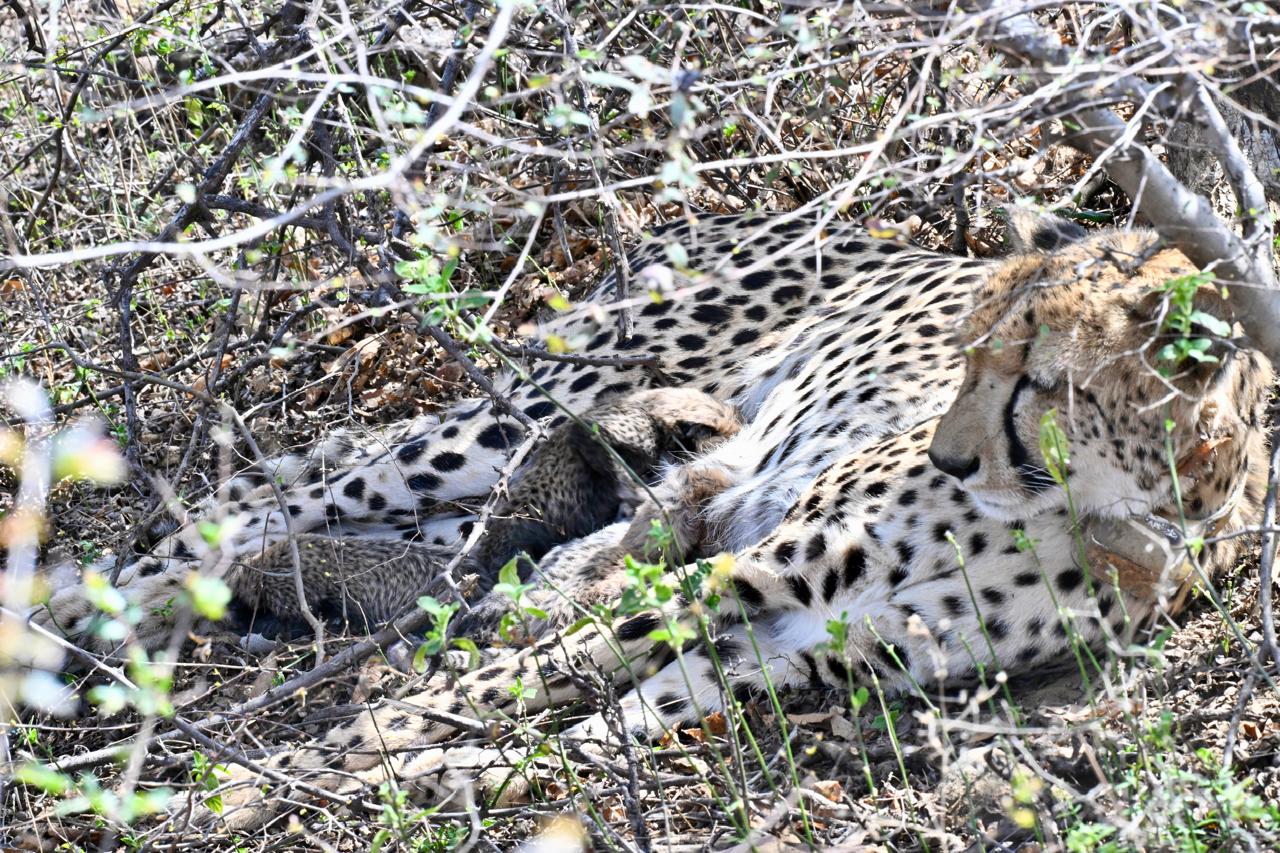
In a landmark moment for India’s wildlife conservation efforts, an Indian-born cheetah, KGP-2, has given birth to four cubs in the open forest of Kuno National Park, taking the country’s total cheetah population to 57. The development marks a crucial milestone in the ambitious Project Cheetah, signalling a shift from reintroduction to successful natural reproduction in the wild.At just 25 months old, KGP-2 represents the second generation of cheetahs born on Indian soil. She is the offspring of Gamini, one of the cheetahs translocated from South Africa. Her journey—from being born in Kuno to now raising her own litter in the wild—underscores the growing adaptability of the species to its restored habitat.
Union Environment, Forest and Climate Change Minister Bhupender Yadav described the birth as a “historic moment,” noting that this is the first recorded instance of a cheetah giving birth in the open forest since the programme began in 2022. All previous births had taken place within large enclosures.“A historic moment unfolds at Kuno National Park as an Indian-born female cheetah of Gamini, aged 25 months, has given birth to four cubs in the wild, marking a major milestone in India’s cheetah conservation journey. Having been in the wild for over a year, this is the first recorded birth in the wild since the reintroduction began in 2022,” he said.
Kuno milestone moment ????
— Bhupender Yadav (@byadavbjp) April 11, 2026
A historic moment unfolds at Kuno National Park as an Indian-born female Cheetah of Gamini, aged 25 months, has given birth to four cubs in the wild—marking a major milestone in India’s cheetah conservation journey.
Having been in the wild for over a… pic.twitter.com/ABjDfxiJua
The latest birth follows closely on another significant development. Mukhi, one of the first cheetahs born in India and a cub of Jwala, recently gave birth to five cubs after learning to survive independently in the wild. Together, these births reflect a steady rise in the cheetah population and a strengthening of ecological stability within Kuno.
Chief Conservator of Forests and Project Cheetah Director Uttam Kumar Sharma emphasised that the focus of the programme is now bearing fruit beyond relocation.“KGP-2 was once a cub here. Today, she is reproducing in the wild. This is a strong indicator that the ecosystem is supporting long-term sustainability,” he said.
He added that both the mother and cubs appear healthy, with veterinary teams monitoring them from a safe distance.Sharma also highlighted recent developments in the project, noting that nine cheetahs translocated from Botswana in February have successfully completed their quarantine period and have been moved to soft-release enclosures. “All nine Botswana cheetahs are healthy and adapting well to their new environment,” he said.
Chief Minister Mohan Yadav said the birth reinforces Madhya Pradesh’s growing role in global cheetah conservation.“The birth of four cubs in the open forests is proof that the land of Madhya Pradesh is fully conducive to the lineage expansion of cheetahs. Our commitment to nature and wildlife conservation is succeeding,” he said.
अब मध्यप्रदेश चीतों के 'पुनरुद्धार' का भी मुख्य केंद्र बन रहा है।
— Dr Mohan Yadav (@DrMohanYadav51) April 11, 2026
'गामिनी' से जन्मी भारतीय मूल की 25 माह आयु की मादा चीता द्वारा खुले जंगलों में 4 शावकों को जन्म देना इस बात का प्रमाण है कि मध्यप्रदेश की धरती चीतों के वंश विस्तार के लिए पूरी तरह अनुकूल है। प्रकृति और वन्यजीव… pic.twitter.com/EZsJobzmsG
Currently, 54 cheetahs, including adults and cubs, reside within Kuno National Park, while three others roam freely in the Gandhi Sagar Wildlife Sanctuary. The project has also seen challenges, with 21 cheetahs—comprising both translocated adults and India-born cubs—having died due to various causes since its inception.India’s cheetahs were declared extinct in 1952, making their return through intercontinental translocation from Namibia, South Africa, and Botswana one of the most ambitious wildlife restoration efforts in the world.Today, quiet yet powerful moments like the birth of KGP-2’s cubs in the wild are transforming that once-uncertain vision into a living reality—one that signals not just survival, but the hopeful revival of the fastest land animal on Indian soil.
(Asstt.Editor)













Related Items
In Satpura Tiger Reserve, Every Turn Tells a Story!
27-month-old cheetah dies at MP's Kuno National Park
Uttarakhand plans reward scheme of up to Rs 1 lakh to combat forest fires