 Ira Singh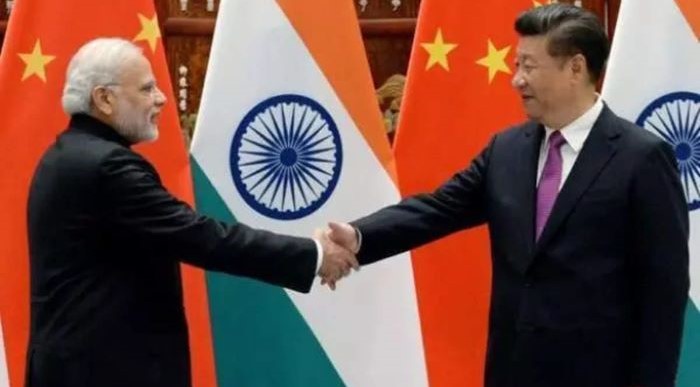
India and China continue to be significant trade partners, with bilateral exchanges expanding steadily over the years. However, the sharp asymmetry in this relationship remains a point of concern for India, as the trade gap between the two Asian economies has widened to a record USD 99.2 billion in 2024-25. While India’s trade with China has grown at a healthy pace, the balance remains heavily tilted in Beijing’s favour, making the deficit not just large, but also structural.
The latest data highlights the depth of this imbalance. During April-July of the current fiscal year, India’s exports to China rose nearly 20 per cent to USD 5.75 billion, while imports from China increased 13 per cent to USD 40.65 billion. Over the full year 2024-25, India’s exports stood at USD 14.25 billion compared with imports of USD 113.5 billion. This widening gap is not a new phenomenon: two decades ago, in 2003-04, the deficit was just USD 1.1 billion. Today, China alone accounts for around 35 per cent of India’s total trade deficit of USD 283 billion.Prime Minister Narendra Modi, speaking on August 29, underscored the strategic importance of rebalancing the relationship, noting that it is essential for both India and China to work together to bring stability to the global economic order. He reiterated that India is prepared to advance bilateral ties on the basis of mutual respect, interest, and sensitivity. Yet, despite these assurances, the numbers reveal the entrenched nature of China’s dominance in India’s import basket.
According to analysis by the Global Trade Research Initiative (GTRI), China controls over 75 per cent of India’s imports in several critical categories. These include antibiotics, silicon wafers, flat panel displays, solar cells, lithium-ion batteries, laptops, viscose yarn, and specialized machinery. In antibiotics such as erythromycin, for instance, China supplies nearly 98 per cent of India’s needs. In electronics, it commands almost the entire supply of silicon wafers and dominates the flat panel display market. Even in renewable energy, which India is keen to expand as part of its green transition, the country relies heavily on Chinese solar cells and batteries.Experts raise concerns that this overwhelming dependence carries significant risks. Ajay Srivastava, founder of GTRI, cautions that Beijing’s dominance gives it potential leverage over India, allowing it to use supply chains as a strategic tool in times of political tension. This imbalance has been deepening further as India’s exports to China shrink in relative terms. Two decades ago, Indian goods accounted for more than 40 per cent of bilateral trade; today, that share has collapsed to just 11.2 per cent.
According to information, much of India’s imports from China consist of raw materials, intermediates, and capital goods — such as active pharmaceutical ingredients, mobile phone parts, and auto components — which are used in domestic manufacturing and exports.The commerce ministry notes that the demand-supply gap in these categories makes imports unavoidable, though it has been working to reduce the reliance.Initiatives taken include production-linked incentive schemes across 14 sectors to boost domestic manufacturing, tightening of quality standards to curb substandard imports, and the imposition of anti-dumping duties in areas such as chemicals and engineering products. Indian businesses are also being encouraged to diversify supply chains by sourcing from alternative markets, reducing the risk of overdependence on any single country.The broader economic implications of a widening trade deficit are difficult to ignore. Persistent reliance on Chinese imports exerts pressure on India’s foreign exchange reserves, risks hurting local manufacturers through cheaper imports, and can lead to a depreciation of the rupee, which in turn raises the cost of imports and fuels inflation. More critically, structural dependence dampens incentives to build robust domestic capacity in key industries, slowing India’s long-term industrial and technological growth.
India’s challenge, therefore, is not merely about narrowing a numerical deficit but about rebalancing an unequal relationship that has strategic as well as economic dimensions noted experts.While the government continues to push for greater self-reliance and diversification, the road to reducing dependence on Chinese supply chains will be long and fraught with challenges, especially as China’s grip on global manufacturing remains formidable.
(Business Correspondent)


.jpg)








Related Items
Salim Dola, Dawood Ibrahim's close aide, deported to India from Turkey
PM Modi calls Northeast India’s ‘Ashtalakshmi’
Trump 'unhappy' with latest Iran offer: Report