 Krishan Gopal Sharma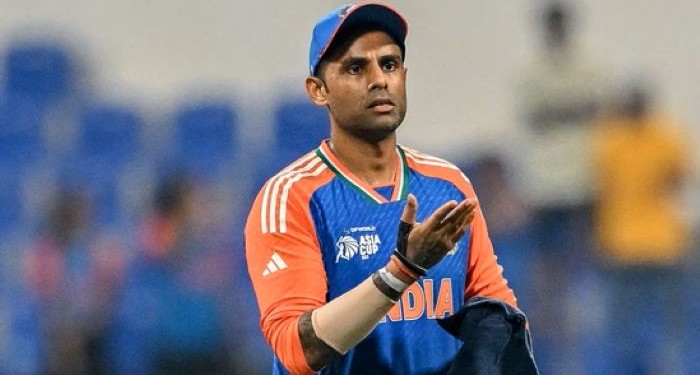
"Sport has the power to change the world. It has the power to inspire. It has the power to unite people in a way that little else does." — Nelson Mandela
Mandela’s words echo across stadiums and summits alike. Sport, at its best, transcends borders, ideologies, and histories. It offers a rare sanctuary from the divisions of politics and the bitterness of conflict. But when leaders conflate athletic triumphs with military victories, or when diplomacy is replaced by defiance on the field, that sanctuary begins to crumble.
Politics at Play, Sport at Bay
India’s recent Asia Cup cricket victory over Pakistan should have been a moment of celebration. Instead, it became a spectacle of symbolic resistance. Indian players reportedly refused to shake hands with their Pakistani counterparts and declined to accept the trophy from the Asian Cricket Council chief—who also serves as Pakistan’s Interior Minister. These gestures, whether spontaneous or encouraged, signaled a troubling shift: sport was no longer a neutral ground, but a stage for political messaging.
"Global slogans call for unity—but on the field, it’s war metaphors, snubbed handshakes, and closed doors. Can a nation claim the Olympic spirit while playing politics with sport?"
The controversy deepened when Prime Minister Narendra Modi congratulated the team with the phrase “Operation Sindoor on the games field,” likening the win to a military operation. The metaphor, referencing a recent cross-border strike, blurred the line between athletic achievement and geopolitical aggression. It wasn’t just a tweet. It was a declaration: sport had joined the nationalist narrative.
Global slogans, local contradictions
India’s diplomatic vocabulary is rich with calls for unity. “Vasudhaiva Kutumbakam”—the world is one family. “One Earth, One Family, One Future.” “Sabka Saath, Sabka Vikas.” These phrases are repeated at G20 summits, UN forums, and climate conferences. They project an image of India as a cooperative, inclusive global leader.
But on the ground, the reality often diverges. When athletes are denied visas, when ceremonial norms are flouted, and when sport is used to settle political scores, the gap between rhetoric and reality becomes impossible to ignore. Can a nation truly lead the sporting world if it refuses to play by its rules?
Selective inclusion
India’s track record on sporting visas has raised eyebrows internationally. After the Pahalgam terror attack in April 2025, India suspended visa services for Pakistani nationals, creating uncertainty around their participation in scheduled tournaments. Although exemptions were later made for multi-nation events, the initial freeze sent a chilling signal.
In November 2024, the Pakistan Scrabble Association alleged that more than half its team was denied visas for the Asia Cup Youth Championship in Delhi—including the reigning World Youth Champion. Pakistan’s hockey team faced similar delays for the Asia Cup in Rajgir and the FIH Junior World Cup in Madurai. Even Olympic javelin star Arshad Nadeem was reportedly excluded from the Neeraj Chopra Classic.
And it wasn’t just geopolitics. A Slovak athlete was also denied a visa to compete in India in 2025, raising concerns about procedural opacity and bureaucratic hurdles. These incidents suggest that India’s visa policies—whether driven by security or administrative caution—risk violating the Olympic Charter’s principles of non-discrimination and fair access.
Olympic ideals under strain
The Olympic Charter is clear: sport must promote peace, understanding, and inclusivity. Rule 50 explicitly discourages political messaging in sporting contexts. India’s recent actions—both symbolic and procedural—risk violating these principles. If India wishes to host the Olympics or other major tournaments, it must demonstrate a commitment to neutrality and openness. Otherwise, its bids may face resistance not just from rival nations, but from international sporting bodies tasked with upholding the integrity of competition.
Leadership demands consistency
India has the infrastructure, talent, and cultural depth to be a global sporting powerhouse. But it must also cultivate the temperament. True leadership lies not in triumphalism, but in restraint. Not in exclusion, but in embrace. The world is watching—not just how India plays, but how it wins.
If India wants to be taken seriously as a host and promoter of international sport, it must ensure that its slogans of unity are not just spoken at summits, but lived on the field. Because in the end, sport is not just about scoring runs or goals—it’s about building bridges. And those bridges cannot be built with metaphors of war.
(Views are personal)
(Krishan Gopal Sharma is a freelance journalist, retired as a senior officer from the Indian Information Services. Contributed to leading dailies in India and abroad, covered major summits like BRICS, ASEAN, and Metropolis, and served as an International Media Consultant with UNICEF (Nigeria) for their Polio Eradication campaign.)





Related Items
'Blackmail politics,selective action': K. Surekha after Cabinet ouster
Khijadiya Bird Sanctuary emerges as black necked stork breeding site
Sports Ministry clears 492 Indian athletes for Asian Games 2026