 Ira Singh
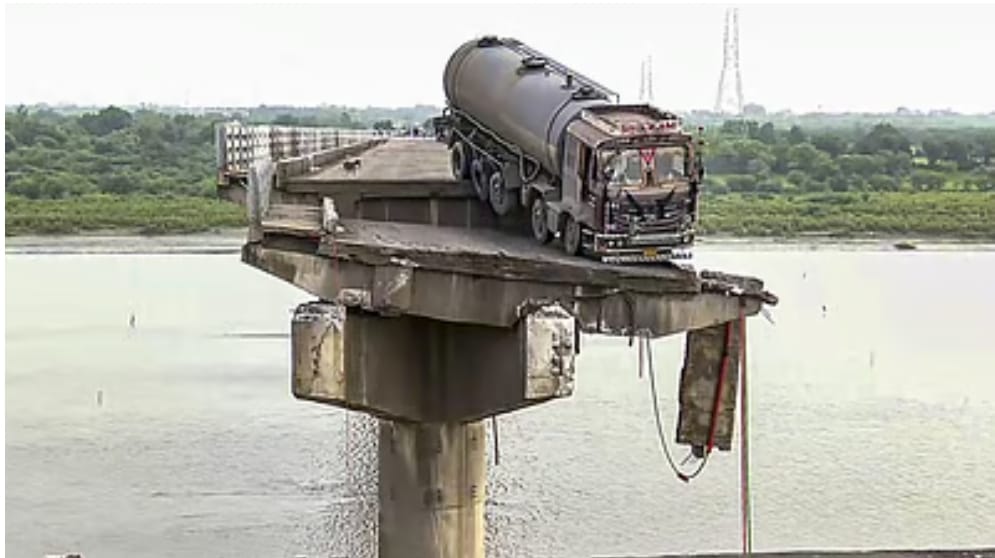
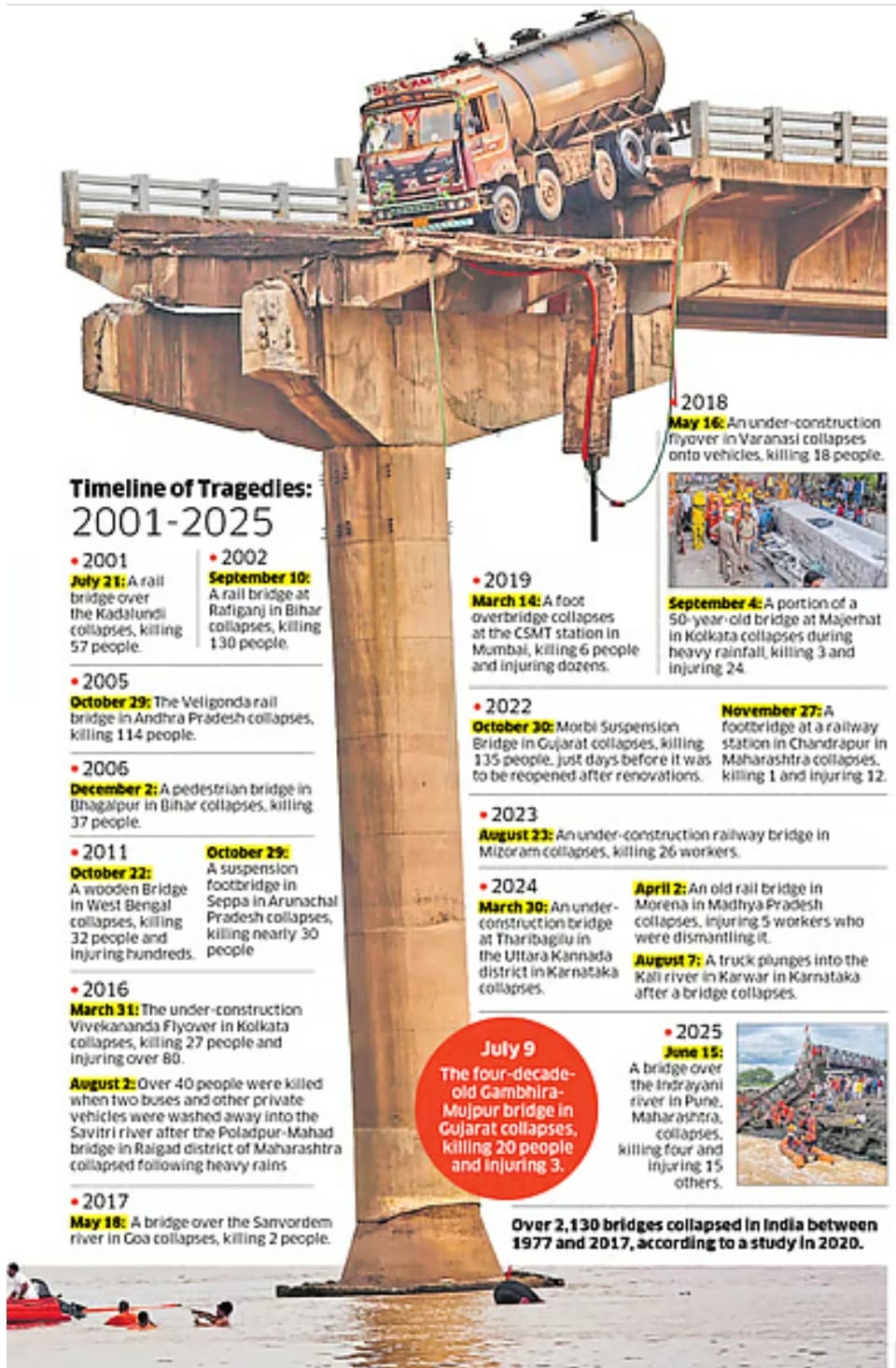
A series of bridge collapses across India has raised alarming questions about the safety and sustainability of the country’s infrastructure. The most recent tragedy occurred on July 9, when a 43-year-old bridge in Vadodara, Gujarat, collapsed, sending several vehicles plunging into the Mahisagar river and claiming 20 lives. This disaster comes less than three years after the Morbi suspension bridge collapse in October 2022 that killed 135 people.
Following the Vadodara incident, the Gujarat government ordered a safety audit of 1,800 bridges across the state. According to the audit report, 20 bridges have been closed for all vehicles, while 113 are restricted to heavy vehicles. The findings highlight that many of these structures are under severe strain due to rising traffic loads and inadequate preventive maintenance.
A Nationwide Pattern of Failures
The problem, however, is not limited to Gujarat. In Maharashtra, four people died when a 73-year-old pedestrian bridge over the Indrayani river collapsed in Pune on June 15 under the weight of heavy tourist crowds. In Bihar, the situation is worse — with seven bridge collapses reported since May 2024. Among them were the Ganga bridge collapse in Patna during bearing replacement work and another incident in Munger, where a bridge built in 2012 gave way. The state’s opposition leader Tejashwi Yadav called it “institutional corruption and organised loot,” while experts attributed the failure to technical errors during girder placement.
According to a 2020 study published in Structure and Infrastructure Engineering, 2,130 bridges collapsed between 1977 and 2017. The study cited natural disasters (80.03%), material deterioration (10.1%), and overloading (3.28%) as primary causes. The Union Ministry of Road Transport acknowledged that 21 bridges on national highways collapsed between 2021 and 2024, and over 6,500 bridges were found distressed in 2017.
Why Are Bridges Failing?
Experts blame a mix of poor maintenance, overloading, and substandard construction. In Bihar, allegations of low-quality materials and corrupt practices have fueled public anger. In Maharashtra, Deputy CM Ajit Pawar questioned, “We are set to become the third-largest economy, but why are our bridges collapsing?”
Government Response: Tech-Driven Safety?
The Ministry ,according to information has mandated the use of high-tensile stainless steel in new bridges near coastal areas and plans to install AI-based sensors for real-time monitoring. Under the Indian Bridge Management System (IBMS) launched in 2016, 1,72,517 bridges have been inventoried, yet progress on repairs remains slow. Monitoring will soon include strain, deflection, vibration, corrosion, and temperature data to predict structural failures.
Lives and Livelihoods Disrupted
The Vadodara collapse has devastated commuters in Anand and Vadodara districts, forcing thousands to take alternative routes two hours longer. “Transportation costs have skyrocketed; this impacts daily life and jobs,” said Punambhai Padhiyar from Bamangam village. While the government has announced a new bridge worth ₹212 crore, locals demand immediate repair of the existing structure for light vehicles to ease hardships.
The Big Question
As India aspires to become the third-largest economy, the bridge collapses expose systemic weaknesses in planning, quality control, and accountability. Without urgent investment in inspection, technology adoption, and preventive maintenance, the country’s infrastructure ambitions risk crumbling under their own weight.
(State Correspondent)



Related Posts
Gujarat Dy CM woos Japanese investors during Japan visit
Gujarat steps up global investment push ahead of VGGS 2027
Five workers killed, five injured in explosion at Gujarat chemical unit