 Ira Singh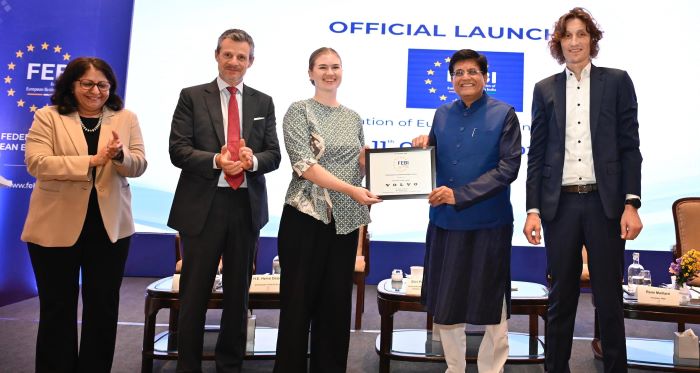
Union Minister of Commerce and Industry, Piyush Goyal, on Friday expressed concern over the European Union's (EU) deforestation regulation and its Carbon Border Adjustment Mechanism (CBAM), stating they are inequitable and could negatively affect Indian industries. Goyal pointed out that the EU’s environmental standards and steel safeguards are disproportionate and may compel India to consider defensive measures if trade challenges continue. Speaking at the launch of the Federation of European Business in India (FEBI) event, Piyush Goyal expressed optimism about fast-tracking the free trade agreement (FTA) negotiations between India and the EU, as long as the discussions focus on relevant trade and business matters, rather than extraneous issues. He asserted that India should not be compared to Southeast Asian nations with which the EU has signed trade deals, and emphasized that the country would not rush into signing an agreement without thorough consideration. Goyal further mentioned that, similar to his approach with Australia, UAE, and EFTA, he is ready to engage in daily talks to expedite the process.
Strengthening trade and investment ties between India and Europe through enhanced collaboration. pic.twitter.com/G24QTPN4GI
— Piyush Goyal Office (@PiyushGoyalOffc) October 11, 2024
According to information, several major agriculture- exporting nations, including Brazil, India, Indonesia, and the United States voiced objections to the EU Deforestation Regulation (EUDR). The EU passed the world's first initiative to impose tariffs on high-carbon imports such as steel, cement, and aluminum last year, as part of its plan to achieve net-zero greenhouse emissions by 2050. In recent months, EU officials have been engaging with countries like China, South Africa, and India, which have voiced resistance to the Carbon Border Adjustment Mechanism (CBAM). The EUDR, officially adopted on May 16, 2023, aims to block the import of goods linked to deforestation and forest degradation within the EU.The covered products include coffee, leather, oil cake, wood furniture, paper and paperboard with plans to expand the product list further.
Additionally,according to the Global Trade Research Initiative (GTRI), India’s exports of items such as coffee, leather hides, and paperboard, valued at $1.3 billion annually, may face significant challenges due to the EU’s new regulations. The Carbon Border Adjustment Mechanism (CBAM), set to take effect on January 1, 2026, functions as a carbon tax on high- emission imports. Finance Minister Nirmala Sitharaman, recently, has voiced her concerns, calling the CBAM unilateral and arbitrary, adding that it will hurt India’s exports. In a recent move, India proposed retaliatory tariffs on EU imports, under WTO rules, as talks over the EU’s safeguard measures on steel products failed to yield a resolution, according to information.
(Business Correspondent)












Related Items
Goyal eyes new avenues for Indian agri-food exports to Singapore
GeM rewrites public procurement rules, says Piyush Goyal
Govt committed to building globally competitive pharma sector: Goyal