 Newsinc24 Team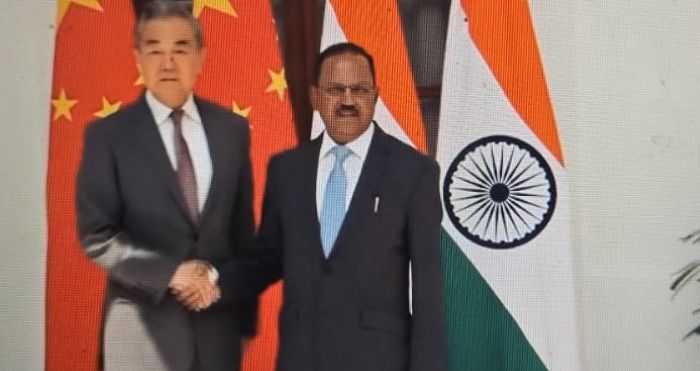
Prime Minister Narendra Modi on Tuesday met Chinese Foreign Minister Wang Yi at his residence in New Delhi, following the latter’s series of high-level talks in the capital earlier, as New Delhi and Beijing work towards stabilising and strengthening bilateral ties between the Asian giants.
Earlier, National Security Advisor (NSA) Ajit Doval met Chinese Foreign Minister Wang Yi on Tuesday in New Delhi. Doval said that relations between the two countries have witnessed an "upward trend" in recent months. "Borders have been quiet. There has been peace and tranquillity. Our bilateral engagements have been more substantial," he noted, crediting the leadership in both countries for fostering a new environment of cooperation since their meeting in Kazan last October.Doval expressed optimism about the outcome of the 24th Special Representative (SR)-level talks on boundary issues. He stressed that the discussions held special significance as Prime Minister Narendra Modi is set to attend the upcoming Shanghai Cooperation Organisation (SCO) Summit.
#WATCH | Delhi: During meeting with Chinese Foreign Minister Wang Yi, NSA Ajit Doval says, "...There has been an upward trend. Borders have been quiet. There has been peace and tranquillity. Our bilateral engagements have been more substantial. And we are most grateful to our… pic.twitter.com/Ngz8e1S3xj
— ANI (@ANI) August 19, 2025
Wang Yi said India and China are heartened to see the stability that is now restored on the borders. "We had a very good 23rd round of special representatives talks at the end of last year. At that meeting, we reached a new and important consensus on the management of disagreements, stabilising the borders, and moving toward a settlement," he said. The Chinese Foreign Minister added that the bilateral relationship is facing an important opportunity for improvement and growth.

.jpg)



Related Items
PM Modi inaugurates 594-km Ganga Expressway in UP’s Hardoi
PM Modi seeks women’s backing for reservation push at Varanasi meet
PM Modi calls Northeast India’s ‘Ashtalakshmi’