 Uday Kumar Varma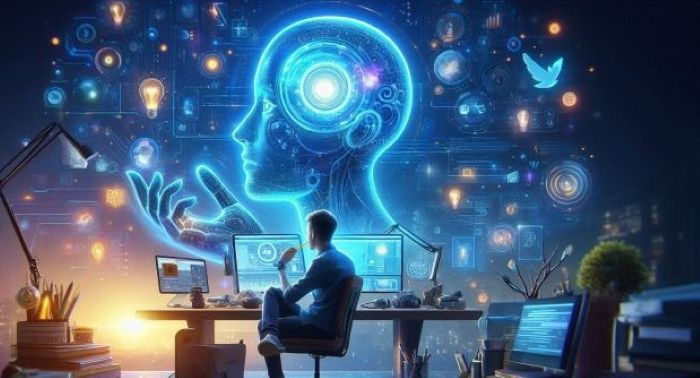
Why Media & Entertainment Must Enter the AI Policy Conversation
As policymakers and technologists gather at Bharat Mandapam for the India AI Impact Summit 2026, discussions understandably gravitate toward sectors where Artificial Intelligence promises immediate developmental returns — inter alia, healthcare diagnostics, agricultural productivity, educational access, climate resilience. Yet in this otherwise comprehensive vision of AI-enabled transformation, one domain remains curiously understated: Media and Entertainment.
This omission is striking, not because cinema competes with health or education in urgency, but because the creative economy sits at the intersection of technology, employment, exports, and national influence. If AI is to reshape how societies work, learn and govern, it will inevitably reshape how they imagine, narrate and project themselves.
India’s Media and Entertainment (M&E) sector today stands at approximately $28–30 billion in size, with sustained growth projected on the back of digital consumption and streaming expansion. It employs millions directly — from
actors and cinematographers to editors, musicians and technicians — and many more indirectly through advertising, tourism, event management, logistics and hospitality. India also produces more films annually than any other country, often exceeding 1,500 across languages, reflecting a scale of cultural production unmatched globally by volume.
But scale alone does not guarantee structural strength.
Historically, India’s film ecosystem has operated on thin margins, volatile financing patterns, and uneven technological integration. Production cycles have been long, marketing often intuition-driven, and international monetisation inconsistent. The industry’s vitality has been unquestionable; its efficiency less so.
Artificial Intelligence enters this landscape not as a peripheral tool, but as a systemic disruptor.
Consider the earliest stage of filmmaking: conception. Script evaluation has traditionally relied on experience and instinct. AI-driven analytics now allow narrative structures to be examined for pacing, thematic resonance, genre alignment, and even probable audience engagement. Such tools do not replace creative judgement, but they reduce asymmetry of information. In a sector where a single misjudged project can destabilise financing chains, risk calibration becomes economically consequential.
In pre-production and design, AI-powered pre-visualisation and generative modelling enable filmmakers to simulate sets, refine shot compositions, and optimise schedules before cameras roll. What once required expensive physical prototyping can now be digitally iterated. Even modest efficiency gains across hundreds of productions translate into meaningful capital savings.
Post-production, long a bottleneck in Indian filmmaking, stands to be transformed further. AI-assisted editing, colour grading, sound enhancement, and visual augmentation compress timelines. When production velocity increases without proportionate cost escalation, output elasticity improves — more stories can be told within the same financial envelope.
Perhaps the most transformative dimension for India lies in language. With 22 constitutionally recognised languages and hundreds of dialects, India’s cultural richness has also been a distribution constraint. AI-enabled dubbing, voice synthesis, and real-time lip-sync correction convert this fragmentation into scale. A film produced in one linguistic region can travel across the country — and globally — with unprecedented speed and fidelity.
In a digital marketplace governed by recommendation algorithms rather than physical theatre screens, multilingual adaptability becomes strategic advantage.
The rise of OTT platforms further magnifies this shift. India now hosts one of the world’s largest pools of internet users, and streaming revenues are projected to grow at robust rates. Algorithms shape not only what viewers watch, but what producers commission. Data feedback loops increasingly inform creative decisions. In this environment, AI does not merely distribute cinema; it co-determines its evolution.
For policymakers, the implications are profound.
Creative industries are labour-intensive and youth driven. They contribute to soft power, export earnings, and urban employment clusters. They influence global perceptions as surely as diplomatic outreach does. If AI adoption enhances productivity even modestly — say by 10 percent across production cycles — the cumulative economic effect across thousands of annual projects would be substantial.
Moreover, AI integration lowers barriers to entry. Smaller studios gain access to tools once reserved for large conglomerates. Independent creators can prototype ambitious narratives without prohibitive infrastructure.
Democratisation of production capacity strengthens cultural plurality.
Yet inclusion must be intentional. Without skill transition frameworks, automation may displace vulnerable segments of the workforce. Without clear intellectual property protections, generative systems may create legal ambiguity. Without sustainable energy planning, AI’s computational appetite may undermine environmental commitments.
These risks are not arguments against adoption; they are arguments for structured adoption.
If the Summit seeks to define AI’s role in shaping equitable growth, Media and Entertainment cannot remain peripheral to the conversation. Storytelling is not ornamental to development. It shapes aspiration, identity, and national confidence. In the algorithmic century, cultural production will be as technologically mediated as healthcare diagnostics or financial services.
India’s film industry already possesses scale, diversity, and global diaspora connectivity. Artificial Intelligence offers the possibility of adding systemic efficiency, predictive discipline, and linguistic scalability to that foundation.
The question before policymakers is therefore not whether AI will transform cinema. It is whether cinema will be deliberately integrated into national AI strategy — or left to evolve unevenly under market pressure alone. If the former path is chosen, the creative economy could become one of the most dynamic beneficiaries of India’s AI moment.
(Uday Kumar Varma is an IAS officer. Retired as Secretary, Ministry of Information & Broadcasting)
Related Posts
AI and the Entertainment Revolution
Kashi Tamil Sangamam shaping India's cultural landscape
Is Britain’s political landscape changing?