 Ira Singh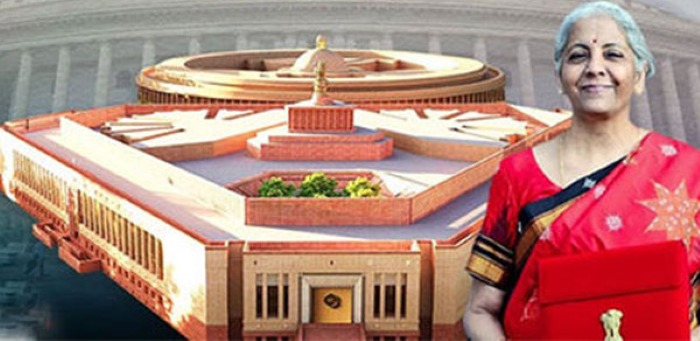
The Union Budget for 2026–27 is expected to strike a balance between sustaining a strong capital expenditure push and advancing medium-term fiscal consolidation, according to pre-Budget expectations outlined by rating agency ICRA.ICRA projects that Finance Minister Nirmala Sitharaman may increase capital expenditure by around 14 per cent to ₹13.1 trillion in FY27, equivalent to 3.3 per cent of GDP, from an estimated ₹11.5 trillion in FY26. The continued focus on infrastructure spending is seen as supporting investment activity while improving the quality of government expenditure.
The upcoming Budget assumes added significance as it will be the first to align with the recommendations of the 16th Finance Commission, which will determine fiscal transfers between the Centre and states for the next five years. Against this backdrop, ICRA expects the Centre to prioritise debt consolidation while maintaining growth-oriented spending.The agency estimates the fiscal deficit to be capped at around 4.3 per cent of GDP in FY27, marginally lower than the 4.4 per cent budgeted for FY26, aided by an expected 9.8 per cent growth in nominal GDP. On this path, the Centre’s debt-to-GDP ratio is projected to ease to about 55.1 per cent in FY27 from 56.1 per cent in FY26, remaining aligned with the medium-term consolidation framework.
In absolute terms, however, the fiscal deficit is likely to rise to ₹16.9 trillion in FY27 from ₹15.7 trillion in FY26, largely reflecting higher capital expenditure. ICRA said the government is expected to front-load infrastructure spending before fiscal rigidities intensify from FY28 onwards, when the implementation of the 8th Central Pay Commission is anticipated to raise salary and pension liabilities.“We believe that the GoI will push up capital expenditure by around 14 per cent to ₹13.1 trillion before fiscal rigidities in the form of higher committed expenditure set in from FY2028,” the agency said.
On the revenue side, gross tax revenues are expected to grow by about 7 per cent in FY27, driven by an 11 per cent increase in direct taxes. Indirect tax growth may remain subdued at around 2 per cent following GST rate cuts implemented from September 2025. After devolution to states, net tax revenues are projected to rise by 5.2 per cent to ₹28.5 trillion.Revenue expenditure growth is likely to remain contained at around 4 per cent, helping narrow the revenue deficit to ₹4.7 trillion, or 1.2 per cent of GDP, the lowest level in nearly two decades, according to ICRA.At the same time, gross market borrowings are projected to increase by 15–16 per cent to ₹16.9 trillion in FY27, reflecting higher capital spending requirements and increased debt redemptions.
The Union Budget for 2026–27 is scheduled to be presented in Parliament on February 1, 2026.
(Business Correspondent)
Related Posts
Modi has very good idea for Ukraine peace deal, Putin likes India's cultural diversity
India win gold medal in women's team recurve Archery
India’s manufacturing sector sees 7-month high growth in Sept