 Ira Singh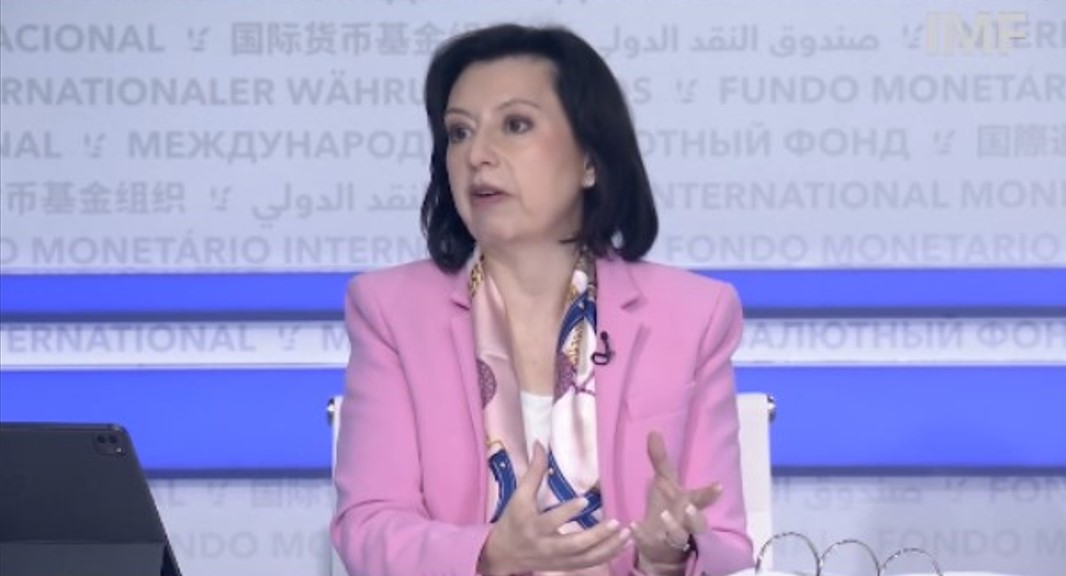
India’s economy continues to show strong resilience and remains a significant contributor to global growth despite challenges arising from geopolitical tensions, the Iran conflict and fluctuations in global energy markets, the International Monetary Fund (IMF) said on Thursday.
According to agency reports,addressing a regular IMF press briefing, Julie Kozack, Director of the IMF’s Communications Department, said India’s economy has demonstrated resilience, supported by strong domestic demand despite uncertainties in the global environment.“Despite the impact of the war and global headwinds, India’s economy has been growing robustly, and it has been supported particularly by very strong domestic demand within India,” Kozack said.
The IMF maintained its growth projection for India at 6.5 per cent for fiscal year 2026-27, following an upward revision made in April. Kozack said the forecast reflects strong economic momentum carried forward from the previous year and remains among the strongest growth rates globally.She highlighted that the reduction in US tariff rates also helped offset some impact of the global energy shock. The tariff rate, which was earlier set at 50 per cent, was reduced to 10 per cent, providing some support to India’s growth outlook.“India’s growth projection also reflects the reduction in the US tariff rate, and that partly offset the impact of the global energy shock on India,” Kozack said.The IMF official noted that India’s economy continued to exceed expectations in the first quarter of the calendar year, growing at 7.8 per cent, which was higher than the pace anticipated in the Fund’s April projections.“There is quite strong momentum still in India. So, it does still remain a growth engine for the global economy, despite the shock,” she said.
However, Kozack acknowledged that the rise in global energy prices due to Middle East tensions has affected economies worldwide, including India, which remains dependent on energy imports.“No country has really been untouched by the global shock,” she said, adding that higher energy prices have had a broad impact across economies.The IMF also welcomed recent developments, including the ceasefire in the Middle East and progress towards reopening the Strait of Hormuz, describing them as positive signals for global economic stability. Oil prices have eased from their peak levels but remain around 10 per cent higher than before the conflict, while some commodity prices have also moderated.
The IMF is scheduled to release its updated global economic projections on July 8, which will provide further assessment of the global growth outlook.
(Business Correspondent)
Related Posts
Bank unions defer 3-day nationwide strike following assurance from IBA
World Bank, IMF back debt framework changes for poor countries
BRICS calls for IMF, World Bank Reforms at Mumbai meet